







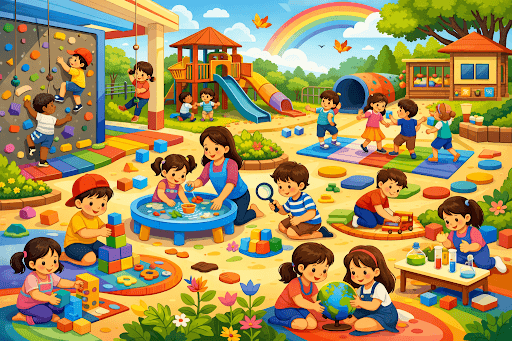

Have you ever noticed how children learn best when they are smiling, moving, and fully immersed in what they’re doing? For young learners, play is not a break from learning, it is learning. Through play, children explore the world around them, express emotions, and build skills that textbooks alone cannot teach.
Educators and parents today increasingly recognize that joyful, play-based environments are essential for a child’s overall development. When learning is combined with movement, creativity, and interaction, children feel more confident, engaged, and eager to participate in school life.
This article explores the importance of play-based learning in a child’s physical, social, and emotional growth, how thoughtfully designed play stations and activity spaces enhance engagement and reduce stress, and how Greater Noida World School, Sigma I, one of the best schools in Greater Noida, takes pride in offering vibrant play stations and activity-based spaces that make learning joyful, meaningful, and developmentally enriching.
Also Read | Learn Global Culture and Foreign Languages at Greater Noida World School
Why Play-Based Learning Matters in Early and Primary Education
Play is one of the most natural ways children learn. In the early and primary years, children understand the world not through memorisation, but through movement, imagination, and interaction. Play-based learning taps into this instinct, allowing children to grow intellectually while enjoying the process.
When learning environments are designed around play, they support development in multiple ways:
- Supports physical development: Activities that involve running, climbing, balancing, or coordinated movement help children strengthen motor skills, improve coordination, and develop body awareness in a healthy, enjoyable way.
- Encourages social interaction: Play naturally brings children together. Through group activities and shared spaces, children learn to communicate, cooperate, take turns, and resolve small conflicts, essential social skills that shape their behaviour beyond the classroom.
- Builds emotional confidence: Play offers a safe space for self-expression. When children engage freely in fun activities, they gain confidence, manage emotions better, and develop a positive sense of self without fear of judgement.
- Enhances engagement and curiosity: A playful environment keeps children interested and involved. When learning feels enjoyable rather than forced, children participate more actively and develop a genuine love for coming to school.
By recognising play as a powerful learning tool, schools create environments where children feel happy, secure, and motivated, laying the foundation for lifelong learning and holistic development.
How Play Stations and Activity Spaces Enhance Learning Experiences
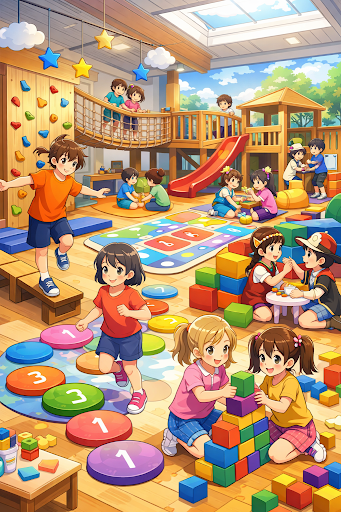
Thoughtfully designed play stations do much more than entertain children, they create purposeful environments where learning happens naturally through action and interaction. When spaces are planned with intention, play becomes a powerful medium for development rather than unstructured free time.
Well-designed activity-based spaces support learning by:
- Encouraging movement and coordination: Climbing frames, balance paths, and interactive floor games help children develop gross motor skills and body control. These activities strengthen muscles, improve balance, and support healthy physical growth.
- Stimulating creativity and imagination: Open-ended play zones, role-play corners, and creative stations allow children to imagine, explore, and express themselves freely. This nurtures originality, problem-solving, and flexible thinking.
- Promoting peer interaction and communication: Shared play areas naturally invite collaboration. As children play together, they learn to communicate ideas, listen to others, and work as part of a group, skills essential for both academic and social success.
- Reducing stress and anxiety: Playful environments provide emotional release. Movement and fun-filled activities help children relax, regulate emotions, and return to classrooms more focused and calm.
By integrating play stations into everyday school life, learning becomes an experience children look forward to, active, engaging, and deeply enriching rather than passive or stressful.
The Role of Structured Play in Building Essential Life Skills
While free play allows children to explore independently, structured play adds purpose and direction to these experiences. Guided activities, age-appropriate games, and planned play sessions help children translate enjoyment into meaningful skill development.
Structured play supports holistic growth by:
- Developing communication skills: Games that involve rules, teamwork, or storytelling encourage children to express ideas, listen to others, and respond thoughtfully. Over time, this builds confidence in speaking and interaction.
- Building cooperation and teamwork: Group activities teach children how to work together, share resources, and respect turns. These experiences help them understand collaboration and collective success from an early age.
- Strengthening focus and self-discipline: Structured play introduces simple rules and boundaries. Following instructions during play helps children improve attention span, patience, and the ability to complete tasks.
- Encouraging confidence and independence: When children successfully participate in guided activities, they experience achievement. This boosts self-esteem and encourages them to try new challenges without fear.
By blending fun with structure, play becomes a powerful tool for nurturing life skills that support both academic learning and personal growth, making education more balanced and meaningful.
Check Out | The Truth Shall Set Them Free: Building Honest, Brave Learners
Greater Noida World School, Sigma I: Where Play Meets Purposeful Learning
Greater Noida World School, Sigma I, one of the best CBSE schools in Greater Noida, takes pride in creating an environment where learning begins with joy. The school believes that children thrive best when they are free to move, explore, and engage, making play an essential part of everyday learning rather than a separate activity.

At Greater Noida World School, play-based spaces are thoughtfully designed to support holistic child development, ensuring that physical movement, creativity, and social interaction are seamlessly woven into the school experience.
Highlights of Play-Based Learning at Greater Noida World School
- Vibrant play stations and activity zones that encourage movement, coordination, and physical confidence, helping children develop strength and balance in a safe, engaging environment.
- Fun-filled activity spaces that stimulate imagination and creativity, allowing children to explore, role-play, and express themselves freely through guided and open-ended play.
- Structured play opportunities that promote teamwork, communication, and cooperation, helping students learn how to interact positively with peers while building essential social skills.
- Stress-free learning environments where playful engagement reduces anxiety, boosts happiness, and fosters a positive attitude toward school and learning.
At Greater Noida World School, play is not seen as a break from academics, it is a pathway to deeper engagement and confidence. By integrating activity-based learning into daily routines, the school ensures that children associate learning with excitement, curiosity, and enjoyment.
Through its vibrant play stations and thoughtfully planned activity spaces, Greater Noida World School, Sigma I demonstrates that joyful learning lays the strongest foundation for confident, well-rounded, and enthusiastic learners, making school a place children look forward to every day.
For more information on this and other such schools in the area, check out this list of the best schools in Greater Noida.
 as a preferred source on