







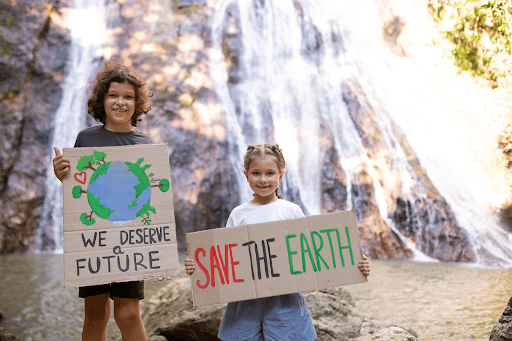

The world stands at a critical juncture where environmental degradation demands immediate action. While global leaders debate policies, a quiet revolution is unfolding in preschool classrooms across India—one that recognises children as the most powerful agents of change. Salwan Montessori School in Gurugram exemplifies this shift, where sustainability education begins at age three, not as an afterthought but as a foundational pillar.
In this article, we explore how ancient Indian pedagogical wisdom converges with modern sustainability frameworks, why early childhood represents the golden window for environmental education, and practical approaches that transform toddlers into eco-conscious global citizens.
Also Read | Green Brights, Bright Minds: Salwan Montessori School’s Blueprint for Sustainable Early Education
The Ancient Wisdom Framework in Modern Early Education
Eastern philosophy has long understood what modern neuroscience is only beginning to prove: human development is multidimensional, requiring attention to body, mind, and spirit. This holistic approach offers profound insights for contemporary early childhood education.
Understanding Pancha Kosha in Child Development
The five koshas—Annamaya (physical), Pranamaya (energy), Manomaya (mental), Vijnanamaya (wisdom), and Anandamaya (bliss)—represent interconnected layers of human existence. A three-year-old learning to plant saplings isn't just developing motor skills; they're experiencing joy, building knowledge, and nurturing their physical body simultaneously. This integrated development model aligns perfectly with NEP 2020's vision of comprehensive growth.
Why Holistic Development Matters for Sustainability
Environmental consciousness isn't purely intellectual. It requires emotional connection to nature, physical engagement with the earth, and wisdom to understand interconnected ecosystems. Children educated through the Pancha Kosha lens don't just learn about recycling—they feel the joy of creation and experience the satisfaction of responsible action.
Why Sustainability Education Must Begin at Age Three
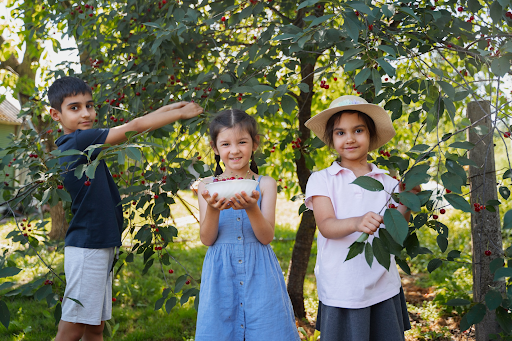
The preschool years represent humanity's most receptive phase for learning. Children between three and seven possess extraordinary neuroplasticity, insatiable curiosity, and minimal conditioning—qualities that make them ideal students of environmental stewardship.
The Neuroscience Behind Early Environmental Learning
According to NEP 2020 research, 85% of brain development occurs by age six. During these formative years, neural pathways form rapidly, establishing patterns that persist throughout life. A four-year-old who learns to conserve water isn't memorising rules—they're hardwiring conservation as a natural behaviour.
Natural Connection: Children as Intuitive Environmentalists
Young children possess an innate affinity for the natural world. They delight in mud, marvel at insects, and feel genuine distress when plants wither. This developmental stage represents evolution's gift to environmental education. Preschoolers don't need convincing that nature matters—they already know it instinctively.
Key advantages of early sustainability education:
- Habits formed before age seven become automatic behaviours
- Sensory learning makes abstract concepts tangible through direct experience
- Play-based approaches associate environmental responsibility with joy
- Young children influence family behaviours, creating ripple effects beyond the classroom
Integrating SDGs into Preschool Curriculum: A Practical Approach
The United Nations' Sustainable Development Goals outline an ambitious roadmap for planetary health. However, these seventeen objectives weren't designed for preschool audiences. The challenge is making global issues meaningful to children still mastering basic self-care.
From Global Goals to Classroom Actions
Effective SDG integration requires radical simplification without losing substance. Instead of explaining SDG 6 through statistics, successful programs let children water plants with leftover drinking water. Rather than lecturing about responsible consumption, they facilitate recycling drives where students transform "waste" into useful objects. This experiential approach makes abstract challenges concrete.
Moving Beyond Token Green Days
Many schools address environmental education through annual tree-planting or occasional "green days." While well-intentioned, these isolated events rarely produce a lasting impact. Genuine sustainability education demands integration across all learning domains—language lessons incorporate nature poetry, math activities involve counting seeds, and art projects utilise recycled materials.
The Role of Parents in Early Sustainability Education
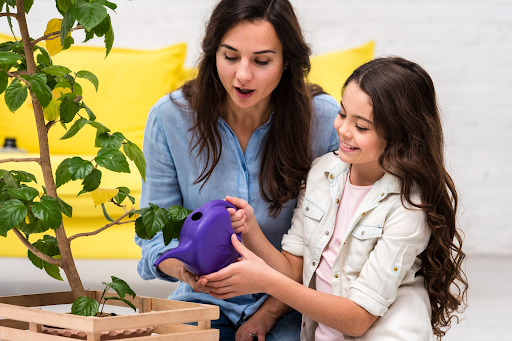
Preschool occupies only a fraction of a child's waking hours. Without parental reinforcement, even excellent school-based environmental education achieves limited results. Progressive preschools recognise that environmental education requires family involvement.
Building the Home-School Partnership
Parent workshops addressing nutrition, sustainable consumption, and energy conservation create shared understanding. When children learn about composting at school and find parents practising it at home, the lesson becomes normalised. This consistency transforms sustainability from a school subject into a lifestyle.
Innovative Pedagogical Tools for Green Learning
Traditional teaching methods fail spectacularly with preschoolers. Young children learn through movement, exploration, and play. Effective sustainability education requires age-appropriate tools that engage multiple senses simultaneously.
Play-Based and Experiential Methods
Toy-based pedagogy transforms environmental concepts into tangible experiences. Puzzles depicting ecosystems, blocks representing renewable resources, and role-play scenarios make abstract ideas concrete. A three-year-old doesn't understand "carbon footprint" intellectually, but comprehends that walking reduces pollution—especially when learned through puppet shows or storytelling.
Multiple Intelligence Centres for Diverse Learners
Resource rooms featuring diverse learning centres—literacy corners with environmental books, science stations for experiments, kitchen areas for nutrition exploration—ensure every child accesses sustainability education through their strongest learning pathway. This differentiated approach prevents any student from being left behind.
Check Out | From Head to Heart to Hands: The Transformative Power of Waldorf Education in Modern Learning
Salwan Montessori School, Gurugram: Where Ancient Philosophy Fuels Tomorrow's Eco-Warriors
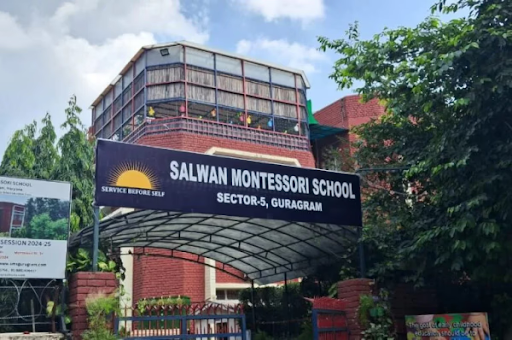
Established in 1999 under the Salwan Education Trust, Salwan Montessori School operates from a 1,000 square meter campus in Sector 5, Gurugram, serving approximately 250 students aged 3-7 years. The school embodies its motto "Tamso Ma Jyotirgamaya" through pioneering sustainability-focused early childhood education.
SMS launched its Green School Mission in May 2025 with monthly themed celebrations. The "Say No to Plastic" campaign collected 170 kg of plastic waste, responsibly recycled through NGO partnerships. Project Greenovate encourages children to transform discarded materials into creative projects, demonstrating tangible environmental contributions from preschoolers.
SMS developed a unique SDG Book for Children, making the United Nations goals accessible through age-appropriate storytelling and puppetry. The Jadui Pitara program offers curated educational materials—toys, puzzles, games—aligned with National Curriculum Framework goals, ensuring learning feels joyful rather than obligatory.
The ME Programme features dedicated resource centers including literacy corners, manipulative stations, music centres, dramatic play areas, kitchen corners, and science exploration spaces. Each centre offers multiple entry points for sustainability education, ensuring diverse learners have access to environmental concepts through their cognitive strengths.
SMS uniquely bridges ancient philosophy with contemporary sustainability goals. "Vasudhaiva Kutumbakam" (the world is one family) connects to SDG 17's global partnerships. "Sarve Bhavantu Sukhinah" (may all be happy) aligns with health objectives. This cultural rooting helps children understand that environmental stewardship is deeply embedded in their heritage.
The Parent Academy initiative offers workshops on child development, nutrition, and sustainability practices, equipping families to reinforce environmental values at home. The "Eco Fit Summer" initiative provides project-based learning during breaks, keeping environmental engagement active year-round through growing plants, crafting with recycled materials, and water conservation.
Programs like Apple Week, Salad Month, and Fruit Chaat Parties teach nutrition while emphasising locally-sourced foods. Monthly Energy Conservation Drives include "lights off" activities using natural sunlight, nature walks, and outdoor meditation. No Bag Day initiative removes heavy backpacks monthly, creating space for activities focused on Pancha Kosha development—pottery, storytelling, yoga—while reducing resource consumption.
Salwan Montessori School, Gurugram, demonstrates that sustainability education and holistic child development aren't competing priorities—they're complementary approaches that strengthen each other. By integrating ancient wisdom with contemporary environmental science, the school prepares young learners to navigate an uncertain ecological future with both cultural grounding and adaptive capacity. Discover how your child can become an eco-conscious changemaker from their earliest years.
For more information on this and other such schools in the area, check out this list of the best schools in Gurgaon.
 as a preferred source on