Nestled along the banks of the river Mula Mutha is the city of Pune which stands as one of the largest and populous cities, embracing the rich social, cultural and historical significance.
Yerwada is one of the most densely populated areas in Pune. In February 1952, some of the Jesuits from De Nobili College, Ramwadi, started the Fatima Tamil Primary School in order to educate the Tamil children of the slums of Yerwada. The people comprised of very poor and lower income families who had migrated to Pune from the neighbouring districts as well as from Tamil Nadu in search of work. Fr. Sebastian Mascarenhas, S.J. was responsible for providing a seemingly permanent site for the school and parish by purchasing a plot on the bank of the river Mula Mutha entitled "Aga Khan's out-house". It was eventually occupied by the sacristan and his family. Fr. Sebastian resided in a corner of the barracks. A structure of seven classrooms had been built with the help of diocesan funds.
In 1970, the school was converted to an English medium school. In June 1974, the Jesuits handed over this parish and Fatima High School to the Salesians. Fr. Olivio Miranda was the first Salesian priest in-charge and Bro. Joseph Mascarenhas was the first Salesian principal. The community resided at the Don Bosco Youth Centre at Koregaon Park.
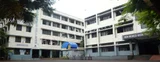
The early days were tough. The school till Std. IX was housed in shanties unfit for use as class-rooms. It lacked adequate infrastructure, having neither laboratories nor a library. It was a coeducational institute and catered to the poorest of the poor. The church too was in a derelict state. Assisted by the clerics of the Youth Centre, various initiatives such as social service and supervised night study for slum children were taken up. Fr. Olivio was succeeded by Fr. P.D. Thomas and then by Fr. Michael Mascarenhas in 1977. The contract for the new property was finalised on March 8, 1978. The school and parish hall were shifted to a tin-shed which formed the new school and parish hall. In 1979, the Fatima High School was renamed Don Bosco High School. The School was housed in a makeshift asbestos structure with ten small rooms. The school was in two shifts. The secondary in the morning and the primary in the afternoon. Initially, children had to be forcibly brought into the school to secure the requisite strength. Most of the students hailed from families of lower economic strata and were provided with uniforms and books. During these days many adjustments had to be made. The classrooms being so near to each other, the staff and students had to endure many inconveniences. Yet there was a lively spirit of involvement and participation. Fr. John Samala the newly appointed Principal was quite strict, setting stringent rules with regards to discipline and insisted that students converse only in English. He initiated some refreshing activities- competitions, quizzes. Students were enrolled for Elementary and Intermediate drawing grade examinations, setting new pathways during his tenure.



 as a preferred source on
