







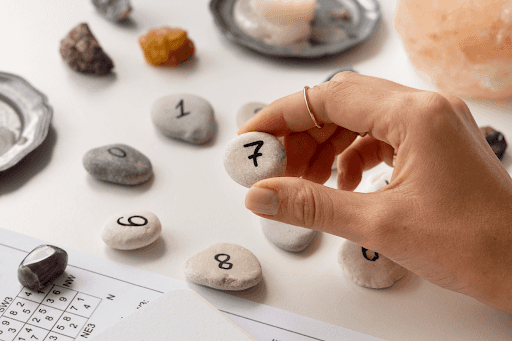

Imagine a school where kids can solve hard multiplication problems in seconds, without using calculators or writing out long steps. This isn't magic; it's Vedic Mathematics, an old Indian way of making maths fun and challenging for your brain. Vedic Maths uses natural concepts and patterns to make computations faster, easier, and more fun, unlike traditional approaches that depend primarily on memorisation.
In today's competitive academic landscape, schools are recognising the immense value of integrating these time-tested techniques with modern pedagogy. One of the best schools in Sector 62, Noida, ASPAM Scottish School, Sector 62, Noida, has embraced Vedic Maths as a core component of its curriculum to enhance mental agility and mathematical confidence among students.
In this post, we'll look at what makes Vedic Mathematics so useful, go over the main methods that make hard calculations easier, see how it improves cognitive skills, and find out how modern schools are employing this old knowledge to get children ready for success in the future.
Also Read | The NIIT Math Lab Experience
What is Vedic Mathematics?
Vedic Mathematics is an interesting link between old knowledge and the learning demands of today. Knowing where it came from and what it stands for helps you understand why this system is still popular in today's classrooms.
Ancient Wisdom Meets Modern Learning
The Vedas are ancient Indian texts that are the basis for Vedic Mathematics. In the early 1900s, Swami Bharati Krishna Tirthaji found and put together these mathematical ideas again, calling them 16 sutras (word formulae) and 13 sub-sutras. These little formulas hold powerful methods that make math operations much easier.
What makes this system remarkable is its relevance today. While developed thousands of years ago, these methods align perfectly with modern educational goals of developing critical thinking and problem-solving abilities rather than just mechanical computation.
The Core Philosophy
The beauty of Vedic Maths is how simple and lovely it is. Students can picture each strategy in their minds because they follow logical patterns. This means they don't have to do long written computations. The method turns problems that take several steps into answers that only need one line. This makes maths feel less like a chore and more like a fun game for the mind.
This technique helps children comprehend how numbers are related, spot trends quickly, and come up with their own ways to get things done. Instead of following strict rules, students learn to think more flexibly and find many methods to get to the right solution.
Key Vedic Maths Techniques That Transform Learning
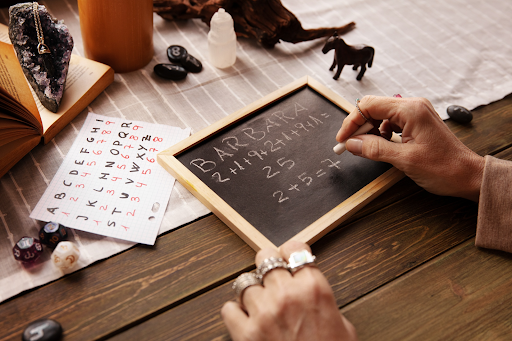
When we look at some methods, we can see how powerful Vedic Mathematics is. These strategies don't merely make calculations faster; they also affect the way pupils see and use numbers.
1. Multiplication Made Easy
The Nikhilam Sutra, often known as the base method, changes how we multiply numbers that are near to powers of 10. Think about multiplying 98 by 97. Traditional methods take a lot of steps, but this one employs base 100, which lets kids figure out the solution in their heads in seconds by seeing how distant each number is from the base.
This approach particularly helps when dealing with large numbers or during competitive examinations where time matters. Students develop confidence as they realise they can outpace calculators with practice.
2. Swift Division Strategies
Students are typically scared of division, but the Paravartya Sutra changes that. The transpose and apply method, which is what this technique is called, makes difficult divisions easier to understand by breaking them down into smaller parts. Instead of learning how to do long division the old-fashioned way, kids learn how to work with numbers in a more natural way.
The strategy works great for algebraic divisions as well, which helps pupils become ready for higher-level math. Once they understand it, students can solve division problems that used to appear hard with amazing ease.
3. Quick Squaring and Algebraic Applications
With methods like Dwandwa Yoga, squaring numbers happens almost instantly. For example, if you know the pattern, squaring 25 is as easy as doing it in your head. Students learn how to break numbers down in a smart way and use different formulas that work for different ranges of numbers.
Vedic Maths is more than just maths; it also includes algebra. It becomes easier to learn how to solve equations, break down expressions, and make complicated algebraic words simpler. This knowledge is very helpful for pupils who are getting ready for competitive tests where they have to solve algebra problems quickly.
How Vedic Maths Builds Mental Agility and Problem-Solving Skills
Vedic Mathematics has a big effect on cognitive development and overall academic confidence, in addition to making calculations faster. The benefits reach into many areas of learning and personal growth, such as:
1. Enhancing Cognitive Development
Consistent application of Vedic Maths procedures fortifies brain pathways linked to arithmetic processing and spatial reasoning. These strategies help students concentrate better since they require them to focus on mental images. Memory retention improves naturally since the strategies follow logical patterns instead of random rules.
The method works with both sides of the brain. The left half does logical sequencing, and the right side sees patterns and relationships. This whole-brain interaction makes learning pathways stronger.
2. From Fear to Confidence
A lot of kids have math anxiety, which is generally caused by failing a lot or being confused by traditional approaches. Vedic Maths gives you a new beginning. When kids can do fast math problems well, their attitude towards arithmetic changes. Little wins add up to real confidence.
This cycle of positive reinforcement is very important during the early years. Students start to volunteer answers in class, get more involved, and look at hard problems with interest instead of fear.
3. Real-World Applications
The abilities you learn in Vedic Maths go much beyond what you need to do well on tests. Students find these approaches quite helpful when taking competitive tests like the Olympiads, when speed and accuracy decide who comes in first. It's easy to do everyday things like figuring out how much to spend, checking bills, and figuring out how much to save.
Moreover, the logical thinking patterns developed through Vedic Maths provide a strong foundation for advanced subjects like physics, chemistry, and computer science, where mathematical reasoning plays a central role.
The Science Behind Speed and Accuracy
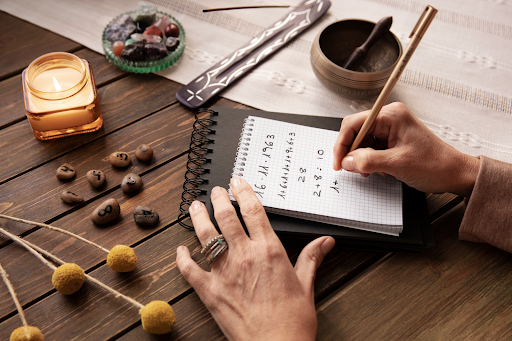
Learning based on patterns uses distinct cognitive processes than memorising things by heart. When kids see patterns, they use higher levels of processing that make their memories stronger. Vedic Maths methods take advantage of the brain's innate ability to see patterns and symmetry.
Researchers in education have found that kids who learn Vedic Maths may do maths faster. Research indicates that regular practice can decrease problem-solving time by as much as sixty percent in comparison to traditional methods. More crucially, when pupils get better in maths, their error rates go down.
Making Mathematics Fun: Beyond Traditional Learning
One of the most important things about Vedic Mathematics is how it transforms how pupils feel about numbers. Vedic Maths is a great way to study in a competitive or cooperative way. Students make it feel like a game by challenging each other to calculating races. It feels more like solving puzzles than doing homework with the techniques.
Students benefit from the analytical thinking skills they learn in Vedic Maths for the rest of their lives. The skill of breaking down complicated problems into smaller, more manageable parts is useful in many real-life situations. Students get better at managing their time when they learn how to rapidly figure out how hard a problem is and use their mental resources wisely.
Check Out | Unlocking Mental Math Mastery
ASPAM Scottish School: Blending Ancient Wisdom with Modern Pedagogy
ASPAM Scottish School, Sector 62, Noida, is a top CBSE-affiliated school that shows how education can be new and exciting. The school runs on the idea that "every child is unique," and its motto is "Educate to Empower." One of the best CBSE schools in Noida, ASPAM Scottish School, received the 'Innovative Practices for Academic Excellence' award at the World Education Awards 2018.

Vedic Mathematics is a key part of the school's Middle School curriculum, which includes programs to improve analytical skills. This old methodology fits well with newer teaching methods, such as Bloom's Taxonomy and Marzano's methods, which are more advanced. Students have access to the best facilities, such as dedicated maths labs and sophisticated classrooms with audio-visual accompaniment.
The school's all-around learning environment goes beyond just academics. Students learn about maths by doing things in specific clubs like the Maths Club and the Robotics Club. Vedic Maths brings the aim of creating well-rounded, confident, and responsible people to life by not just increasing students' speed with maths but also giving them real confidence in their arithmetic skills. This prepares them for the challenges of the 21st century while honouring tried-and-true ways of learning.
Want to give your child an edge in maths by teaching them in new ways? Find out how ASPAM Scottish School's one-of-a-kind way of teaching will help your kid reach their greatest potential.
For more information on this and other similar schools, check out this list of the best schools in Noida.




 as a preferred source on