









Walk through any school's main corridor, and you'll find a similar display: photographs of exam toppers, board rank holders, national-level athletes, alumni who became ministers or CEOs. These walls are important. Academic achievement deserves to be celebrated. But if that's all a school chooses to remember — the scores, the ranks, the trophies — it's preserving only the surface of its own story, and quietly forgetting the people who made that surface possible in the first place.
The greatest contributors to any institution are rarely the ones with the highest marks. They're the teachers who stayed for decades. The housemasters who turned restless teenagers into disciplined young men. The benefactors who funded the building that still stands. The alumni who came back, long after they had any obligation to, because they still felt the institution was theirs. These are the people who shape a school's culture, carry its values forward, and give it the kind of continuity that makes it mean something to generation after generation of students. And yet, it's these people that institutional memory most often struggles to hold onto. We see a great example of this with one of the top boarding schools in India, The Scindia School, and its over 100 years of history shows multiple such moments where the school honors its alumni who have achieved a great deal after moving out of the school.
What Schools Remember — and What They Often Forget

The Toppers on the Wall
Schools are good at celebrating outcomes. The rank holder gets their photograph displayed. The national-level sportsperson gets a trophy in the cabinet. The alumni who make it to a prestigious university get mentioned in the newsletter. None of this is wrong — outcomes matter, and celebrating them sends students a message about what's possible. But outcomes are visible. They're easy to quantify and easy to display. They make for good marketing.
The people who made those outcomes possible are harder to put in a frame.
The People Who Actually Built the Place
Behind every school's story of academic success is a longer, quieter story about the humans who built its character. A teacher who spent fifteen years figuring out exactly how to teach a difficult concept, and refined that method year after year until it became something genuinely effective. A principal whose vision transformed what the school believed it was for. A housemaster who knew every boy in his house by name, knew which ones were struggling before they'd admitted it to themselves, and created the kind of structured, caring environment that let them find their footing. A benefactor who gave generously at a moment when the school needed it, asking for nothing in return. An alumnus who came back year after year — not to revisit their own glory but to contribute something to a place they still felt responsible for.
These people don't show up in exam results. But a school without them wouldn't have had those results in the first place.
Also Read| Why Holistic Education Matters
The People Who Shape an Institution's Character

Teachers and Housemasters
There's a particular kind of institutional contribution that's difficult to measure and easy to undervalue: the long-serving teacher. Not because of a single brilliant lesson or a year of exceptional results, but because of sustained presence. Because of eighteen years in a classroom, knowing hundreds of students, watching them develop, showing up with the same commitment in year seventeen that they brought on their first day. These teachers become part of the school's connective tissue. Students who passed through a decade apart find, when they meet, that they share a reference point — a particular phrase a teacher always used, a method they still use to approach a problem, a standard they still hold themselves to because someone once held it for them.
Housemasters occupy a unique dimension of this. In boarding schools especially, the housemaster is often the adult a student has the most sustained relationship with — more than a classroom teacher, sometimes more than a parent during term time. A good housemaster creates a house culture that outlasts their own tenure. Former students who might not remember the specifics of their O-Level syllabus will remember, clearly and with feeling, what it was like to live in a house that someone ran with genuine care.
Benefactors and Alumni
Institutions are also shaped by people who give. Sometimes financially, sometimes with time, sometimes with the less tangible gift of returning and staying connected. A benefactor who funds a scholarship that changes a student's trajectory has made a contribution that compounds forward — that student goes on to carry the institution's values into the world. An alumnus who returns to mentor current students or participates in school events decades after they graduated signals something important to the students watching: that this place is worth coming back to. That belonging here doesn't end when you leave.
What Institutional Memory Actually Is
Institutional memory is the accumulated sense of what a school stands for — the values, traditions, and human stories that give an institution its particular character. It's what makes one school feel meaningfully different from another, even when their exam results look similar. And it doesn't maintain itself. It has to be actively tended. Schools that are good at this create structures for it: scholarship funds named after people who shaped the institution, trophies that honor specific contributions, events that bring together former students and current ones, spaces where the school's human history is made visible and felt — not just its academic history.
Why Preserving This Memory Matters
It tells students where they come from
Students who know the story of their institution — who built it, who shaped it, who gave something of themselves to make it what it is — carry a different relationship to the school than students who simply attended it. They understand that what they've inherited was created by people who chose to invest in something larger than themselves. That understanding has an effect on how they show up and on what they feel obligated to pass forward.
It Creates a Living Culture, Not Just a History
The most important thing about institutional memory is that it isn't static. When a school honors a former teacher, it isn't just commemorating the past — it's telling its current students something about what the school values in the present. Dedication. Mentorship. Long service. Care. When an alumnus comes back and participates actively in school life, it demonstrates that the connection between a person and their school can be ongoing, generative, and mutual — not just nostalgic. Institutional memory, kept alive this way, becomes culture. And culture is what actually shapes students, far more than any single policy or program.
Also Read| Exploring Chemistry through Curiosity and Experimentation
The Scindia School: A Recent Example Worth Noting
Honoring Mr M. S. Bedi
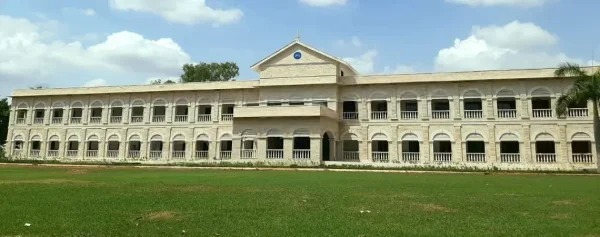
On 13th July 2026, The Scindia School — one of India's oldest and best CBSE boarding schools, located within the historic Fort of Gwalior — held an event that illustrated exactly this kind of institutional care. The occasion centered on two tributes, each recognizing a different kind of contribution to the school's life.
The first was the inaugural M. S. Bedi Football Trophy, instituted by the former students of Mr M. S. Bedi — a master who served The Scindia School for 18 years and was Housemaster of Ranji House. The trophy will henceforth be awarded to the winners of the annual football match between the Scindia Old Boys and current students. That detail matters: the trophy doesn't sit in a cabinet — it lives in an ongoing contest between generations, connecting people who attended the school decades apart through a shared act of play and competition. In the evening, a panel discussion at the Madhav Pavilion brought together Mr Bedi and several former students, who spoke about the discipline, encouragement, and belief he had invested in them. The stories were specific and warm — the kind that only come from a relationship that genuinely shaped someone.
The Rajnish Rai Kumar Memorial Scholarship
The second tribute of the day was the Rajnish Rai Kumar Memorial Scholarship, presented by the Rajnish Rai Kumar family to student Dev Mittal in recognition of academic promise. Mr Rahul Kulshreshtha, former SOBA President, spoke about Mr Kumar's life and his contribution to the Scindia fraternity. The scholarship carries his name forward in the most practical way possible — not as a plaque, but as support for a student who is still becoming who they'll be. That's a particularly meaningful form of institutional memory: the past directly enabling the future, in the name of someone who clearly believed in both.
What the 13th July event at Scindia captured, with considerable grace, was the full range of people an institution should choose to remember: the long-serving teacher, the dedicated benefactor, the alumnus who remained connected, the family who chose to honor a legacy through something practical and forward-looking. These aren't different categories of contribution — they're different expressions of the same commitment to a place and what it stands for.
Conclusion
Great schools don't just produce great alumni. They remember the people who made that possible. Teachers who gave decades. Housemasters who gave attention. Benefactors who gave resources. Alumni who gave their time and loyalty long after they were owed nothing. Honoring these contributions isn't sentimentality — it's how an institution keeps its values legible to each new generation of students. It tells them: here is what we believe matters. Here is the kind of contribution we hold in esteem. Here is what it looks like to belong to something beyond yourself. That message, carried forward deliberately, is what turns a school from a place students attend into an institution they feel part of for the rest of their lives.
For more information on this and other boarding schools, check out this list of the best boarding schools in India.
 as a preferred source on