







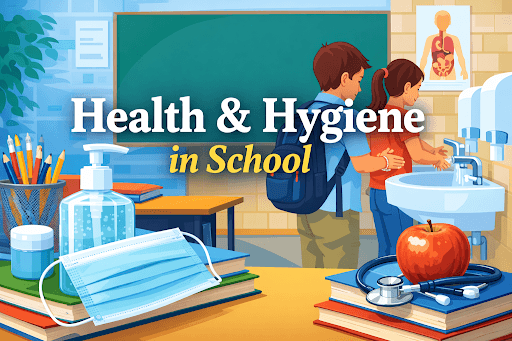

While applying for school admissions, parents often focus on academics, results and facilities available for the children. However, one burning question is just as important, i.e., how clean is the school where your child spends 6 to 8 hours every day?
Even though the COVID-19 pandemic has taught us to be more cautious regarding the common cold and cough, children under the age of twelve still fall prey to these quite often. In fact, studies have revealed that nearly 22 million school days are lost annually due to the common cold alone; 20% of such cases are linked to health and sanitation.
This makes one thing clear, that taking the school’s hygiene standards into account is just as important as considering it’s academic benefits. While academics are always a priority, the physical well-being of a student is the foundation of all learning. This is something that Manav Rachna International School, one of the best schools in Noida, very well recognises as an aspect of well-being and stands out for its consistent focus on health, hygiene, and overall student well-being.
How is Health & Hygiene a Part of School Education?
The human immune system undergoes its most rapid development during the first few years of life, with significant maturation occurring up to the early teenage years. This makes younger children more susceptible to catching infections, which in turn makes their health take a backseat.
As children spend most of their working hours at school, it becomes important to ensure that the school environment does not hamper their health. Instead, ensuring proper health and hygiene at school should become the norm, especially since studies indicate that studying in clean and well-ventilated environments has been known to improve student concentration by almost 15%.
However, this is something that schools still need to work hard on. While the Ministry of Education's UDISE+ data shows that sanitation infrastructure has improved over the years, consistent maintenance and hygiene practices remain a challenge in many schools.
Also Read | Healthy and Hygienic Learning: Promoting Well-Being
What Actually Defines a Hygienic School Environment?
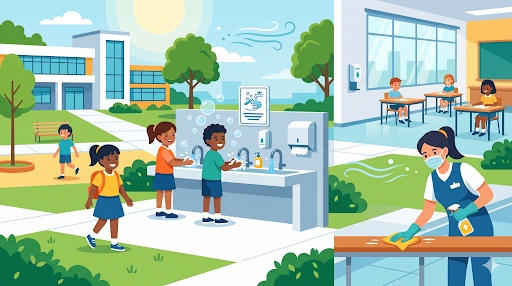
When we talk about hygiene in a school, we often think of clean hallways and white-tiled bathrooms. While those are important, a truly hygienic environment consists of systems in place to stay clean, day after day, whether or not there is a parent visit scheduled.
Here are some pointers that can help you identify a truly hygienic school environment:
- Consistent Maintenance: Whatever cleaning takes place, it must be a routine instead of being a practice before events or parent visits. Washrooms should be cleaned multiple times a day, not once in the morning and forgotten. Classrooms should be dusted and mopped daily. Cafeteria surfaces should be wiped down between batches. Most importantly, schools must have accountability in case any of this is questioned.
- Water, Sanitation, and Hygiene (WASH): The most basic pillar of hygiene and sanitation is what is usually termed as WASH. Statistics from global health bodies show that improving WASH facilities in schools can reduce gastrointestinal diseases by up to 30%. Schools must ensure that water tanks are cleaned every few months, with washrooms being disinfected regularly with medical-grade cleaners.
- Safe and Clean Common Spaces: Corridors, staircases, assembly halls, libraries, and labs are shared by hundreds of children every single day. Shared spaces reflect a school's overall standards. If they are clean, well-lit, and well-maintained, it usually means the school takes its responsibilities seriously across the board.
- Trained, Hygiene-Aware Staff: A hygienic school environment is also shaped by the people who run it. Canteen staff who handle food should be trained in basic food safety. Housekeeping staff should know what cleaning products to use, and where. This awareness culture, from the kitchen to the classroom, is what separates schools that genuinely care from those that simply appear to.
Hygiene Visibility: What Children See, Children Learn
One of the most crucial teachings about parenting, be it through parenting books or through real experiences, is that children learn through imitation. They observe and follow whatever they see happening around them, missing the capability to have a sound judgement on rights and wrongs.
This stands true to all experiences that children have, whether it is about cultivating certain behaviours in them or setting examples of a lifestyle. For example, if a child constantly notices that soap dispensers are empty, dustbins are never emptied, or washrooms where the taps do not work, they get the message that this is how things usually are. Chances are that, down the line, they too might not take hygiene that seriously as a part of their lifestyle.
However, when children see that their school takes cleanliness seriously, when they notice the staff cleaning regularly, when handwashing stations are functional and well-stocked, they start living by these practices. Cleanliness practices become a part of their daily routine, thus setting a precedent for healthy living.
Check Out | The Connection Between Health Awareness and Holistic Education
Manav Rachna International School, Sector 51, Noida: Setting Strong Examples of Health & Hygiene for Students
One of the premier CBSE schools in Noida, Manav Rachna International School is mostly recognised for its vision of progressive learning and its dedication on providing students with the best. The school emphasises skill-building in students, recognising its importance in the 21st-century educational scenario.
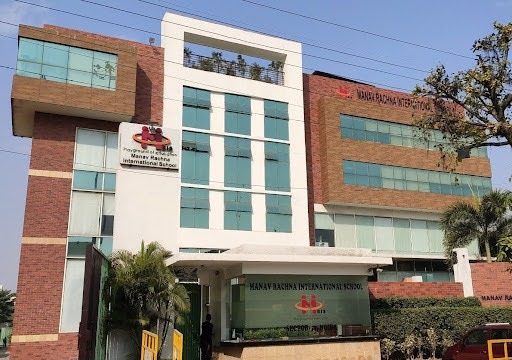
When it comes to health and hygiene, MRIS Noida takes a hands-on, structured approach. The campus maintains a well-equipped sickbay with medical facilities that are accessible to students at all times. This facility ensures that children receive prompt attention in case of injury or sudden illness during school hours.
In addition to this, the school also places a high priority on nutrition, ensuring that the food provided is both healthy and prepared under strict sanitary conditions. Classrooms and common areas are kept well-maintained, creating a comfortable learning environment. Students are encouraged to follow basic hygiene habits, which are reinforced through regular guidance and supervision.
The school also offers a Life Skills Programme, which includes education on personal health, hygiene, and responsible living as part of its broader curriculum. Facilities like a psychology lab and child development centre further underline the school's commitment to addressing not just physical, but also mental and emotional well-being.
Schools like Manav Rachna International School, Sector 51, Noida, demonstrate that it is entirely possible to create an environment that is both academically excellent and genuinely healthy for children. After all, in the end, the question is simple. Is the school just educating your child, or is it also protecting their well-being?
For more information on MRIS and other similar schools, check out this list of the best schools in Noida.
 as a preferred source on