









Maths! This subject is probably the most disliked subject for students. The positive and negative with fractions and integers confuse the students a lot. In addition to this, they are confronted with the complex equations of finding the value of x and y. The peak of the problem starts when the maths turns into solving long equations, differentiation, and integration.
But the fear of maths is not as big as it looks. In fact, maths is a subject that, when taught and learnt correctly, can be the favourite subject. These things were usually not taken care of. There is one school in Noida, Yadu Public School, that addressed this issue. Let us see how.
Also Read| Secure Creative High Paying Jobs at Yadu Public School
Why is there a fear of maths in students?
To understand how to eliminate this fear, firstly, we need to look at the root cause of this fear. Here we have mentioned some of them.
- Maths is an abstract subject- Unlike subjects like science, where they can actually see a plant grow while studying about it, maths is a subject that has numbers and variables. They cannot use a sensory approach towards it. This makes this subject different from others. It is like children cannot hold negative 3 in their hands and add 5 to it. Hence, maths is an abstract subject.
- Lack of structured learning in formative years(0-8)- The age between 0 and 8 is most crucial as a child’s brain is forming foundational neural connections and pathways. But our Indian curriculum and parents focus on building arithmetic concepts exclusively, which include counting, addition, subtraction, and multiplication tables. Instead, they should focus on learning concepts like pattern recognition, basic probability, logical reasoning, and sequencing.
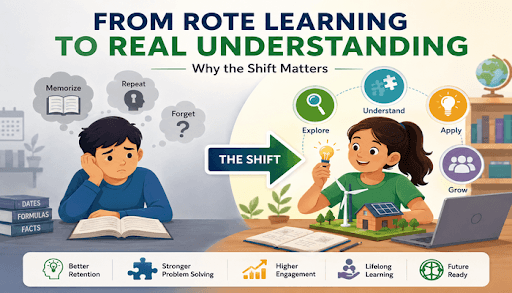
- Taught by rote instead of creativity- Rote learning is the biggest challenge that children face in the education system. And maths is the subject that cannot be learnt. It needs to be understood by building concepts. For example, the students can learn about symmetry only by dividing the shapes.
- Taught as facts, not skills to acquire- There is a slight difference between skill and fact. For instance, 7 multiplied by 8 is 56, which is a fact, but the ability to use this in different mathematical equations is a skill.
- Result-oriented rather than process-oriented- Our schools are so result-driven that they have forgotten to structure the process. If we start focusing on teaching the process, the result will itself align.
- Left-brain-dominant teaching methods- There are two hemispheres of our brain. The left one that processes the information in a linear, sequential, logical, and language-based manner. This is the strongest of a person who is naturally analytical and a sequential thinker. But most of the children are right-brain dominated and learn through visual patterns, spatial relationships, and holistic connections. And when these children enter maths class, they simply struggle and think that maths is not for them.
- Teaching different chapters separately instead of an integrated one- You must have also seen how chapters are divided in maths books, like chapter 3 is geometry and chapter 7 is probability. But the right way should be that they are integrated together as they overlap. For instance, fractions are the language of probability, data handling is applied arithmetic, and geometry is the visual face of algebra.
- Non-friendly teaching environment- Our Indian education system is all about mugging up, and this way is useless for maths, hence it becomes difficult to understand maths. Also, the learning pace of every child is different, and teaching them together in one class sometimes neglects this.
How to fill in these loops to help children improve mathematical skills?
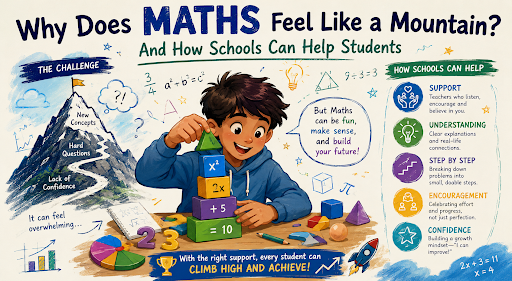
To help children out, certain changes can be made at every level. Here we have mentioned some of them.-
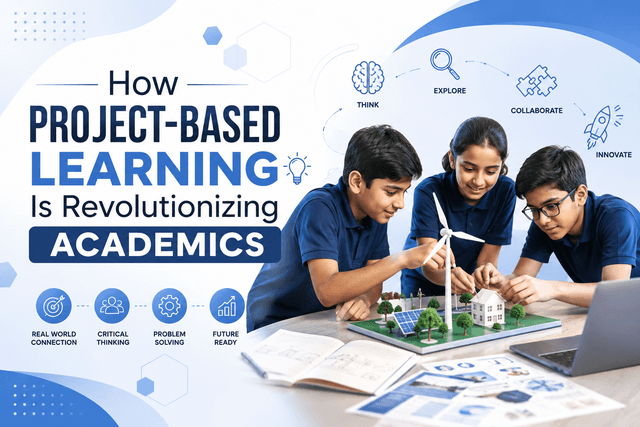
- Set up a Maths Lab with low-cost materials like geo-boards, fraction tiles, an abacus, 3D shapes, and number grids. One hands-on period per week per class, from Nursery to Class 8.
- Start with a 5-minute diagnostic quiz before every new chapter to understand which foundational concept is missing.
- Replace formula-first teaching with activity-first teaching.
- Reserve every Friday's last 10 minutes for a maths puzzle, number game, or magic square, instead of evaluating through marks, curiosity, and pressure.
- Award marks for even efforts and not just for right answers. This will help your child.
- Train teachers twice a year in concept-based questioning, like instead of asking what the answer is, ask why this method works?
- Organise a school Maths Festival once a year and eliminate contests, geometry art, Vedic maths speed rounds, and puzzle stalls.
These methods require foundational changes, which take time for implementation, but at the same time, once done, can actually change the whole narrative built for maths as a subject to fear!
Also Read| A Holistic Approach to Education at Yadu Public SchoolHow has Yadu School started working towards this approach?
Yadu Public School is one of the top day schools in Noida that offers admission to students from class nursery to class 12th. It follows the CBSE board with well-trained faculty having 30+ years of experience. The school uses practical approaches to teach maths. They have a dedicated maths lab with all the required props and tools.
To keep the learning level of the students of a class, the school offers remedial classes that help students understand the concepts slowly but efficiently, and they will not have the fear of being left behind. Schools also keep parents informed about the progress of their children by organizing parents ' and teachers' meetings and other parent workshops.
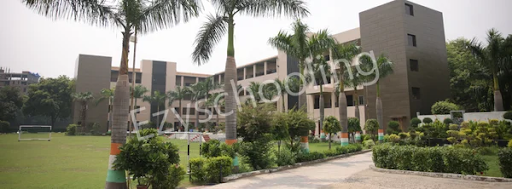
Very few schools mindfully teach the maths subject by focusing on these basic problems. But this school in Noida has taken a few measures to teach maths in an appropriate way-
- Concept-based learning methods
- Dedicated maths lab
- Activity-Based Learning
- Vedic Maths Integration
- Diagnostic assessment
- Process is marked not just by the answer
- Child-friendly classroom culture
- Cross-Topic Connections
- Parent involvement
All these ways give an edge to the students to understand the maths concept rather than mugging. This conceptual clarity today will help students clear the competitive exams tomorrow, as in those exams, you cannot just learn and write answers. You need to have basic conceptual clarity. So indirectly, this school is preparing students for those days.
If you are looking for such schools in Noida and nearby areas, you can check here.





 as a preferred source on