









Did you know that between the ages of 11 and 14, a child’s brain undergoes its most significant restructuring since toddlerhood? It is a statistic that often surprises parents, yet it explains so much of the turbulence associated with the middle school years. We often look at a sixth or eighth grader and see a young person who looks increasingly like an adult, but in reality, they are navigating a massive construction site inside their heads.
If you are a parent of a child in Grades 6 to 8, this probably does not surprise you. Many parents describe this phase as confusing, emotionally intense, and unpredictable. A child who once enjoyed school may suddenly resist it. Marks fluctuate. Attention spans change. Questions increase. Silence increases too.
Schools that understand this phase treat it not as a problem to be corrected, but as a transition to be guided. At Sapphire International School, one of the best schools in Noida, the middle school years are approached with this exact understanding. Let us see how!
Also Read | Enlightened Minds & Adept Hands: How SIS Noida Redefines 21st-Century Learning
Why Grades 6–8 Are a Turning Point in How Children Learn
Between the ages of 11 and 14, a child’s brain undergoes one of its most complex phases of development since early childhood. Neuroscience research shows that the prefrontal cortex, which controls planning, focus, and emotional regulation, is still developing. At the same time, emotional centers of the brain become more active.
This explains why children at this age often show:
- Strong opinions but inconsistent self-control
- Curiosity paired with sudden self-doubt
- A desire for independence alongside emotional sensitivity
Academically, learning also shifts in nature. Children move away from simple recall toward reasoning, comparison, and application. Many students struggle here, not because they lack ability, but because teaching methods fail to adjust to how their minds are changing.
The Shift from "What" to "How" and "Why" in the “Tween” Stage
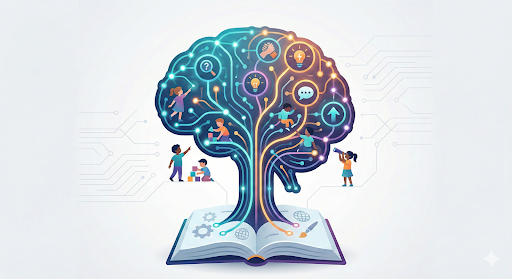
One of the most profound shifts in Grades 6 through 8 is the move from concrete to abstract thinking. In younger grades, learning is often about acquiring facts: the "what." But as children enter middle school, their developing brains crave the "how" and the "why." They are beginning to understand complex systems, nuances, and grey areas.
However, traditional education methods often miss this mark as the standard lecture-style format clashes directly with the adolescent brain’s need for autonomy and relevance. Sitting still and listening for hours is biologically difficult for a 12-year-old whose attention span is naturally fluctuating and whose body is teeming with energy.
To combat this, learning needs to be active. Studies have highlighted that students in active learning environments, where they discuss, problem-solve, and create, perform significantly better than those in passive lecture settings.
How Do Children Learn Best at This Stage?
Middle school students thrive when learning environments align with five key needs:
- Learning must feel Relevant: Children in this age group want to know why something matters. When lessons connect to real-life examples, current events, or everyday problems, attention improves dramatically. Relevance fuels motivation.
- Questioning should be Encouraged: This is the age of questioning rules, ideas, and assumptions. Classrooms that allow respectful debate and discussion help students develop clarity of thought rather than blind compliance.
- Mistakes must be Normalized: Research indicates that students who view mistakes as part of learning show up to 30% improvement in long-term understanding. When errors are treated calmly and constructively, students feel safe enough to try again.
- Emotional Safety Matters as much as Discipline: Students learn better when teachers recognize emotional fluctuations and respond with patience. A sense of emotional security allows students to focus rather than shut down.
- Independence Needs Guidance: Middle school is where responsibility should be introduced gradually. Time management, project planning, and self-reflection are skills that require mentoring. Expecting instant independence creates anxiety. Supporting independence builds resilience.
What Changes for Parents During Grades 6 to 8
Parents often feel unsure during this stage. Should they step back or stay involved?
Studies from the National Education Association suggest that students perform best when parents remain emotionally involved but avoid excessive academic control.
Helpful parental support looks like:
- Asking reflective questions instead of checking marks daily
- Listening without immediately correcting
- Valuing effort and growth over perfection
Children at this age want autonomy, but they still need reassurance. Emotional availability matters more than constant supervision.
Check Out | Collaborative Parental Engagement: Strengthening the Home-School Connection
How Sapphire International School, Noida, Supports Middle Schoolers
Sapphire International School in Noida was established in 2010 and has since built a reputation for nurturing leadership in every student. Affiliated with the CBSE board and compliant with the National Education Policy (NEP) 2020, the school operates with a clear vision: to raise future-ready global citizens who are grounded in strong values.
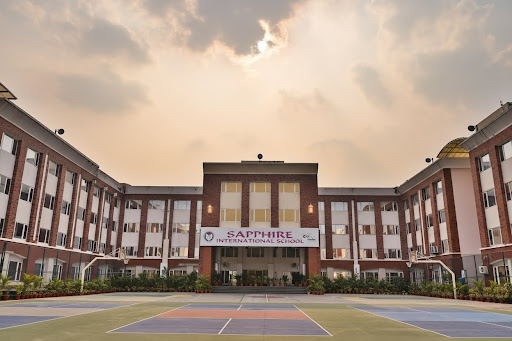
The school’s approach to middle school education is directly aligned with the understanding of the "construction site" inside an adolescent's brain. Moving away from old-school rote memorization, Sapphire International School adopts strategies that actively engage the developing mind:
- Inquiry-Based Learning: The curriculum challenges students to "Look Deep, Look Beyond, Look Within, and Look Around." This method encourages students to ask questions and connect their lessons to the real world, satisfying their craving for "how" and "why."
- Resource Diversification: Technology acts as a bridge to autonomy. Through the integration of tools like Google Chromebooks, students are empowered to research and create, helping them take ownership of their work.
- Assessment for Growth: Instead of relying solely on high-pressure exams that can spike anxiety, teachers use continuous observation and formative assessments. This helps students view mistakes as a normal, valuable part of the learning process.
Beyond academics, Sapphire International School actively promotes holistic development. Students are encouraged to explore interests and talents through a range of co-curricular and extracurricular activities.
These include:
- Sports and physical education
- Arts, music, and creative expression
- Clubs and activities that build leadership and teamwork
- Events and programs that strengthen communication skills
Such opportunities help students develop confidence, social skills, and emotional balance alongside academic growth.
Being one of the best CBSE schools in Noida, Sapphire International School also places strong importance on parent–school collaboration. Open communication channels and regular interactions ensure that parents remain informed and involved, creating a consistent support system for students at school and at home.
Together, these elements form a learning environment that supports students academically, emotionally, and socially through the middle school years and beyond.
For more information on this and other similar schools, check out this list of the best schools in Noida.
 as a preferred source on