







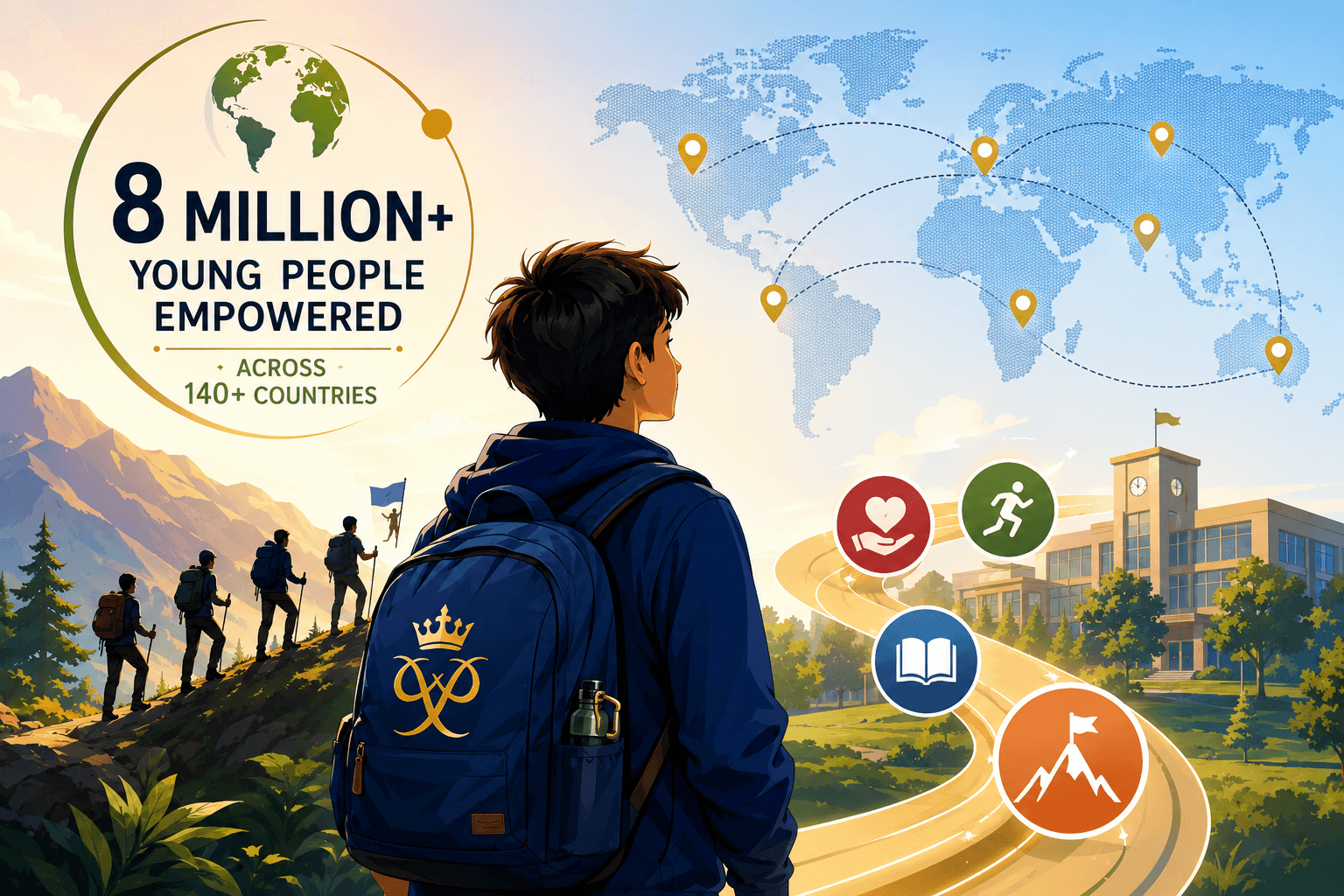

"If a programme has helped over 8 million young people across more than 140 countries grow into confident, responsible adults, shouldn't more parents know about it?"
That question rarely comes up during school admissions in India. Parents compare academic boards, board exam results, campus facilities and sports infrastructure. Some ask about coding labs or international exchange programmes. Yet very few ask whether a school offers opportunities that help children develop resilience, leadership and a sense of responsibility.
Perhaps that is because the Duke of Edinburgh's International Award, known in India as the International Award for Young People (IAYP), has quietly stayed in the background despite being one of the world's most respected youth development programmes. While it continues to run in more than 140 countries, encouraging young people to challenge themselves beyond classrooms, several Indian parents still do not know about it.
Some of the best residential schools in India, such as JAIN International Residential School, Bengaluru, have embraced the philosophy behind the Award by encouraging students to volunteer, take part in outdoor expeditions and build leadership through real experiences. This reflects a larger shift in education as more schools are beginning to believe that strong character deserves as much attention as strong grades.
Also Read | The Charm of Boarding Schools: More Than Just a Fiction Movie’s Fantasy
What is the Duke of Edinburgh Award, or IAYP?
The Award was founded in 1956 by Prince Philip, Duke of Edinburgh, along with educationalist Kurt Hahn and Lord Hunt. It started as a way to get boys who weren't part of the Scouts involved in something worthwhile outside of formal education. By 1957, the programme had extended to cover girls as well.
Over the years, the programme expanded far beyond the United Kingdom. Today, it is recognised across schools and organisations in Europe, Asia, Africa, Australia and the Americas.
In India, it operates as the International Award for Young People (IAYP). Students work towards three progressive levels:
- Bronze
- Silver
- Gold
Each advanced level demands significantly more time and a much deeper personal commitment. Completing a level takes anywhere from 6 months to a year and a half.
Participants are required to be working on four areas at once:
- A new skill, and it could be anything from coding to cooking to learning an instrument.
- Physical activity, chosen by the student, not assigned by a teacher.
- Voluntary service within the community.
- An adventurous journey, a real expedition planned and led by the students themselves, often through terrain none of them has seen before.
What Makes the Three Levels of IAYP Different?
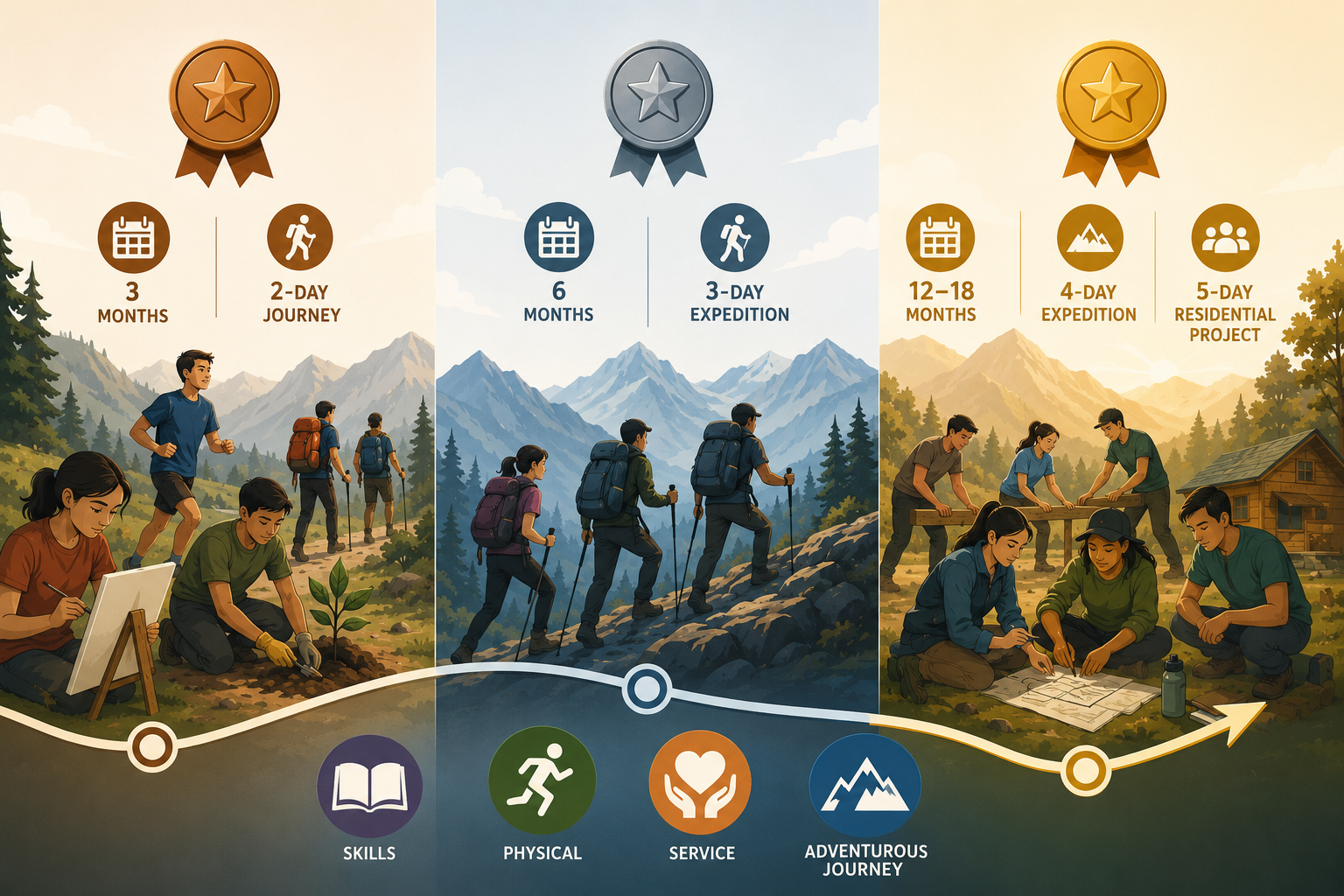
The three levels of IAYP are made different in the following ways:
- Bronze Level: For students aged 14 and older, the Bronze level requires students to commit at least 3 full months to the core sections. They complete volunteering, physical, and skills development activities on a weekly basis. They also carefully plan a 2-day adventurous outdoor group journey. It serves as the perfect introduction to the overall award framework.
- Silver Level: Students must be at least fifteen years old to officially start with the Silver level, as it demands a bit more focused effort from participants. The time commitment increases significantly to 6 full months of work. The outdoor journey naturally becomes a 3-day, highly challenging expedition.
- Gold Level: Designed for young adults over 16 years of age, the Gold level requires 12 to 18 months of unwavering dedication. The final expedition lasts for 4 gruelling days in wild terrain. Gold participants also must complete a 5-day residential group project. They work entirely away from home alongside strangers on community tasks.
Why So Few Indian Parents Know About It
India brought this award home in 1962, decades before several current school boards even existed in their present form. There are around 330 institutions authorised to run it across the country today. And yet participation still sits at roughly 13,000 students a year.
If we compare that with the United Kingdom, where the program began, the UK has around 450,000 young people working on it at any given time, even with a population that is barely a twentieth the size of India’s. That gap is not because of a lack of interest, but simply because people here are unaware.
Even in the United States, only about 7,000 of the 47 million eligible young people take part each year. So this isn't purely an Indian problem. But given how much Indian families already spend on coaching classes and exam preparation every year, it's fair to ask why a globally recognised program, already sitting right here since 1962, gets so little attention by comparison.
The answer thus, is simple, Indian students and parents haven’t ignored it. It’s just that they never got introduced to it.
Check Out | The 10 Hours Your Child Loses Every Week (And How to Get Them Back)
How JAIN International Residential School Brings This Philosophy to Life
JAIN International Residential School was established in 1999 under the Jain Group, founded by Dr Chenraj Roychand. Today, it houses over 750 students from Class V to Class XII, following CBSE, IGCSE, and IB curricula under one campus. The school is built on Gurukul principles fused with modern infrastructure, and has a student-teacher ratio of 8:1, tighter than most Indian boarding schools manage.
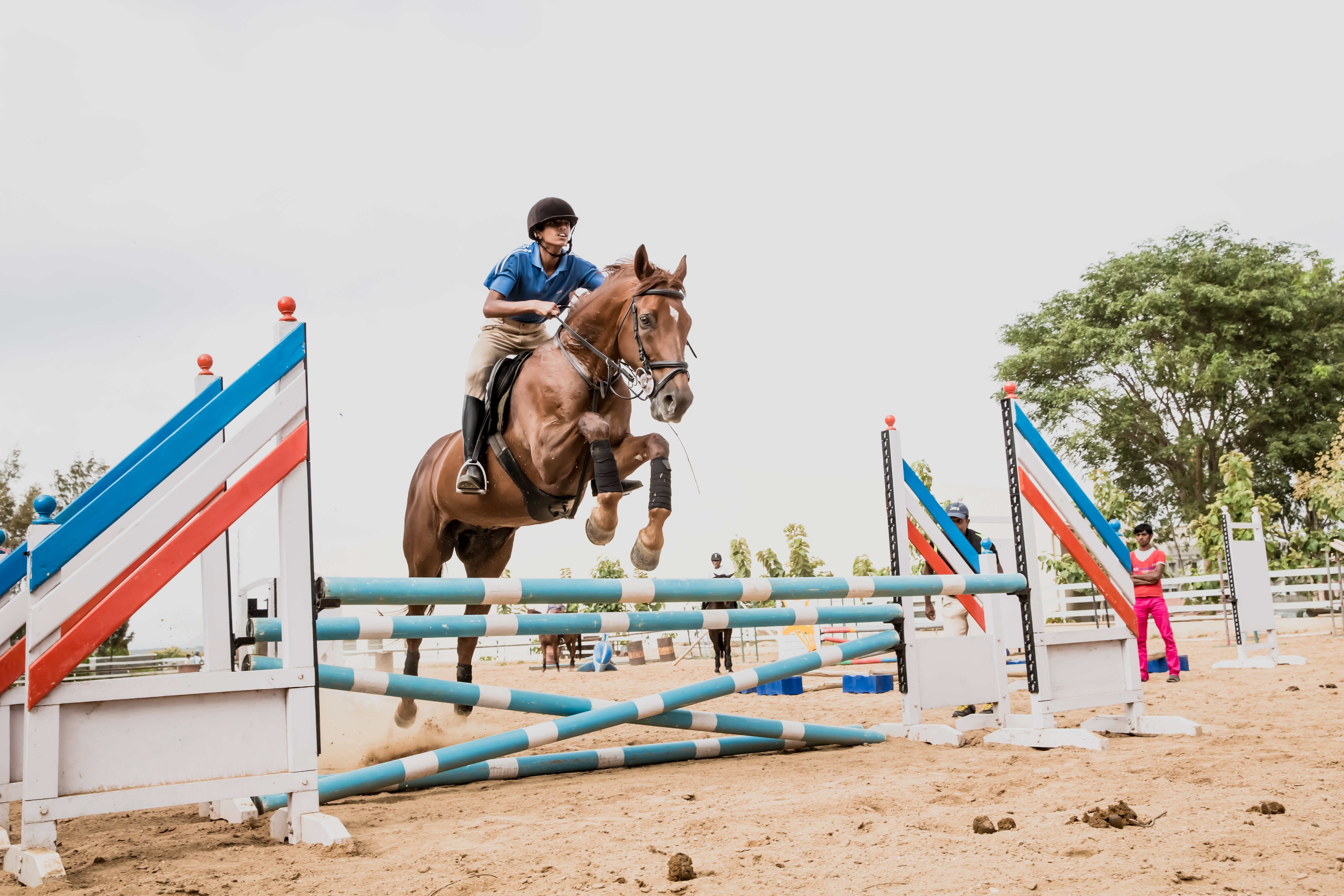
JIRS is one of the few schools in India that is authorized to run the International Award for Young People (the common name for the Duke of Edinburgh Award in India). Around 113 students at JIRS are currently enrolled in the award, of whom 50 have earned Bronze medals and 63 have gone on to Silver. Students train in trekking, mountaineering, rappelling, tent pitching, river rafting, and bridge building, all building toward the 12-hour adventurous journey that sits at the centre of the program.
One of the best residential schools in Bangalore, JIRS also runs annual education tours to places like NASA's convention centre in the US and the Swarovski Crystal Museum in Austria, alongside a Think Green nature trail program that takes students into the Nilgiris for hands-on environmental and tribal community projects.
Spread across a 350-acre campus, the school offers a residential environment where students have access to sports facilities, creative arts, leadership opportunities, international exposure and pastoral care throughout the year. The structured residential setting also helps students develop independence, time management and interpersonal skills, qualities that complement the values promoted through the International Award for Young People.
The school's commitment has also earned national recognition. JIRS was honoured as one of the Best Performance Units of the Year 2025 by the International Award for Young People, recognising its contribution to the successful implementation of the programme.
For more information on JIRS and similar schools, check out this list of the best boarding schools in India.
 as a preferred source on