







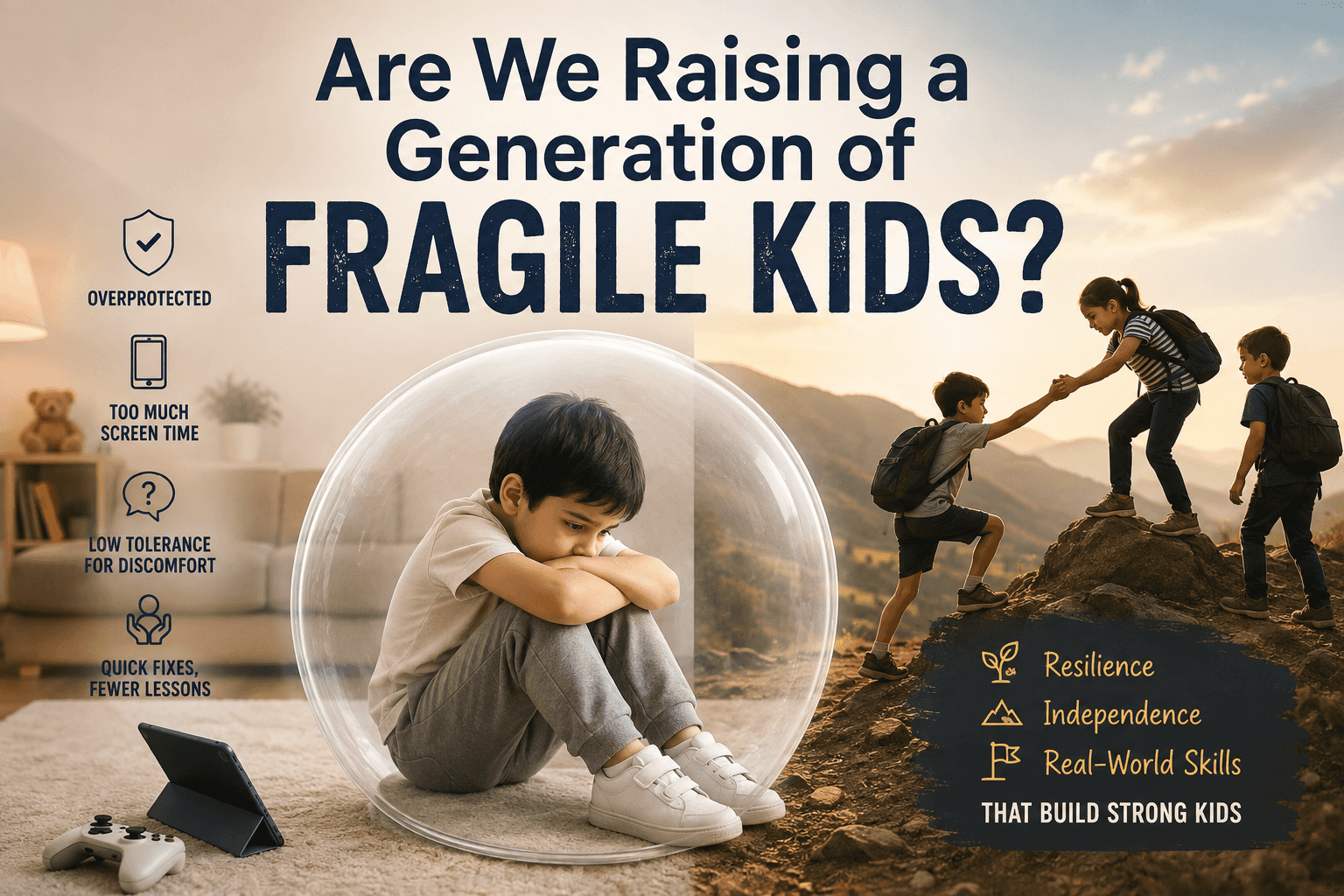

You can see today's kids are carrying something that wasn't quite as common in earlier generations. Ask any parent, and you will hear it almost on repeat: "My child is very sensitive," said gently, like an explanation and an apology at once. Ask a teacher, and they’ll say, "Today's kids cry very easily; they have no patience at all," said with the tired honesty only years in a classroom can give you. But here is the real question nobody stops to ask.
Is getting softer actually a bad thing? Or did our generation just get really good at swallowing our emotions and calling it strength? Walk past any of the top schools in DLF Phase 2, Gurgaon, during pickup time, and you will hear both lines floating around in different words. Vasant Valley School is a good example to look at here. This is not a school trying to toughen kids up by shutting their feelings down. They respect that emotional side of a child completely, while still making sure they build enough resilience to actually go out and conquer the world. Which brings us to the question most parents are quietly asking today: Is this generation really weak?
Also Read: Benefits of Experiential Learning: How Does Vasant Valley School Offer this to students?
Fragile or Just Different? Why This Debate Even Exists
Helicopter Parenting
The parent who calls the teacher before the child even finishes explaining what happened, who packs the forgotten lunchbox to school personally, who steps into every playground argument, is not doing anything wrong exactly. But a child who is rescued every single time never actually learns what happens after the fall. They just learn someone will always catch them.
Kids Today are More Expressive & Vocal
A child today will say "this makes me anxious" or "I don't feel safe with that" in a completely matter-of-fact way, the same way older generations would casually say they were hungry. To a generation raised on "don't talk back" and "log kya kahenge," that kind of open expression can look like fragility. It is not. It is fluency. These kids have a vocabulary for feelings that most of us are still learning at thirty.
Generation Born in a World of Convenience
- Food arrives in ten minutes, not after waiting for mom to cook
- Answers arrive in a Google search, not after struggling with a textbook for an hour
- Entertainment is one tap away, never boring, never blank
- Friendships and validation happen instantly, through a like or a reply, not through effort over time
None of this is the child's fault. It is simply the water they have been swimming in since birth.
Older Generation's Core Belief: Discomfort is the Real Teacher
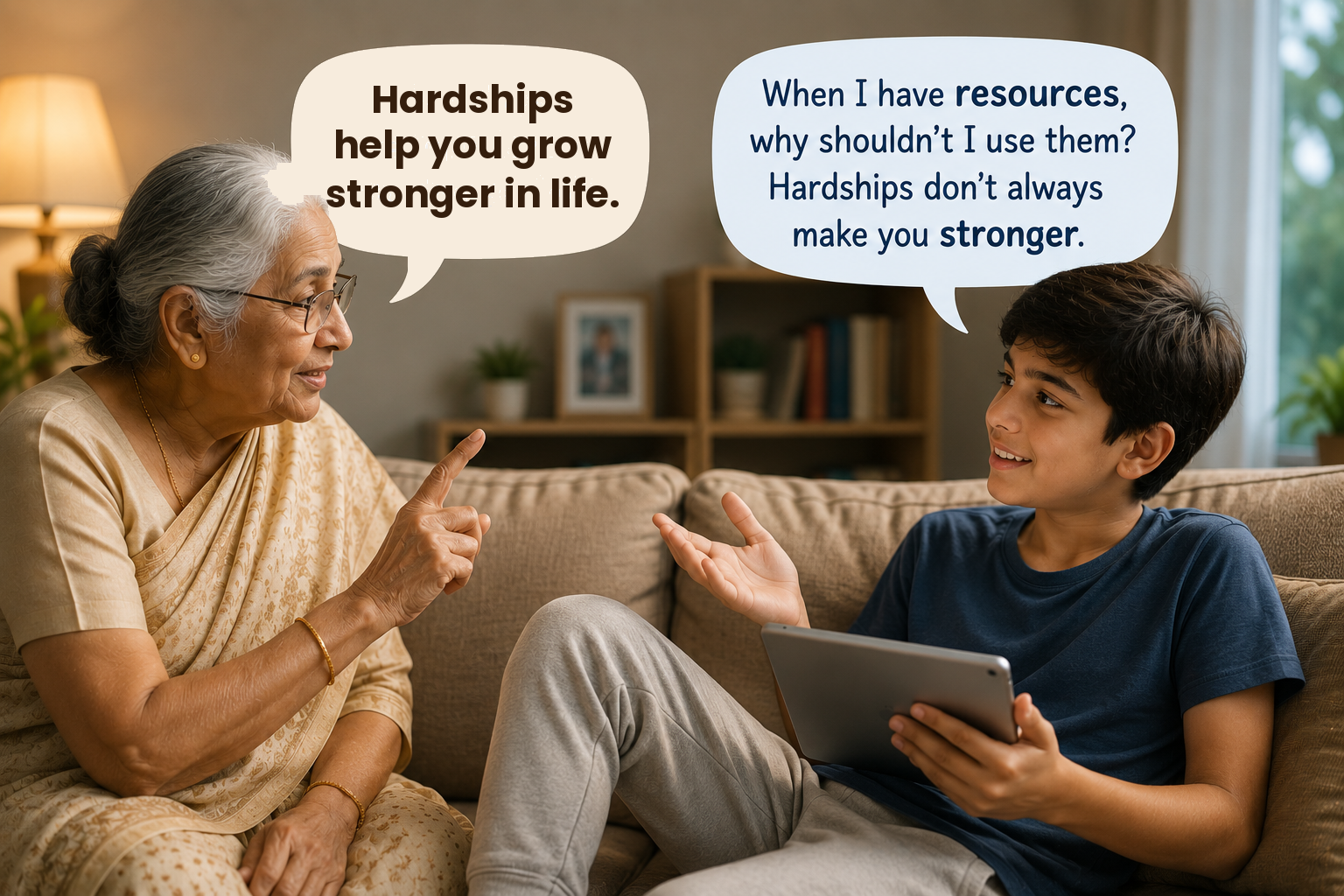
Most parents and grandparents today grew up on a fairly simple formula: life is supposed to be hard, and it is the hardness that makes you strong. Walking to school in the heat, not getting what you wanted, and simply accepting it. So when they see a child struggle to sit through a boring class or cry over a lost match, the instinct is to think, "We had it so much harder, and we turned out fine." What that mindset misses is a quieter possibility: maybe we turned out fine despite the hardship, not because of it.
The Verdict: Are Today's Kids Really Soft?
Honestly, the answer sits somewhere in the middle, and anyone giving you a straight yes or no is only telling you half the picture.
There are moments where this generation genuinely struggles. Give a kid a piece of feedback meant to help them improve and watch them shut down for the rest of the day like you just minus their whole aura. A teacher raises their voice because a child was messing around in class, and instead of stopping to think about why, the child runs home, and the parent shows up the next morning ready to fight the teacher. A kid trips while playing, nothing serious, just a scraped knee, and what follows is ten minutes of crying and a flat refusal to get back in the game. These things happen, and pretending they don't would just be lying to make everyone feel better.
But what gets ignored is that this same generation sits around the dinner table talking about things our generation would never even bring up: mental health, body image, failure, therapy; none of it feels forbidden to them the way it did to us. They're okay putting their own peace above some unnecessary sacrifice that used to be treated as a badge of honour, and honestly, that takes more courage than most adults ever had. They say what they actually feel instead of pretending everything's fine, and they don't burn half their energy worrying about what people will think if they speak up.
So maybe this generation isn't weaker or stronger than the ones before it. They're just strong in different places, and still catching up on the places we happened to get more practice in.
Also Read: The Hidden Skills Gap Every Parent Should Know About
How Vasant Valley Is Raising Resilient Kids, Emotionally and Physically
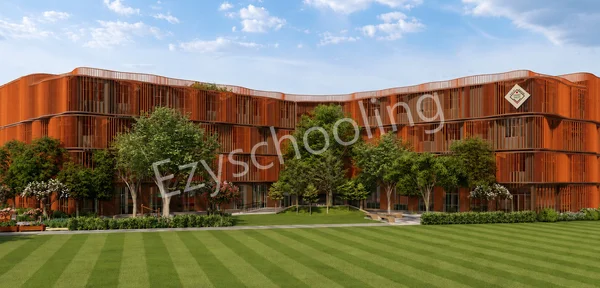
This is where Vasant Valley School, Gurgaon Campus, actually stands out among the top CBSE schools in Gurgaon, and it's not because they picked a side in this whole debate. They didn't. They just refused to treat emotional strength and physical or mental toughness as two separate things a child has to choose between.
One of the actual pillars behind how they design learning is called "Designed for Antifragility," and once you unpack it, it's a pretty simple idea. A kid doesn't grow stronger by avoiding hard stuff. They grow stronger by going through hard stuff with someone steady standing next to them, not rescuing them, just there. So the challenges are real, the setbacks are real, but so is the support around them.
You see this in the small daily habits too. "Fail forward" is something the teachers actually build lessons around, basically telling kids that messing up isn't a full stop; it's just part of getting better at something. Same with how they treat feedback and revisions; a first attempt is never treated as the final answer, and being critiqued isn't something to dread.
And here's the part that actually matters most. None of this comes at the cost of how a child feels. Their whole culture of care runs right alongside it, kids are still allowed to say when something's too much, still get heard properly, still feel safe enough to be honest about a bad day. They even hosted a parent session called "Safe Enough to Struggle," which is basically the exact question every parent reading this article has probably asked themselves at some point.
Vasant Valley isn't choosing between raising an emotionally aware child and a resilient one. They're just building both, together, on purpose.
Want to know more about this school and other schools in this area
 as a preferred source on