




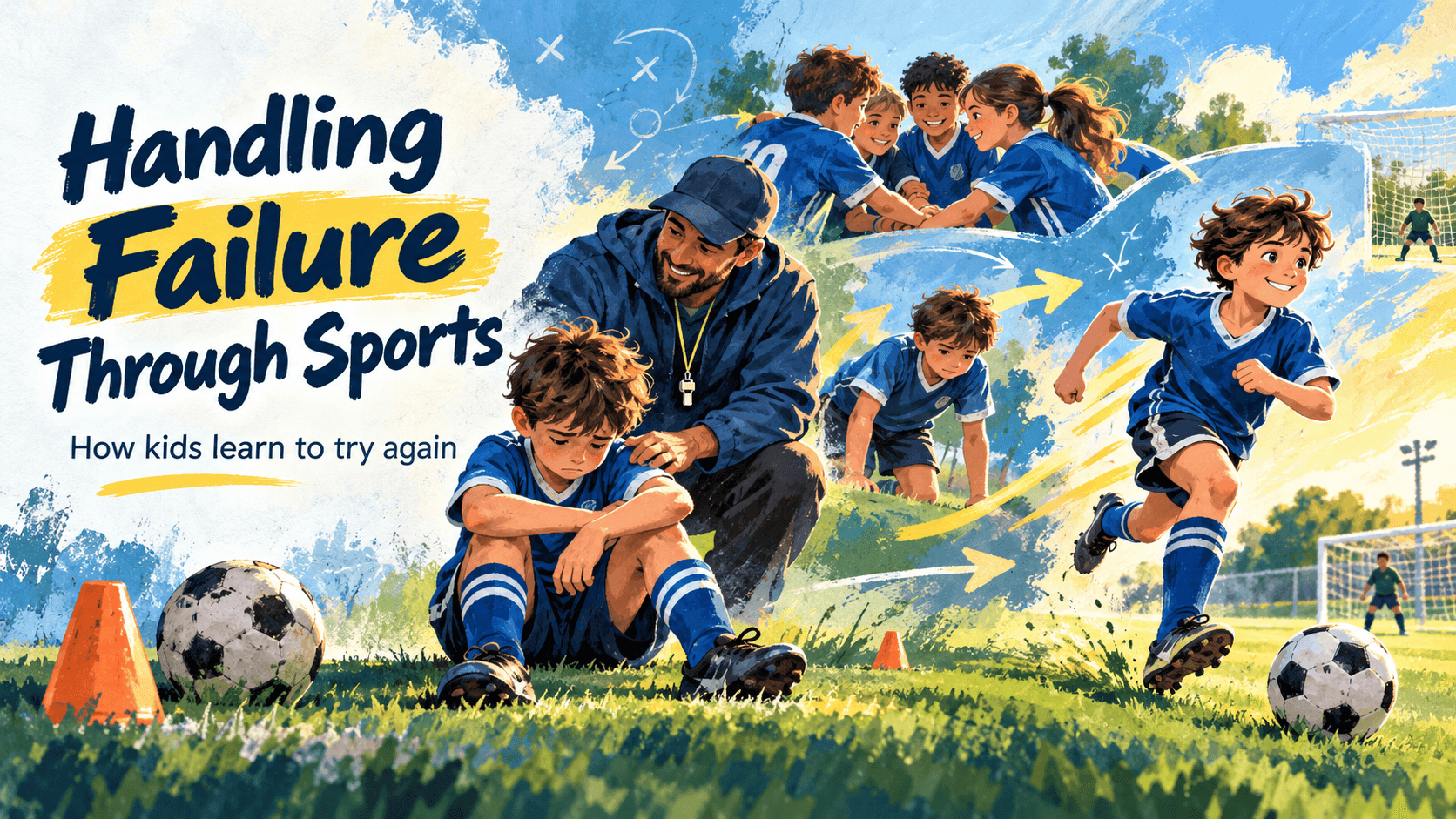

Your child comes home after losing a football match. They look upset, refuse to talk, and say they never want to play again. As a parent, you may wonder what to say to make them feel better.
Losing a game can be difficult for children, especially when they have worked hard to win. However, sports can teach them that making mistakes and facing disappointment are normal parts of learning.
When exploring the Top Schools In Greater Noida, parents often look at academics and facilities. Schools such as Sheoran International School(SIS), Omega I, Greater Noida also bring attention to the role of sports in children's education.
Why Is Losing a Game Difficult for Children?
Children often feel proud when they win a match or receive a medal. But when they lose, they may feel sad, angry, or embarrassed.
Some children start thinking they are not good at sports. Others worry about disappointing their parents, coaches, or teammates.
For example, a child who misses the final basketball shot may feel responsible for the team's loss.
These feelings are natural. Children are still learning how to handle strong emotions, and losing gives them a chance to practise.
Instead of expecting children to stay happy after every match, adults should help them understand that one defeat does not decide how good they are at a sport.
Four Important Lessons Children Learn Through Sports
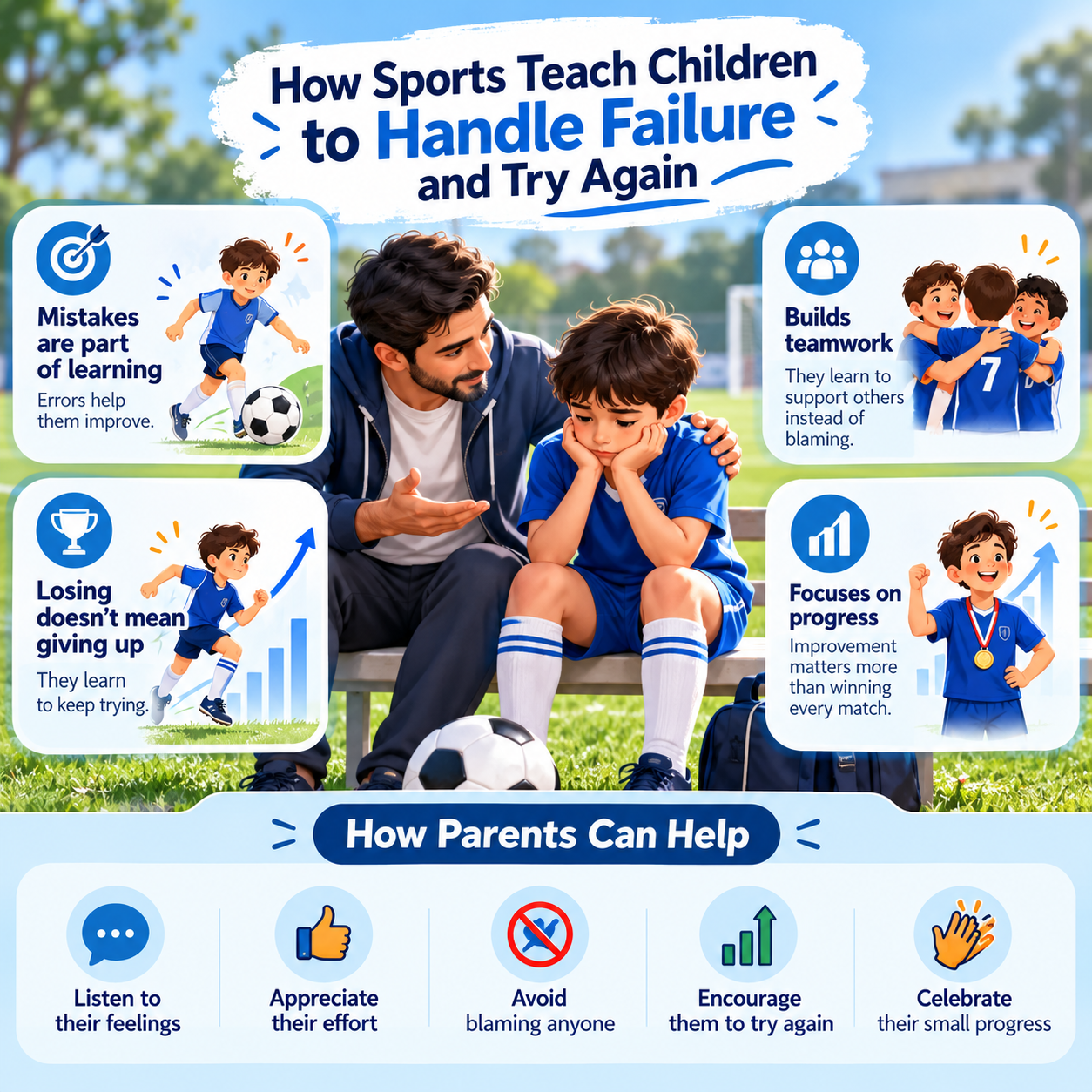
1. Making Mistakes Is Part of Learning
Every sport requires practice, and mistakes happen even when children try their best.
A child learning badminton may miss several shots before understanding how to hold the racket and hit the shuttle properly.
With regular practice and guidance, they can gradually improve.
This teaches children that making mistakes does not mean they cannot succeed. It simply shows them what they need to work on.
2. Losing Does Not Mean Giving Up
Imagine a child who finishes last in a running race. They may feel disappointed and decide they do not want to participate again.
With support from parents and coaches, they can learn to see the experience differently.
Instead of focusing only on their position, they can practise running, improve their stamina, and try again.
Even if they do not win the next race, improving their previous time is something worth celebrating.
3. Teamwork Is More Important Than Blaming Others
In team sports like football and basketball, everyone plays a part.
When a team loses, children sometimes blame the goalkeeper or another player who made a mistake.
However, learning to play as a team means accepting that everyone makes mistakes.
Coaches can encourage children to discuss what went wrong and how they can improve together.
This teaches them to support their teammates instead of making someone feel bad about losing.
4. Improvement Matters More Than Winning Every Match
Winning is exciting, but children cannot win every competition.
A child may lose a table tennis match but manage to return more shots than they did in their previous game.
That improvement deserves attention.
When parents and coaches notice such progress, children learn to focus on developing their skills rather than comparing themselves with others.
They also begin to understand that improvement often takes time.
How Can Parents Help Children Handle Losing?
Parents have an important role in how children respond to defeat.
Here are some simple ways to help:
- Let them express their feelings: If your child feels sad or angry after losing, give them time to talk about it.
- Listen before giving advice: Ask what happened during the match and what made them upset.
- Avoid blaming anyone: Do not blame your child, their teammates, or the coach for the result.
- Appreciate their effort: Notice how hard they practised, how they supported teammates, and what they did well.
- Encourage them to try again: Help them choose one small skill they can practise before their next match.
For example, instead of asking, "Why didn't you score a goal?" try asking, "What did you enjoy about today's match?"
This small change can help children feel comfortable talking about their experiences without worrying about being judged.
What Should Parents Look for in a School's Sports Programme?
When comparing the Best Schools in Greater Noida, parents should consider more than the size of playgrounds or the number of trophies a school has won.
A good sports programme should give children opportunities to learn, practise, and participate.
Parents can ask whether beginners receive guidance, how coaches respond when students make mistakes, and whether children are encouraged to try different sports.
It is also worth understanding how schools teach fair play and handle conflicts between teammates.
The way children are treated after losing can be just as important as how their achievements are celebrated.
How Sheoran International School Encourages Learning Through Sports
At Sheoran International School(SIS), Omega I, Greater Noida, sports are included as part of students' school experience. The school offers activities such as football, basketball, taekwondo, badminton, and table tennis.

They also organise Annual Sports Day and inter-house competitions, where students can participate in different sporting events. These activities give children opportunities to practise their skills, work with teammates, and experience competition. Through such experiences, students can learn that winning is enjoyable, but effort, teamwork, and the willingness to improve also matter.
Conclusion
Losing a game can be upsetting for children, but it can also teach them important lessons.
Sports give children opportunities to make mistakes, practise again, support teammates, and notice their own progress.
Parents and teachers can help by listening to children, appreciating their effort, and encouraging them to keep trying.
After all, children do not need to win every match to become better players or learn something useful from the experience.
To know more about other schools in Greater Noida, click on the link below






 as a preferred source on