







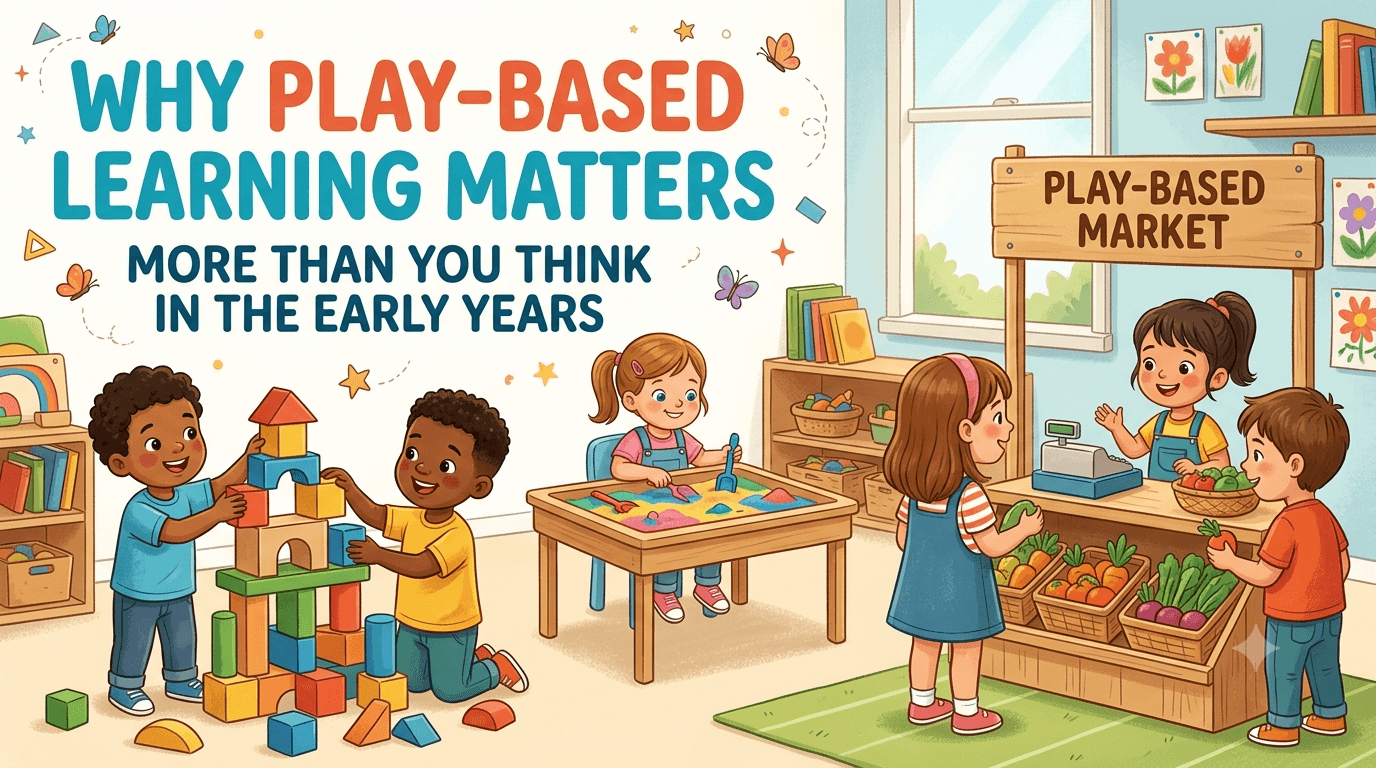

If you've ever picked up your three-year-old from nursery and found out the entire afternoon was spent building towers with blocks or playing pretend shopkeeper, you may have quietly wondered: is my child actually learning anything? It's a fair question, and one that comes up often among parents researching the best CBSE schools in Greater Noida for their little ones. The answer, backed by decades of child-development thinking, is reassuring: play-based learning isn't a break from education at this age. For most children between two and a half and five years old, it is education.
Also read| Holistic Development Through Academics and Activities
What Is Play-Based Learning?
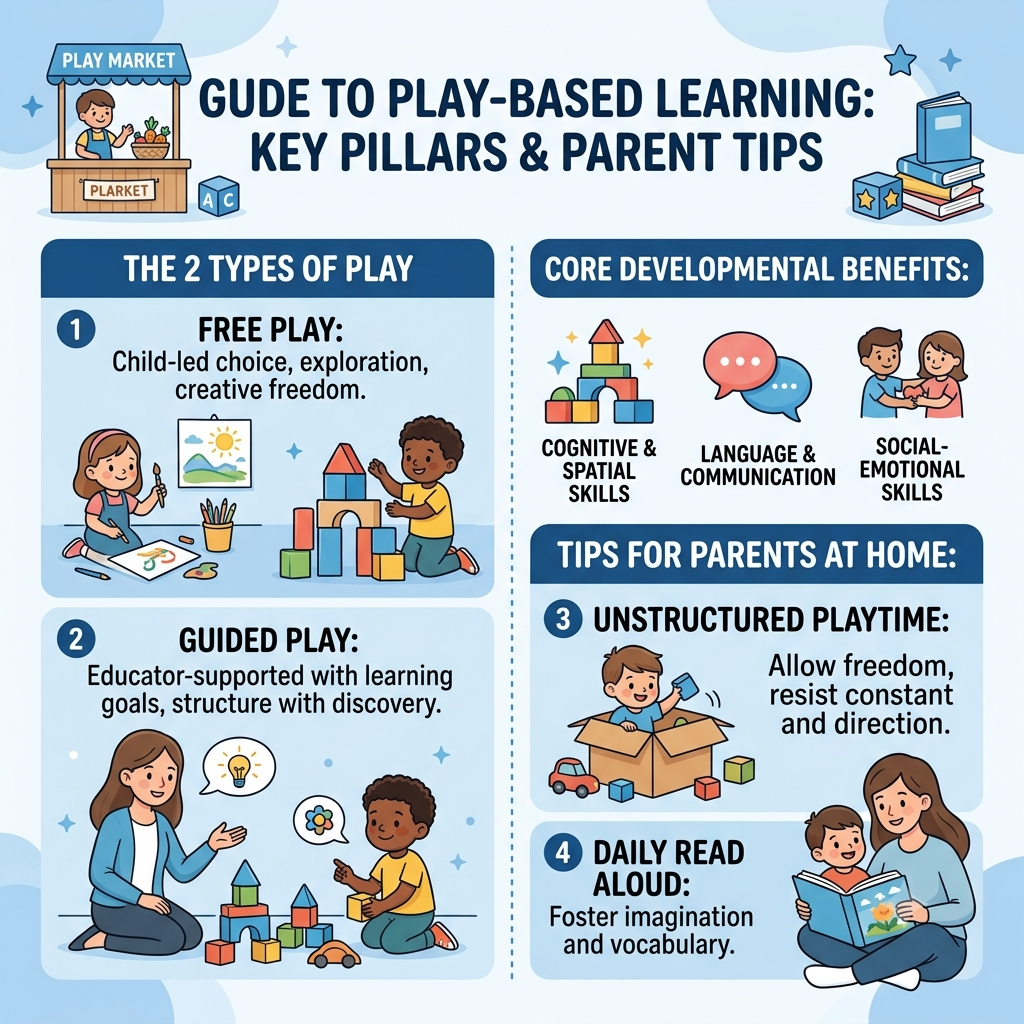
Play-based learning simply means children absorb concepts: numbers, letters, colours, cooperation, cause and effect, through activities that feel like play rather than instruction. It isn't the same as unsupervised free time, and it isn't the opposite of academics either. A good pre-nursery classroom usually blends two kinds of play:
- Free play, where children choose their own activity: sand, blocks, dress-up, drawing, with minimal adult direction.
- Guided play, where a teacher sets up an activity with a learning goal in mind, such as sorting coloured blocks by size to introduce basic classification, but lets the child explore it in their own way.
The difference from a traditional worksheet-first approach is that the child arrives at the concept through doing, not through being told.
Also read| Integrated Education Model for Future-Ready Students
Why Play Matters for a Young Child's Brain and Behaviour?
Early-childhood development research has consistently pointed to play as one of the primary ways young children build cognitive, language, motor, and social skills, not as a supplement to "real learning," but as the mechanism through which that learning happens at this age.
A few everyday examples make this concrete:
- Block building develops spatial reasoning, patience, and early problem-solving, long before a child can name these skills.
- Pretend play, like running a toy kitchen or acting out a doctor's visit, builds vocabulary, sequencing ("first this happens, then that"), and empathy, since children practise imagining another person's role.
- Group games, such as passing a ball in a circle or waiting for a turn on a slide, teach patience, sharing and basic self-regulation, skills that matter far more for early school success than knowing the alphabet early.
It's worth noting that play-based learning isn't a magic fix, and outcomes vary by how well it's implemented. A classroom where "play" simply means unstructured free time with no teacher involvement doesn't offer the same developmental benefit as one where play is thoughtfully guided. The quality of the teacher's involvement matters as much as the activity itself.
What Parents Should Look for in a Pre-Nursery or KG Program
When you're visiting schools or comparing options, including many of the best schools in Greater Noida, a few practical signs can tell you whether a program takes play-based learning seriously:
- A daily schedule that mixes free play, guided activities, outdoor time, and short structured sessions, rather than long stretches of seated worksheet work.
- Classrooms with hands-on materials: blocks, art supplies, sensory bins, books, that children can access independently.
- Teachers trained specifically in early-childhood education, not just general subject teachers assigned to younger grades.
- Reasonable class sizes, since play-based learning depends on individual attention.
- Low pressure around early reading or writing milestones, with more emphasis on curiosity, communication, and comfort in a group setting.
How Parents Can Support Play-Based Learning at Home
The good news is that this approach doesn't stop at the school gate. Parents can reinforce it with very little effort or expense:
- Set aside unstructured playtime at home, without feeling the need to "teach" something every minute.
- Read aloud daily, even simple picture books, since this builds vocabulary far more effectively at this age than flashcards.
- Encourage pretend play , a cardboard box can become a train, shop or spaceship, and each version builds different language and imagination skills.
- Limit passive screen time in favour of active, hands-on play, especially before age five.
- Resist the urge to compare early academic milestones with other children; developmental pace varies widely and normally at this stage.
Sapphire International School, Noida and the Early Years
For parents exploring the best CBSE schools in Greater Noida for their child's very first classroom experience, Sapphire International School, Greater Noida, located in Sector 70, is one option worth including in that research.

The school is CBSE-affiliated and admits children from the pre-nursery stage through Class XII as a co-educational institution, which means the early-years journey and the later school years happen within the same familiar campus. Beyond these confirmed basics, parents considering pre-nursery admission would do well to ask any school directly, including this one, about its specific classroom approach, teacher training for early years, and daily schedule- the same questions this article has outlined above.
Conclusion
Play at this age isn't time away from learning: it's often the most effective form of it. Understanding this can change how parents evaluate schools, talk to teachers, and even spend time with their children at home. Rather than looking for a program that skips play in favour of early academics, it's worth looking for one that uses play deliberately, with trained teachers and thoughtful structure behind it. That's a more reliable sign of a strong early-years education than any early reading milestone.
To know more about other schools in Greater Noida, click on the link below
 as a preferred source on