








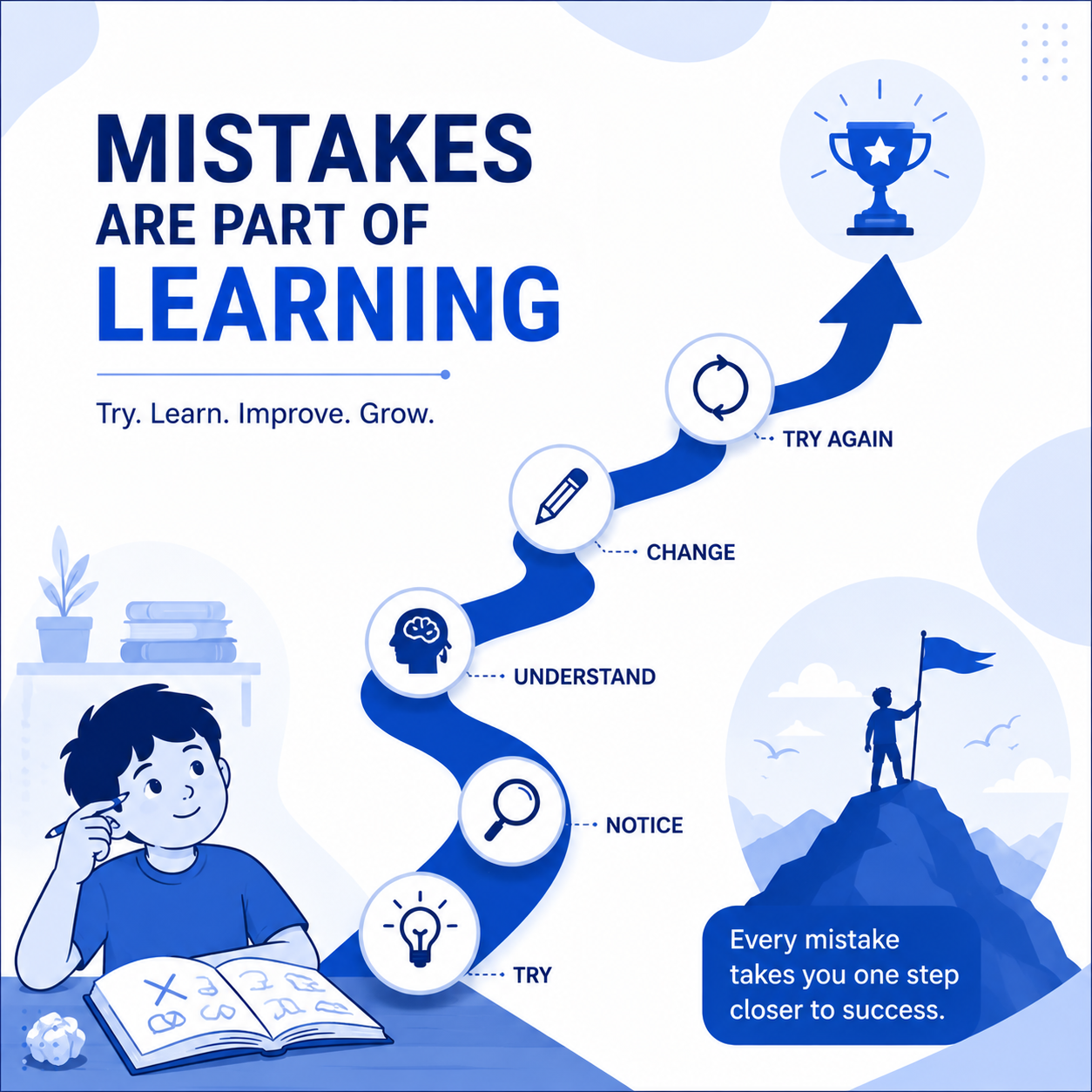
A child learning to write rarely gets it right on the first attempt. The first few lines may look like random curves. Letters may be too big, too small, tilted, or joined in strange ways. A child may write “S” backwards, draw an “O” that looks more like a potato, or keep lifting the pencil in the middle of a letter.
But somewhere between those messy attempts, something clicks. The child slowly understands how the pencil moves, how much pressure to use, where a curve should begin and end, and how different movements come together to form a letter.
Those early “mistakes” were not wasted attempts. They were part of learning. The same thing happens much later in education too. A student gets a maths problem wrong, changes the approach, tries again and eventually understands the concept. Another student builds a science model that doesn't work, figures out why and makes a second version. Someone gives a wrong answer in class and, through the discussion that follows, remembers the concept better than they would have by simply reading it.
Yet, somewhere along the way, many children begin to believe that mistakes are something to avoid. And that raises an important question: What if getting things wrong is actually an important part of getting better?
Today, through this article, we will understand how one of the schools in Noida, Sapphire International School, is making a huge difference by helping students learn from their mistakes. Read the article to know more.
Also Read| The Innovative Human Library at Sapphire International School
Why Do Children Become Afraid of Making Mistakes?
Young children are naturally comfortable with trial and error. Give a four-year-old a puzzle, and they will happily try the same piece in five different places. But as children grow older, the response can change.
A wrong answer can mean losing marks. A difficult question can mean feeling embarrassed in front of classmates. A failed attempt may make a student think, “Maybe I am just not good at this.” Gradually, the focus can shift from: “Let me figure this out.” To “I hope I don't get this wrong.” That small change matters.
When children become more concerned about being correct than understanding something, they may stop asking questions, avoid difficult tasks, or choose the easiest option simply because it feels safer. And learning rarely grows in a comfort zone where children are afraid to experiment.
A Mistake Is Not Always a Failure
There is an important difference between making a mistake and failing to learn from it. Think about a child learning to ride a bicycle. The first attempt may involve wobbling. The second may involve falling. The child may turn the handlebar too sharply or forget to balance while pedalling. But each attempt provides information.
The fall is not the lesson by itself. Understanding why the fall happened is. That is what schools can help children develop: the ability to look at an unsuccessful attempt and ask, “What can I do differently next time?”
Remember How Children Learn to Write
One of the simplest examples can be found in a child's first writing attempts. Before children can confidently write letters, they spend a lot of time making:
- Curves
- Circles
- Lines
- Zigzags
- Loops
- Dots and strokes
At first, these movements may not seem to have much purpose. But those curves eventually help a child form letters such as S, C, O, and U. That imperfect curve wasn't really a mistake.
It was practice disguised as a mistake. This is how much of learning works. Children often need to make several imperfect attempts before they understand the movement, pattern, or idea behind something. The same principle applies to much more complex learning later
What Happens in the Brain When Students Try, Fail and Try Again?
Learning becomes more meaningful when students actively work through a problem instead of simply receiving an answer. Consider a student who gets a maths question wrong. If the teacher immediately gives the correct answer, the student knows the answer.
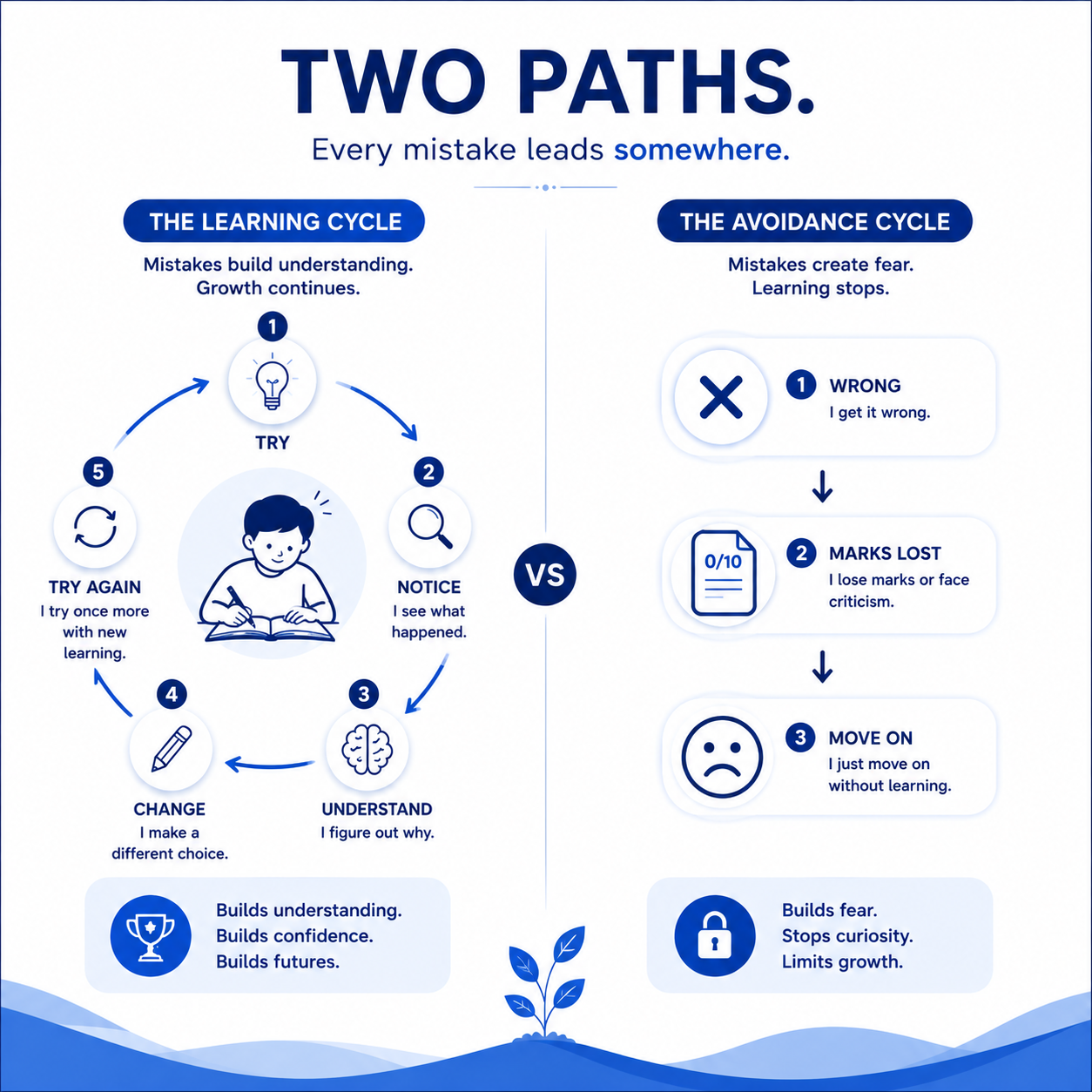
But if the student is encouraged to look back and find where the calculation went wrong, something more useful can happen. They may discover: “I understood the formula, but I used the wrong value here.”
Now the student hasn't just learnt the answer. They have learnt how to check their own thinking. That ability becomes increasingly valuable as subjects become more complicated.
Mistakes Can Teach Students to Problem-Solve
Real life rarely gives us a set of questions with four options and one clearly marked answer. Things go wrong, and plans can change. Solutions don't always work the first time.
A child who has had opportunities to experiment and correct mistakes is more likely to become comfortable with that uncertainty. For example, imagine students are asked to build a bridge using simple materials. The first design collapses. There are two ways the activity could end.
Approach 1:The teacher shows them the correct design. Approach 2:
The teacher asks:
- Where did the structure become weak?
- What could make it stronger?
- Should we change the shape?
- What happens if we distribute the weight differently?
The second approach may take longer. But students are learning something far beyond the bridge. They are learning to observe, question, modify and try again. That is problem-solving in its simplest form.
Children don't always learn best by sitting quietly and listening. Sometimes they need to touch, build, test, discuss, change and try again. That's the thinking behind experiential learning.
A science experiment that doesn't produce the expected result can become an opportunity to investigate. A robotics project that doesn't work can lead students to check the design. A group presentation that doesn't go smoothly can teach students about communication and collaboration.
A business activity that loses imaginary money can teach students about decision-making. The important part isn't that every activity ends perfectly. It's that students understand why something happened and what they can do next.
But There Is a Difference Between Productive and Repeated Mistakes
Not every mistake automatically leads to learning. A student can make the same error repeatedly without understanding why. That's where guidance matters. Productive mistakes need reflection.
A child needs the opportunity to identify what went wrong, receive feedback and make another attempt. So the goal isn't to let children struggle endlessly. It is to give them enough space to think and enough support to move forward.
What About Parents?
The same approach can continue outside school. Suppose a child is trying to make a sandwich and spills something. An immediate reaction might be: “See? I told you to be careful.” A more useful response could be: “What do you think made it spill? How can we do it differently next time?”
The second response doesn't ignore the mistake. It helps the child learn from it. The same can apply when a child:
- Gets a puzzle wrong
- Loses a game
- Makes a drawing they don't like
- Struggles with homework
- Makes a mistake while cooking
- Builds something that falls apart
Sometimes, children don't need adults to fix the problem immediately. They need adults to give them enough confidence to try solving it themselves.
This idea of learning through doing is also relevant when looking at schools that place emphasis on experiential and practical learning.
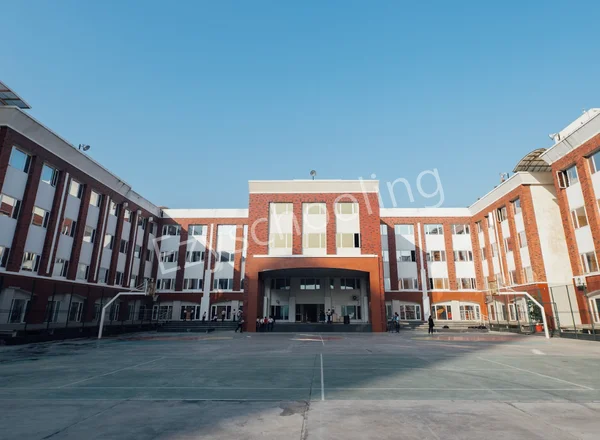
Sapphire International School, one of the top schools in Noida, incorporates experiential learning, technology, STEM and hands-on activities into its educational approach. Its learning environment includes opportunities for students to explore ideas beyond simply receiving information. For example, activities involving STEM, robotics, projects and practical experiences can give students opportunities to test an idea, discover that it doesn't work as expected and then rethink their approach.
That process matters. Because a child who learns that “my first attempt didn't work” is not the same as a child who learns “I can't do this.” The first mindset leaves room for another attempt. And sometimes, that second attempt is where the real learning begins.
The Bigger Lesson
We often talk about wanting children to become confident, creative, resilient, and independent. But those qualities don't develop only when everything goes right. They develop when children have opportunities to:
- Make a decision
- Get it wrong
- Understand what happened
- Make a better decision
- Try again
The child learning to write doesn't know that those messy curves will eventually help them write letters. The child building a failed model doesn't know that the failed version may teach them more than the perfect one. And the student who gets a difficult question wrong today may eventually become the person who knows exactly how to find the mistake.
That is a skill worth carrying far beyond school. The goal of education isn't to raise children who never make mistakes. It is to raise children who aren't afraid to learn from them.
Want to know more about schools in Noida offering tech-driven learning
 as a preferred source on