







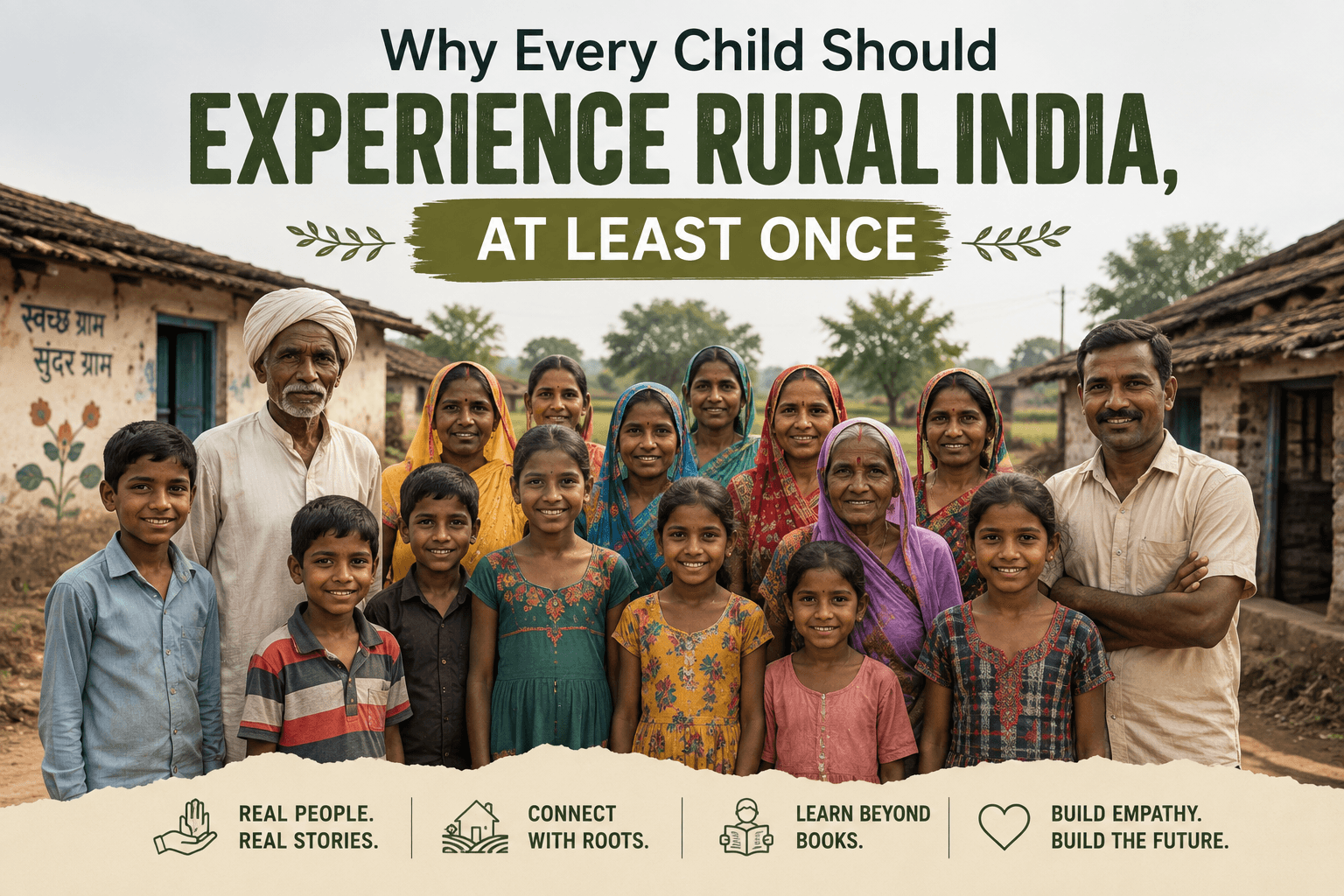

Remember going to nani’s or dadi’s village as a kid, that one trip a year you’d count down the days for? The train journey that felt like an adventure on its own, the cousins waiting at the station, the smell of the chulha and fields. Somehow those few days felt longer, fuller, better than any other week of the year. But here’s the thing: that’s becoming rarer now. Grandparents have moved to cities, or the village home got sold, or summer break turned into summer camp instead. And with that, an entire part of childhood quietly disappeared, the one where a child actually knew what rural India felt like, not read about it, felt it.
That’s a real loss, because those trips taught kids things no city ever could: patience, community, simplicity. It’s exactly that feeling some of the top boarding schools in Mussoorie are trying to bring back, and why Mussorie International School built its village immersion programme, so that even kids who’ve never had a nani’s village to visit still get to experience one. In this article, we'll tell you why this connection matters so much for a child's growth, and how MIS is making sure no child misses out on it.
Also Read: Remembering the Moments That Made School Life Special
Why Rural Indian Education Is Needed For Students
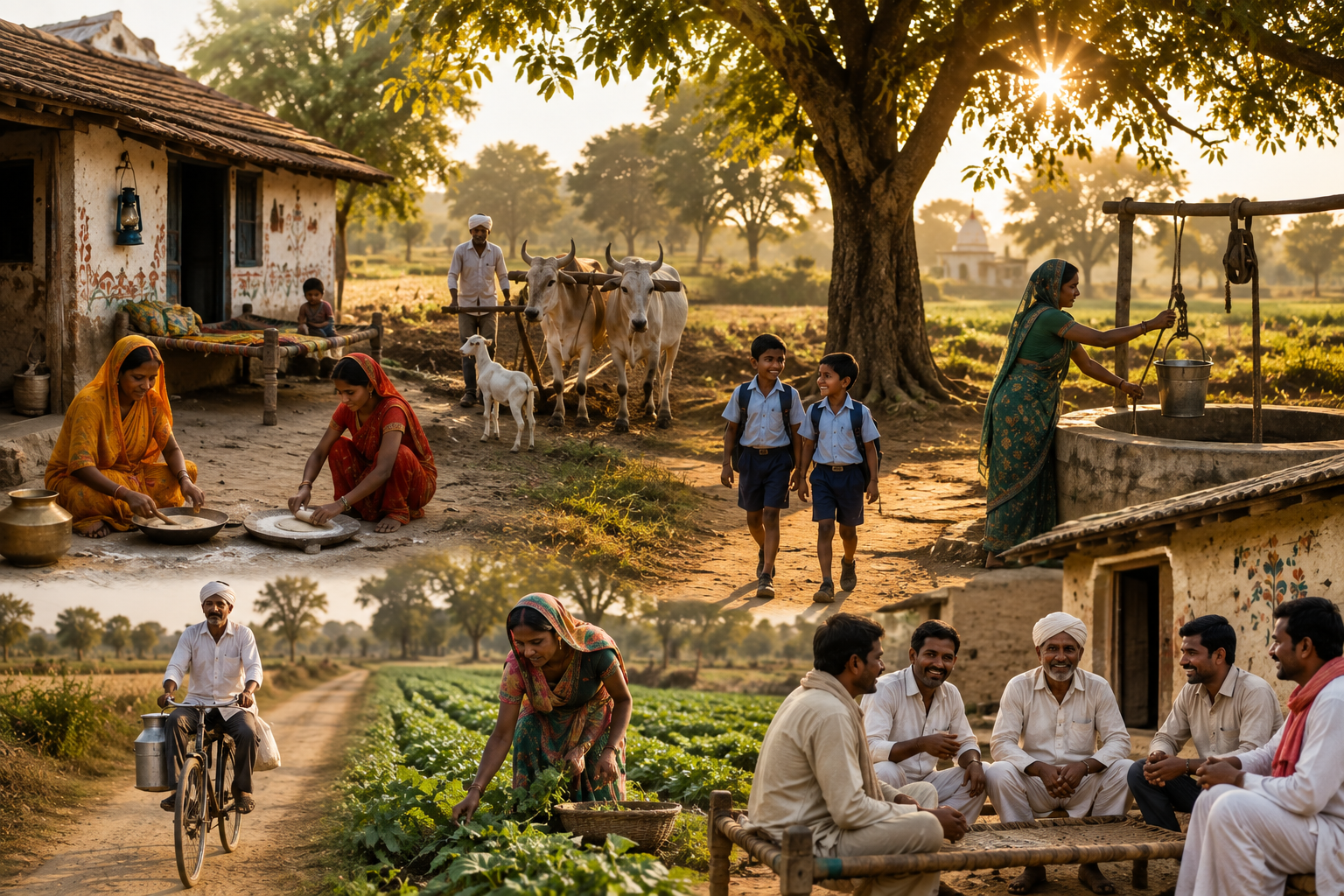
Almost 64% of India’s population still lives in rural areas. Almost two out of every three Indians. So when a child grows up only knowing city life, malls, apps, delivery in ten minutes, they’re not seeing the “smaller side” of India. They’re actually missing the bigger side. And that’s exactly the gap most classrooms don’t fill.
We read about it, but we never really understand it
Every kid has read that one chapter on Palampur village in economics class, remember? Crops, irrigation, farmers, done, move on to the next chapter. But be honest, did any of us actually understand what a farmer’s day looks like, or why his income depends on rainfall he can’t control? It stayed a chapter, just words on a page, forgotten right after the test.
Kids don’t know how food actually reaches their plate
Ask a city kid where wheat comes from, and most will say “the supermarket.” Not entirely their fault; that’s genuinely the only supply chain they’ve seen. What they don’t see is the farmer waking up before sunrise, the unpredictable monsoons, the mandi, the transport, the middlemen, all of it happening quietly before that packet of atta lands in a kitchen. That’s a real education most kids never get.
The real problems rural India faces don’t fit in one paragraph
Things like limited access to good schools, hospitals hours away, unreliable electricity, water shortages- these aren’t abstract “social issues” for a textbook footnote. They’re daily life for hundreds of millions of people. A child who never sees this grows up with a very incomplete picture of their own country, and honestly, a slightly disconnected sense of privilege too.
Awareness builds something empathy alone can’t
It’s easy to feel sympathy from a distance. It’s a different thing entirely to sit in a village home, see the effort behind every meal, every school day, every small convenience city kids take for granted. That shift, from sympathy to actual understanding, is something no chapter, no documentary, no photo can fully create.
That’s really the point of rural education for kids today. Not to romanticize village life, and definitely not to reduce it to a cultural experience, but to make sure a child grows up actually knowing the country they live in, not just the version of it they see from a car window.
What Rural Indian Education Can Teach Students
- Give kids the full picture of real problems and not the filtered version textbooks give them.
- Teaches gratitude that no lecture on being thankful ever really manages to.
- Builds empathy for people whose lives look nothing like their own.
- Sparks real problem-solving; kids start asking how instead of just why.
- Shows them what community actually looks like, beyond just a word in a chapter.
Also Read: Why Curiosity-Driven Learning Matters in a Child's Early Years
How MIS Turns a Lesson in Empathy Into a Life of Action
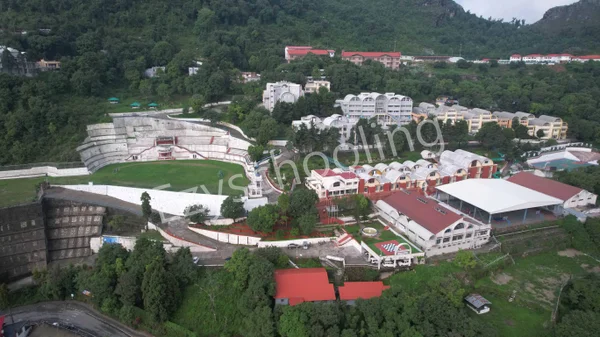
Talking about rural India in a classroom is one thing. Actually spending five days living in a village is a completely different kind of learning, and that’s exactly what MIS built its Village Immersion Programme around. Every September, students head to Churedhar, a small village tucked away in Dhanaulti, Garhwal, in partnership with Tata Trust. It’s not a day trip; it’s not a photo-op visit; it’s five days of actually being there, seeing how a village runs, how families manage their day, what daily life looks like without the conveniences students are used to.
But what makes this genuinely stand out is that MIS didn’t stop at exposure. Awareness is easy; action is harder, and that’s where their Adult Literacy Programme comes in. MIS works directly with Beera Village, near the Rawal Temple in Musssorie, helping adults in the community learn to read and write. Think about that for a second: students aren’t just visiting rural India to understand its problems; they’re part of a school that’s actually doing something about one of its biggest ones, literacy.
That’s really the difference: a lot of schools talk about compassion and social responsibility as values on a brochure. At MIS, it shows up as an actual, ongoing commitment, students who’ve walked through a village and understood its struggles firsthand, and a school that’s simultaneously working to change some of those struggles right alongside them.
It’s this kind of grounded, real-world initiative that quietly sets apart the leading boarding schools in Uttarakhand, not just academic results or campus infrastructure, but whether a school is actually shaping students who understand and care about the country beyond their own bubble.
For more information on MIS and other similar schools, check out the list of
 as a preferred source on