









Have you ever wondered why some students seem completely comfortable with JEE or NEET preparation while others begin feeling overwhelmed within just a few months?
Every year, millions of students compete for a limited number of seats. More than 13 lakh candidates registered for JEE Main in recent years, while over 22 lakh students appeared for NEET UG. Yet fewer than one in twenty who write NEET each year get an MBBS seat anywhere in the country, government or private. JEE tells a similar story once you look past the total registrations to the actual number of IIT and NIT seats on offer.
That gap, between the students who register and the ones who actually get in, rarely comes down to a stroke of luck in Class 12. It usually traces back to how the two or three years before that were spent.
Many schools have started recognising this shift. Instead of waiting until Class 11, they are helping students build stronger academic foundations during middle school itself. BVM Global School, one of the best schools in Bangalore, is among the institutions following this approach through its Veranda JEET programme, which introduces structured preparation while students are still developing their core concepts.
But isn’t starting in middle school too early? Read on to find out!
Also Read | Stop JEE/NEET Coaching Pressure for Students
JEE & NEET Start With School Concepts
Class 9 and 10 textbooks already carry a surprising amount of what shows up later in JEE and NEET. Here are a few examples:
- Trigonometric ratios, taught in Class 10, return almost unchanged in JEE mechanics and in NEET's projectile motion questions, just with harder numbers attached.
- Coordinate geometry, covered across Class 9 and 10, resurfaces directly when students take up vectors and optics two years later.
- The mole concept, first explained in Class 9 chemistry, becomes the backbone of every stoichiometry question in NEET.
- Newton's laws of motion, also a Class 9 chapter, get tested again and again in JEE mechanics, only at a sharper pace and with more steps layered on top.
None of this is new territory invented for competitive exams. It is groundwork laid two or three years in advance, which is exactly why a shaky grasp of these chapters in Class 9 or 10 tends to surface as a struggle later, often without anyone tracing it back to where it actually began.
A student who genuinely understands these ideas in Class 9 does not need to relearn them later. Class 11 simply adds depth to something already known. A student who memorised formulas without real understanding carries that shortfall forward, and it tends to grow heavier with each passing year rather than lighter.
The Mistake Many Families Make Without Realising

There is a common, well-meaning mistake many families make. Parents naturally want to protect their children from pressure. That often leads to one common decision:
"We'll think about competitive exams after Class 10."
They wait until Class 10 board exams are done, but then enroll their child into intensive coaching almost overnight. The child moves from a relatively relaxed school routine to six or eight hours of additional coaching within a matter of weeks.
That sudden jump is one of the more overlooked reasons behind student burnout in Classes 11 and 12. A gentler introduction, spread gradually across Classes 8 to 10, gives a child time to adjust in stages instead of being pushed into deep water without warning. It also gives them a chance to discover genuine interest in a subject, rather than arriving at Class 11 already exhausted by the idea of studying it.
How Does Integrated Learning Help?
The growing popularity of integrated learning has also made parents more cautious. Every programme promises better results, experienced faculty, and structured preparation. However, the real difference often lies in how the programme supports the child, not just how many hours it adds to their schedule.
A well-designed integrated programme should help students strengthen their understanding without making them feel like they are constantly preparing for an examination. It should fit naturally into their school life instead of replacing it.
Before choosing any programme, parents should consider a few important aspects:
- Concept-first Learning: Does the programme focus on understanding concepts before introducing difficult questions?
- Balanced Academic Schedule: Can students manage both school academics and competitive preparation without feeling exhausted?
- Regular Feedback: Are parents informed about their child's progress and areas that need improvement?
- Experienced Mentors: Do teachers guide students beyond the classroom by helping them develop effective study habits and problem-solving skills?
- Continuous Assessments: Are assessments used to identify learning gaps, or are they simply conducted to compare students with one another?
These questions often provide a clearer picture than brochures or advertisements. Every child learns differently, and the right programme should recognise that rather than expecting everyone to progress at the same pace.
Check Out | Microlearning 101: How Ten-Minute Lessons Beat Hour-Long Classes
How BVM Global School, Bangalore, Is Strengthening The Foundation Years
BVM Global has been part of India's school education landscape for well over a decade now, with campuses spread across Chennai, Coimbatore, Trichy and Bengaluru. The school follows the CBSE curriculum, with select campuses also offering NIOS and international pathways for families seeking a more global exposure for their children. Today, the group serves more than 5,000 active students, supported by a teaching community of over 390 educators.
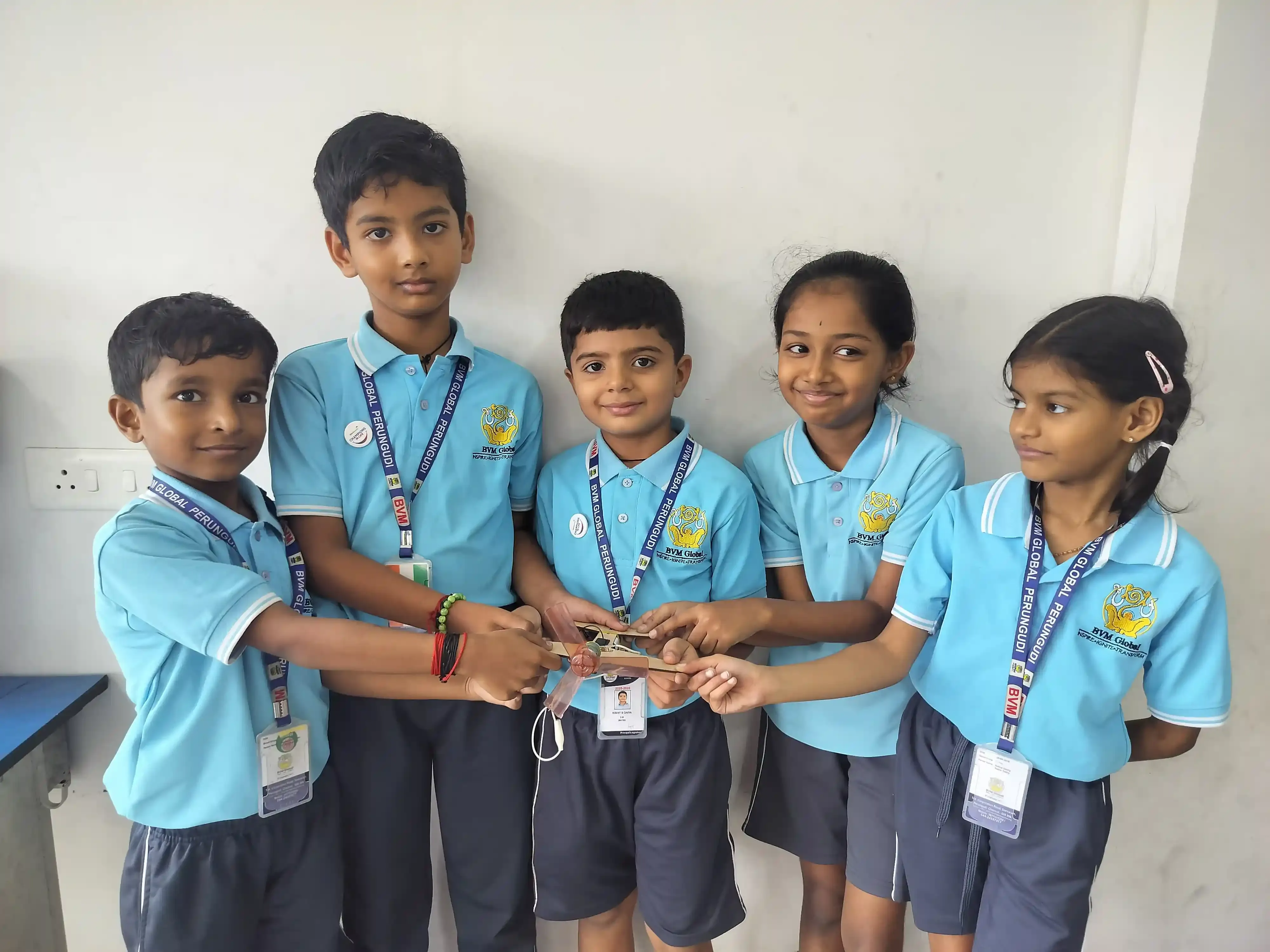
One of the best CBSE schools in Bangalore, BVM Global has taken a fairly clear stance on a strong early foundation. The school describes Classes 8 and 9 as the real springboard for academic confidence, rather than plain bridge years sitting between primary school and senior school. To put that belief into practice, BVM Global partnered with Veranda K-12 to introduce Veranda JEET, a program woven directly into the regular school day instead of running as a separate coaching class bolted on after hours. The focus stays on Science and Mathematics, aimed at building real conceptual clarity rather than rushed memorisation.
The faculty relies on structured study material, regular assessments and direct feedback to track how each student is actually progressing. Learning analytics are also used to flag gaps early, so a teacher can step in while a small doubt is still small, rather than after it has grown into a bigger problem.cs
Beyond this program, BVM Global follows what it calls a philosophy of personal progress over comparison. A child scoring 70% is encouraged to work towards 80, and one scoring 90 is nudged towards 100, with assessment treated as an ongoing process rather than a one-time event tied to a report card.
The school also runs Collab-Hub sessions, where students practise negotiation, presentation and teamwork as deliberate skills, alongside a dedicated space for sports, classical dance, music and art, treated as standalone disciplines rather than occasional activities squeezed into a timetable. Parents are kept closely informed through Sunshine Calls, regular newsletters and the Veranda K-12 app, reflecting a broader emphasis on staying connected with families as their children move through school.
For more information on this and similar other schools, check out this list of the best schools in Bangalore.
 as a preferred source on