








Ten years ago, did you know that we would get images and answers to almost any question in one click? Many people had not even heard of AI in the way we talk about it today. Now, there are people whose work involves things such as managing social media communities, designing virtual experiences or working with technologies that were not common career choices a decade ago.
This makes parents wonder about something quite difficult. If we do not know what kind of jobs our children will be doing 15 or 20 years from now, what exactly should we teach them today?
The easy answer is to make a list of future careers and start preparing children for them. But that may not work for very long. After all, nobody can predict the future perfectly. A child who is in Class 5 today could enter the workforce when the technology, industries, and even the way people work have changed several times.
So perhaps the question should not be, “Which job should my child prepare for?” It should be, “Can my child learn something new when the old way no longer works?” If you are a parent in Greater Noida West and looking for Top Schools in Greater Noida West right now, but this question is on your mind, then read the whole article and then make the right decision for your child.
Also Read: Important CBSE Updates for the Academic Session 2026-2027
A child does not need every answer
Think of a student who loves drawing. Today, we might suggest careers in fine arts, animation, architecture or design. But the same interest could eventually take that child into game design, digital storytelling, product design or something that we do not have a common name for yet.
The important part is not predicting the exact job. It is helping the child develop the habit of exploring an interest deeply.
This idea is close to the philosophy of John Dewey, who believed that children learn through experience rather than simply by receiving information. A child who builds something, gets it wrong, changes the design and tries again is learning how to deal with a problem. That lesson can stay useful even when the actual tools and workplaces change.
Imagine a group of children trying to make a paper bridge that can hold ten books. Their first bridge collapses under the weight. They discuss what went wrong and make it again, perhaps changing the shape or using the paper differently. Nobody has given them a perfect answer beforehand. They have had to find one.
That small activity is actually preparation for an uncertain future.
What if the answer keeps changing?
We have all seen this in ordinary life. A parent may have learned one way of booking a train ticket years ago and now use an app. A shopkeeper who once maintained everything in a notebook may now use digital payments and software. The basic purpose has remained the same, but the way of doing the work has changed.
Children will face the same thing, perhaps on a much larger scale.
This is where Carol Dweck's idea of a growth mindset becomes relevant. The useful belief is not “I am good at maths” or “I am bad at technology.” It is “I can get better at this if I work on it.”
A child who gets stuck on a science problem and says, “I cannot do this,” may stop there. Another child may say, “I don't understand it yet. Let me try another way.” The second child has already developed something valuable for a changing world.
Future skills are often simple human skills
When people discuss future jobs, they often talk about coding, robotics and new technology. These things matter, but children will still need to explain an idea, listen to another person, work in a group and make a sensible decision.
Take a school project where four students have to build a model together. One wants to make it bigger, another thinks it will take too much time and the third has a completely different idea. They have to talk, disagree, adjust and finally decide what to do.
There is no special “future technology” involved here, but the children are learning how to work with people who do not always think like them. That is a skill they can carry into almost any career.
The same is true of creativity. Constructivist approaches to education suggest that children build understanding by connecting new experiences with what they already know. When a child is asked, “Can you find another way to solve this?” rather than simply being shown the correct method, the child begins to see learning as something they can actively take part in.
Also Read: How to Choose the Right Stream After Class 10: A Practical Guide for Students and Parents
So what should schools prepare children for?
A school cannot predict every profession a child may choose in the future. What it can do is create enough opportunities for children to experiment, question, communicate, make mistakes and try again.
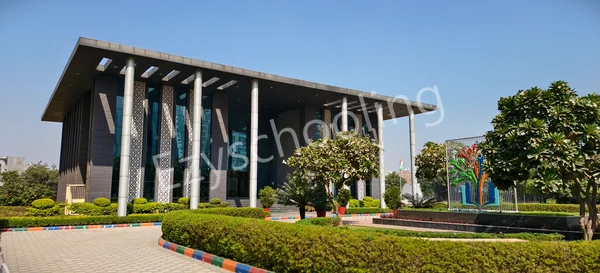
At The Wisdom Tree School (TWT), Sector 16B, one of the schools in Greater Noida West, this becomes especially important when education is looked at as preparation for life rather than preparation only for examinations. Classroom discussions, practical activities, projects and opportunities to work with others can help children become more comfortable with unfamiliar situations.
For instance, when a child is allowed to present an idea, change a project after receiving feedback or find a different solution to a problem, the child is not merely completing a school activity. They are practising how to respond when things do not go according to plan.
And that may be one of the most useful lessons for the future.
We cannot tell today's children exactly what their first job will be, what technology they will use or what new professions will appear. But we can help them become curious enough to learn, confident enough to try and flexible enough to change direction when required. Perhaps preparing children for jobs that do not exist yet is, in the end, less about predicting the future and more about helping them become ready for whatever future arrives.
For more information regarding this and other schools in the same area
 as a preferred source on