







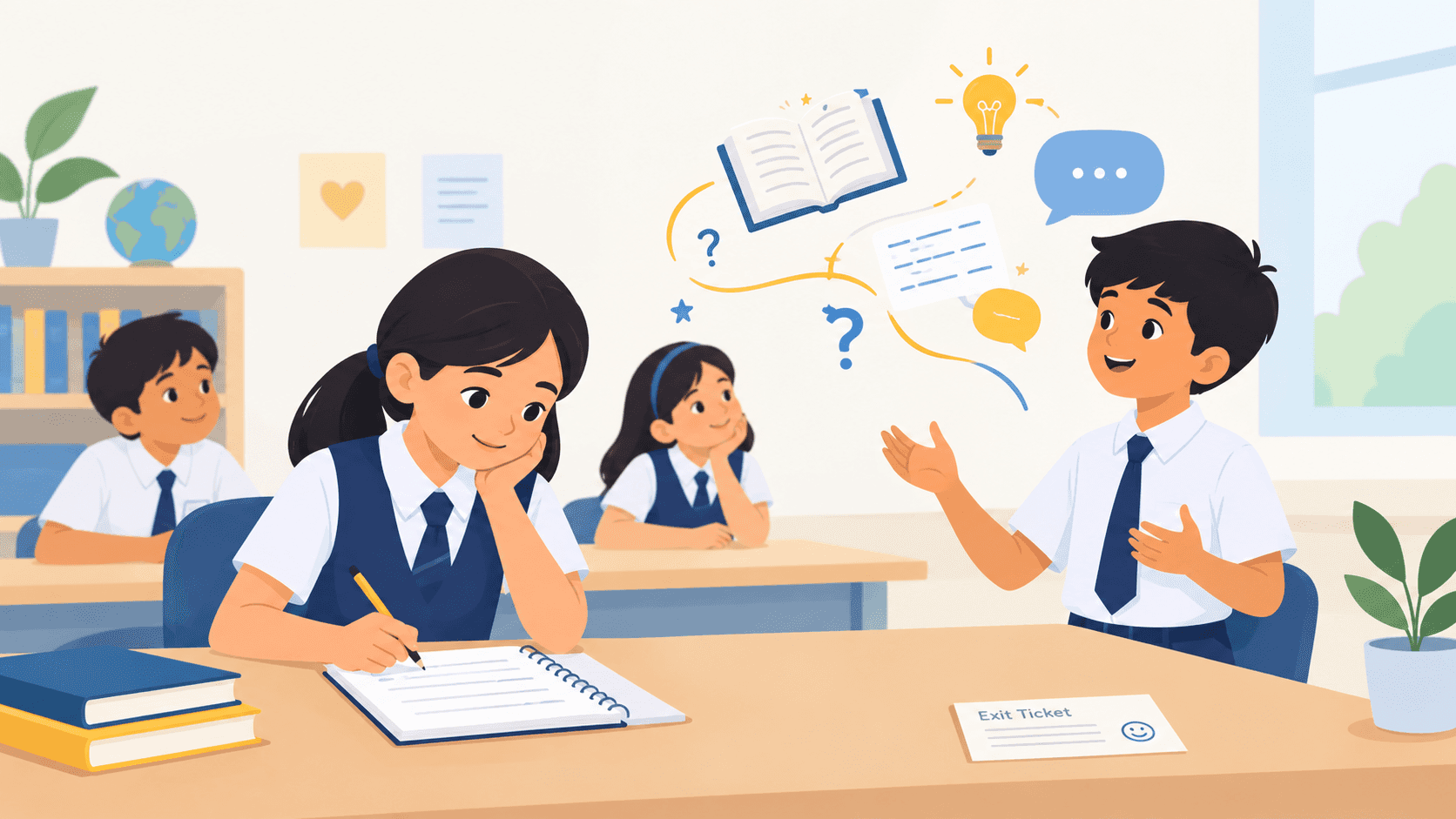

A child may have a head full of questions, half-formed ideas, unusual observations, and stories that make perfect sense to them—but turning those thoughts into words is a different skill altogether. Some children speak easily, while others need time, prompts, and a safe space before they are ready to share what is on their minds.
This is where language-rich learning experiences can make a real difference. Writing, storytelling, reflection, and discussion are not merely activities added to the school day. They can help children organize their thinking, understand their own ideas, and gradually become comfortable expressing them.
At one of the best schools in Greater Noida West, Delhi World Public School, spaces such as Wordsmiths reflect this broader approach by giving language a role that goes beyond conventional reading and writing exercises.
Say More, Express Less
Children do not always struggle because they have nothing to say. Often, the opposite is true.
A student might understand a science experiment but struggle to explain why it worked. Another may have an interesting opinion but hesitate to raise a hand. A child may enjoy a story but find it difficult to describe what they liked about it.
The gap between having an idea and expressing an idea is important.
Language helps bridge that gap. When children repeatedly get opportunities to describe, question, explain, imagine, and reflect, they begin to develop a clearer connection between their thoughts and their words.
This matters across subjects—not just language classes.
A child who can explain why they chose a particular solution in mathematics is demonstrating a different kind of understanding from one who simply writes the answer. A student who can discuss what went wrong during a group project is learning to examine their own actions. A child who can tell a story from another character's perspective is beginning to explore empathy.
In each case, language becomes a tool for thinking.
Also Read | Project-Based Learning in Schools
Reflection can turn an experience into learning
One simple way schools can encourage this process is through reflection.
An Exit Ticket, for example, can be much more than a quick classroom formality. Instead of asking students to reproduce what was taught, it can invite them to think about their own learning.
Questions such as:
- What surprised you today?
- What is one question you still have?
- What idea would you explain to someone else?
- What was difficult, and how did you approach it?
Encourage students to look back at their learning rather than simply move on to the next lesson.
There is an important shift here. The child is no longer only answering the teacher's question. They are learning to ask themselves questions.
That habit can gradually make learning more active.
Storytelling gives children another kind of freedom
Writing can sometimes feel demanding because the child has to create the words themselves. Storytelling offers another route.
A child can begin with a picture, an object, a character, a memory, or even a completely imaginary situation. There does not have to be one "correct" story.
This freedom is particularly valuable for quieter children.
A student who rarely volunteers an answer in a conventional classroom may happily describe what happens to a fictional character. Someone who is hesitant to speak about themselves may confidently speak through a character they have created.
Over time, that experience can make speaking feel less intimidating.
Storytelling also teaches children that communication is not only about getting the grammar right. It is about having something worth communicating.
The shy child needs participation, not pressure
There is a common assumption that confident children are naturally good communicators and shy children simply need to "speak up."
It is more complicated than that.
Confidence often grows from repeated experiences of being heard.
If a child's first attempts at speaking are met with patience and genuine attention, the child learns that their contribution has value. If every mistake is immediately corrected, they may instead become focused on avoiding mistakes.
This is why language activities work best when they create room for experimentation.
A child might first tell a two-sentence story. Later, they may narrate an entire sequence. Eventually, they may be comfortable presenting an idea to a group.
The change may appear small from the outside, but for the child it represents an important transition: "I have something to say, and people will listen."
Words connect learning with real life
Language also helps children connect classroom experiences to the world outside school.
Imagine a student learning about the environment. They could memorize definitions and complete a worksheet. But they could also write a short reflection about something they noticed in their neighborhood, discuss an environmental problem from a character's point of view, or create a story about a community responding to change.
The subject remains the same, but the learning becomes personal.
This is where language becomes a bridge between thought and action.
When children can explain an idea clearly, they are better positioned to discuss it with others. When they can put a question into words, they can seek an answer. When they can tell a story, they can invite someone else into their perspective.
That makes communication part of how children participate in the world, rather than simply another academic skill.
Also Read | Importance of Schools Clubs
Creating spaces where words can grow
The most effective language spaces do not necessarily need elaborate equipment. What they need is intention.
A classroom can become a language-rich environment when children regularly encounter opportunities to:
- Reflect - Pause and think about what they experienced.
- Question - Express curiosity without immediately needing the "right" answer.
- Tell - Turn experiences and imagination into stories.
- Listen - Understand that communication involves receiving ideas as well as sharing them.
- Revise - Discover that ideas can become clearer when words are reconsidered.
These experiences also allow teachers to understand children better. A student's written reflection may reveal a question they never asked aloud. A story may reveal an unexpected interest. A discussion may show that a child has understood an idea in a way that a conventional test would never capture.
From Wordsmiths to everyday learning

This philosophy is visible in the approach behind the Wordsmiths learning space at one of the best CBSE schools in Greater Noida West, the Delhi World Public School. Its focus on activities such as Exit Tickets and Tales & More creates opportunities for children to reflect, narrate, and share ideas rather than treating language as something limited to textbooks.
The larger idea is especially relevant in a time when children encounter an enormous amount of information every day. Knowing information is useful, but being able to make sense of it, question it, and communicate what it means is equally important.
A reflection can help a child recognize what they have learned. A story can help them understand another perspective. A question can open a new direction for inquiry. A conversation can turn an individual thought into a shared idea.
That is what makes spaces like Wordsmiths meaningful. They are not simply trying to produce children who speak more. They are helping children discover what they want to say, why it matters, and how they can make others understand it.
And perhaps that is one of the most valuable things a language-rich education can offer: not a louder voice, but a child who gradually learns to trust their own words.
To know more about other schools in Greater Noida West, click on the link below
 as a preferred source on