







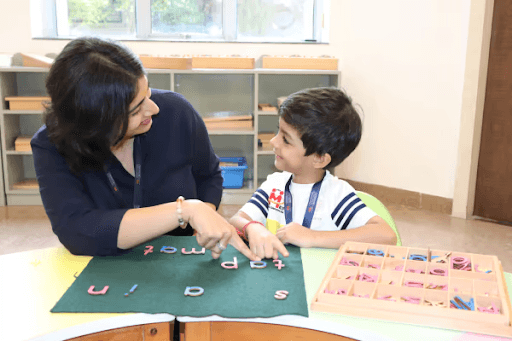

Finding the right school for your child is one of the biggest tasks for any parent. In a city like Faridabad, where many schools promise top-tier education, it can be hard to find the real differences. You might see flashy buildings or large sports grounds everywhere. But true education happens inside the mind of the student. This is where Manav Rachna International School (MRIS), Sector 21C, Faridabad, one of the best schools in Faridabad, stands apart from the crowd.
While many schools focus heavily on memorising textbooks for exams, MRIS Sector 21C has chosen a different path. They focus on two distinct pillars that form the foundation of all future learning: a specialised Reading Programme and a unique Quick Calculation Programme. These aren't just extra classes; they are the heart of the school’s academic distinctiveness.
In this closer look, we will explore how these two programs work and why they make MRIS Sector 21C a leader in modern education.
Why Reading and Calculation Matter More Than You Think?
Before we dive into the specific programs, let’s ask a simple question: What makes a child successful in the future? Is it just knowing facts? No. Children succeed when they understand information deeply (Reading) and solve problems logically (Calculation).
MRIS Sector 21C knows this secret. The school understands that children who read with deep understanding and calculate with speed and accuracy can conquer any other subject, like Science, History, or Coding. This is why the school invests so much effort in designing programs that go beyond the standard CBSE curriculum.
The Specialised Reading Programme
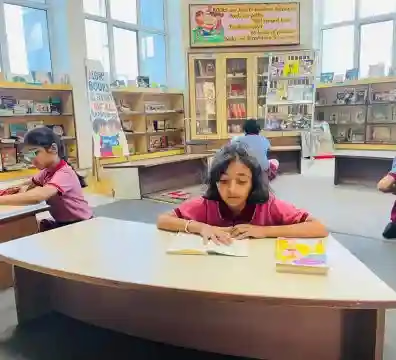
In many schools, students just read textbook chapters to pass tests. At MRIS Sector 21C, the school treats reading as a life skill and a superpower. The school believes that children who love reading grow into adults who love learning.
The Magic of Lexile Levels
MRIS Sector 21C uses Lexile Frameworks in a special way. This sounds fancy, but the idea is simple and smart. If you give a heavy novel to a 7-year-old, they get frustrated and quit. If you give a baby picture book to a 12-year-old, they get bored and stop. In both cases, the child gives up on reading.
MRIS Sector 21C fixes this by testing every student's reading ability. They call it the Lexile measure. They match each child with books at just the right level. These books challenge the child enough to help them grow, but they are not so hard that the child quits. This smart, science-based method is rare, and it helps students improve reading quickly.
D.E.A.R. Time (Drop Everything And Read)
To build a habit, you practice it every day. MRIS Sector 21C does D.E.A.R., which means Drop Everything And Read.
During this time, everyone stops what they are doing. Students, teachers, and staff all pick up a book and read for fun. This creates a strong shared space. When a Grade 2 student sees their teacher or principal reading with focus, they understand that reading matters for everyone, not just homework. It develops a culture of quiet, focus, and imagination.
From Reader of the Week to Confident Speakers
The school knows children love rewards. They keep excitement high with programs like Reader of the Week. This honors students for their steady effort. Reading brings benefits beyond quiet time. Students at MRIS 21C read all kinds of books, fiction, non-fiction, and encyclopedias. This quickly grows their vocabulary.
Children who read more words learn more words. This helps them speak and write better. When you walk the corridors of MRIS 21C, you hear students speak with real confidence. Their clear way of talking comes straight from the school's strong reading culture.
The Quick Calculation Programme
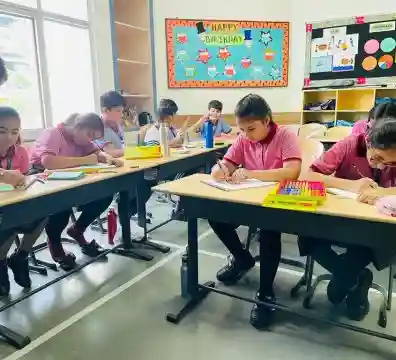
Mathematics is often the most feared subject in school. Many students hate math because they find it slow, confusing, or boring. MRIS Sector 21C decided to change this completely with their Quick Calculation Programme.
Banish the Fear of Numbers
The first goal of this program is to remove fear. When a student relies heavily on a calculator or finger-counting for simple sums, they lose confidence. They start believing "I am bad at math."
The Quick Calculation Programme trains the brain to handle numbers naturally. Teachers at MRIS Sector 21C, one of the best CBSE schools in Faridabad, use specialised techniques that encourage mental math. They teach students to visualize numbers and operations in their heads. This turns math into a game rather than a chore. When a student can mentally solve a problem faster than their friend can type it into a phone, they feel a rush of pride. That confidence is the key to loving math.
Speed and Accuracy: A Winning Combination
In the real world, and in competitive exams like Olympiads or entrance tests, speed matters. It is not enough to get the right answer; you must get it quickly.
The school’s curriculum integrates methods that are often found in advanced Abacus or Vedic Math training. These methods teach shortcuts and logical patterns that standard textbooks often miss. For example, instead of doing long, messy rough work on the side of the page, an MRIS student learns to break the numbers down and solve them step-by-step mentally.
This training is why MRIS Sector 21C students frequently top the charts in Math Olympiads and inter-school competitions. They aren't just memorising formulas, they are playing with numbers.
Improving the Numeracy Learning Area
This program is part of the school's broader Numeracy learning area. The school connects these quick calculation skills to real life. Students learn that math is everywhere, whether in handling money, in measuring space for a project in the Makershala, or in understanding time. By mastering quick calculations, students free up their brainpower to think about the logic of a problem, rather than getting stuck on the addition or subtraction.
How do These Programs Work Together?
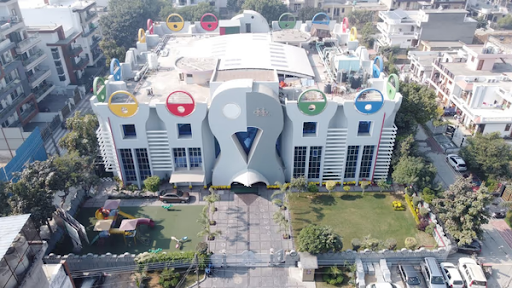
You might think Reading and Math are opposites. One is about stories and words; the other is about logic and numbers. But at MRIS Sector 21C, they see them as two sides of the same coin.
Whole Brain Development
The Reading Programme stimulates the creative and linguistic parts of the brain (often called right-brain thinking). The Quick Calculation Programme stimulates the logical and analytical parts of the brain (left-brain thinking).
By pushing both programs equally, MRIS Sector 21C ensures the Whole Brain Development idea. A student here doesn't have to choose between being artsy or nerdy. They become well-rounded thinkers. They can read a complex word problem in a Science exam, understand it perfectly (thanks to reading skills), and solve the equation quickly (thanks to calculation skills). This combination is what produces the high achievers the school is known for.
Outside of the Classroom: The Future Skills Connection
0The school’s focus on reading and calculation also feeds into their other famous facility: the Makershala and Innovation Labs.
In the Makershala, students build robots, design structures, and use 3D printers. But how do you design a robot if you can't calculate the measurements? How do you code if you can't read and understand the logic?
The Quick Calculation Programme gives students the mental agility to make quick decisions while building projects. The Reading Programme gives them the patience and comprehension skills to read technical manuals or research new ideas. This is how MRIS Sector 21C connects the dots. They don't just teach subjects in isolation; they develop a foundation that supports innovation.
Why This Matters to Parents?
As a parent, you want your child to be ready for the future. As the world is changing fast, new jobs will appear that we cannot even imagine yet. However, two skills will never go out of style: the ability to learn new things (i.e., Reading) and the ability to think logically (i.e., Calculation).
By choosing MRIS Sector 21C, you are not just choosing a school with a nice campus. You are choosing a school that goes deep into the basics. You are choosing a system that ensures your child will never feel lost in a library or scared of a Math test.
The teachers at MRIS Sector 21C don't just give lectures; they guide students through these programs, tracking their Lexile levels and celebrating their calculation speeds. They turn learning into a personal journey for every child.
Conclusion
Manav Rachna International School (MRIS) Sector 21C in Faridabad stands out because of its special Reading Programme that uses science-based Lexile levels and the D.E.A.R. method to help students become eager readers who understand what they read. At the same time, the Quick Calculation Programme ends math fears and teaches kids fast mental math for quick, accurate problem-solving.
For parents, when you tour the MRIS Sector 21C, ask the counselor about the Lexile test and request a reading progress report. Watch a Math class to see their speedy calculation tricks in action. Check the library and notice the students' confidence. Don’t focus on just the buildings, check here if you want brain skills over boring memorisation. Strong basics now lead to great grades and a successful professional career for your child.
To learn more about this and other schools nearby, see this list of the top schools in Faridabad.
 as a preferred source on