







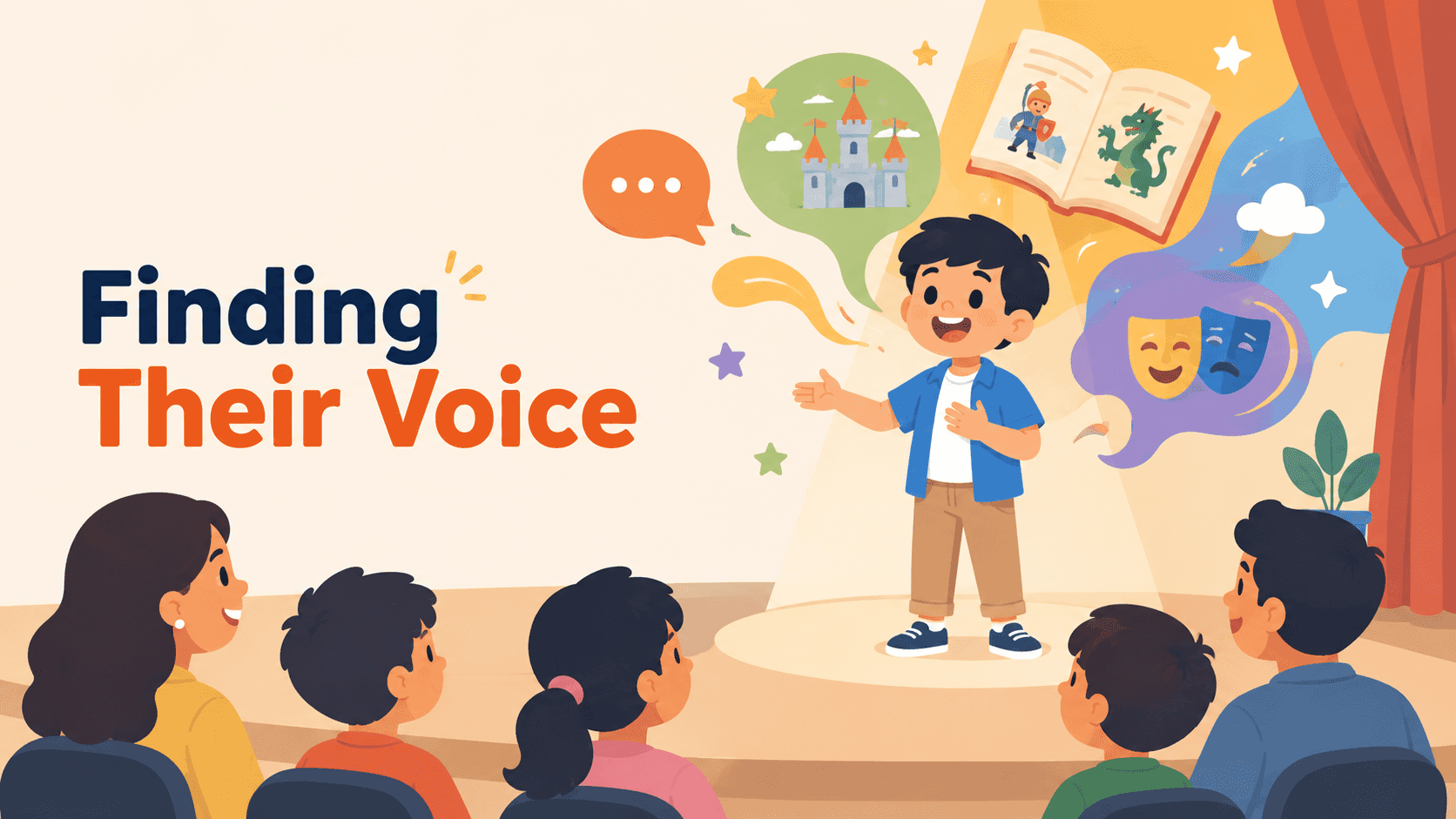

A child standing in front of a group with a favorite toy, a handmade model, a picture, or an object from home may seem like they are taking part in a simple school activity. But a Show and Tell session can do something much bigger. It creates a small stage where children learn that their thoughts, experiences, and ideas are worth sharing.
That is what makes activities like these meaningful. Recently, one of the best schools in Delhi, The Bethesda Christian Academy, conducted a Show and Tell competition where children participated with enthusiasm, confidence, and creativity. Beyond the performances and presentations, such an activity points towards an important question: How do children learn to find their voice in the first place?
The answer is not simply by telling them to “speak confidently.” Confidence is usually built through repeated opportunities to think, express, listen, make mistakes, and try again.
Communication Begins Before Perfect Language
Adults often associate communication skills with speaking clearly, using the right words, or delivering a good presentation. For young children, however, communication begins much earlier.
A child may communicate through a story about their favorite object, an excited explanation of how something works, a question they have been thinking about, or even a drawing they want to explain. These moments help children connect what is happening inside their minds with the words they use outside.
This is why Show and Tell can be more than a speaking exercise.
When a child chooses something to present, they first have to make a decision: What do I want to share? Then comes another challenge: How can I explain why it matters? They may organise their thoughts, remember details, anticipate questions, and respond to their audience.
Without realizing it, the child is practicing a basic form of structured thinking.
Also Read | Study Smarter, Remember Better
The Important Shift: From Performing to Sharing
Sometimes school activities can accidentally become focused only on performance. Who spoke the loudest? Who remembered every line? Who looked the most confident?
But the real value of a show-and-tell activity does not have to lie in producing a perfect performance.
In fact, a child who pauses, forgets a word, laughs, and starts again may be learning something equally valuable: it is okay not to get everything right the first time.
This changes the purpose of the activity. Instead of teaching children, “Stand up and impress everyone,” it can teach them, “You have something to share, and we are listening.”
That difference matters.
Children who are constantly worried about getting an answer right may become hesitant to speak. On the other hand, children who are regularly given space to explain their own ideas begin to understand that communication is not only about having the “correct” answer. It is also about participating in a conversation.
Choosing What to Say Is Also a Skill
One of the most interesting parts of Show and Tell is the word “choose.”
Children are often given instructions throughout the day: read this, write that, and answer this question. A show-and-tell format can offer a different kind of freedom. The child gets to bring something connected to their own world.
It could be a book, a family photograph, a craft project, a small object, or something connected to a hobby. Suddenly, the classroom is not only filled with information selected by adults. It also contains pieces of the children's own experiences.
This can make learning more personal.
When children talk about something they know or care about, they are often more willing to participate. The challenge then becomes helping them move from simply saying, “This is my toy,” to explaining, “This is why I chose it.”
That small shift encourages reflection.
Listening Is the Other Half of Show and Tell
A room full of children taking turns speaking is also a room full of children learning to listen.
While one child presents, the others have an opportunity to hear about experiences that may be different from their own. They may discover a new interest, hear an unfamiliar idea, or ask a question they had not thought of before.
This makes communication a two-way process.
Good communication is not only about being able to hold the microphone. It is also about knowing when to listen, how to pay attention, and how to respond respectfully to someone else.
Schools can make these activities even more meaningful by encouraging children to ask simple follow-up questions. Instead of applause being the only response, a classmate might ask, “Why did you choose this?” or “How did you make it?”
Now the activity becomes a conversation rather than a sequence of individual speeches.
Small Audiences Can Prepare Children for Bigger Spaces
Not every child feels comfortable speaking in front of a large group. And they do not need to become confident overnight.
A classroom can act as a practice space.
The first attempt may be in front of a few classmates. Later, it may be a group presentation, a school assembly, a debate, or a larger event. Over time, children learn that standing up and speaking does not have to be an extraordinary or frightening experience. It can become a familiar part of learning.
The key is repetition without unnecessary pressure.
Children need opportunities to speak often enough that communication becomes a habit, rather than an occasional high-stakes event. A school culture that values student voice can create these opportunities through storytelling, discussions, presentations, exhibitions, role-plays, and collaborative projects.
Also Read | House System in Schools
What Adults Can Learn From Show and Tell
Perhaps these activities also carry a useful lesson for adults.
When children are asked to share, adults should be prepared to genuinely listen.
It is easy to guide every sentence, correct every word, or take over when a child hesitates. Sometimes support is necessary, but too much intervention can send an unintended message: Your voice is not ready yet.
Children do not always need adults to make their thoughts sound perfect. Often, they need enough patience to complete those thoughts themselves.
A hesitant explanation today can become a clearer one tomorrow. A child who speaks softly today may become more expressive after several opportunities. Growth does not always look polished while it is happening.
Building Confidence Through Everyday Opportunities

This is where activities such as the Show and Tell competition at one of the best CBSE schools in Delhi, Bethesda Christian Academy, become part of a larger learning experience. The enthusiasm and active participation of the children show how a simple platform can encourage them to step forward, communicate, and share something of their own.
The value lies not only in who performs the best but also in the fact that every participating child gets an opportunity to stand up and be heard. Creativity, communication, confidence, and curiosity often grow together when children are given regular chances to express themselves.
For schools, this is a useful reminder that communication skills cannot always be developed through worksheets or instructions alone. Children need real situations where they can practice using their voice.
The Show and Tell activity at BCA Delhi reflects this idea in a simple but meaningful way: give children something to think about, give them the space to express it, and let them discover that an audience is not always something to fear. Sometimes, it is simply a group of people waiting to hear what they have to say.
Because before children can confidently speak to the world, they first need places where they learn that their voice belongs in the conversation.
To know more about other schools in Delhi, click on the link below
 as a preferred source on