







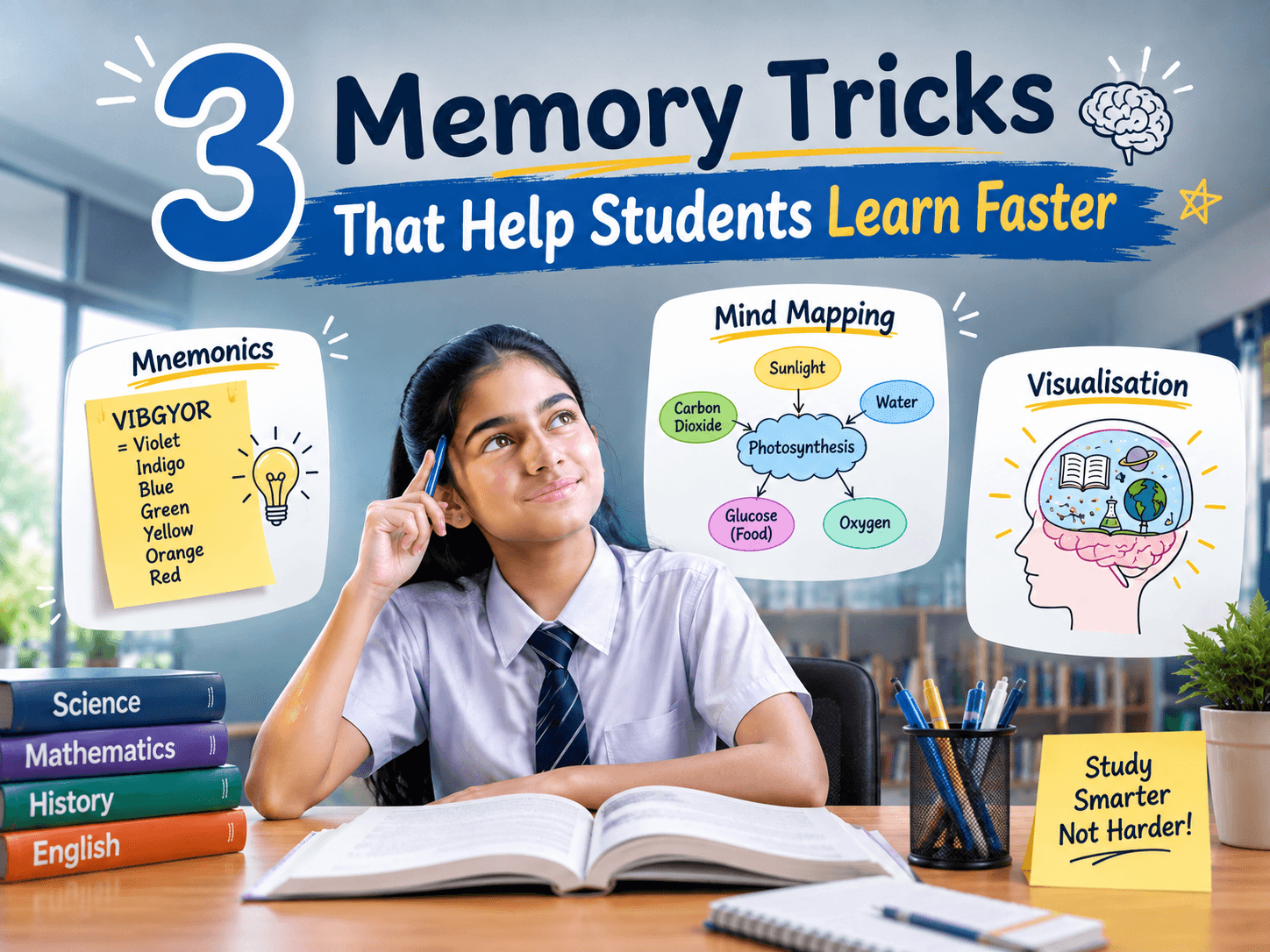

One thing every student searches on Google before an exam is "how to remember things before exams," and I bet every student will relate to this: their mothers start giving them almonds and walnuts every morning so their memory stays sharp. A sharp memory actually plays a big role in every student's life, whether it's cramming formulas the night before a math test or trying to recall an entire history chapter in the exam hall. Almonds and walnuts help, sure, but memory is also a skill, and most students are never really taught how to use it.
This article will be really helpful for students who are looking for certain tricks and hacks to memorize things easily. We'll give you 3 powerful hacks here, and additionally share examples of how top schools in Delhi, like Bethesda Christian Academy, are using these best practices so that learning doesn't take too much effort to remember. Students get it in their heads for life.
Also Read: The Importance of Life Skills Education in Today's Schools
3 Best Memory Hacks For Students
Let's break down three simple yet powerful hacks that can make anything easier to remember and easier to recall exactly when it matters.
1. Teach Out Loud & Active Recall
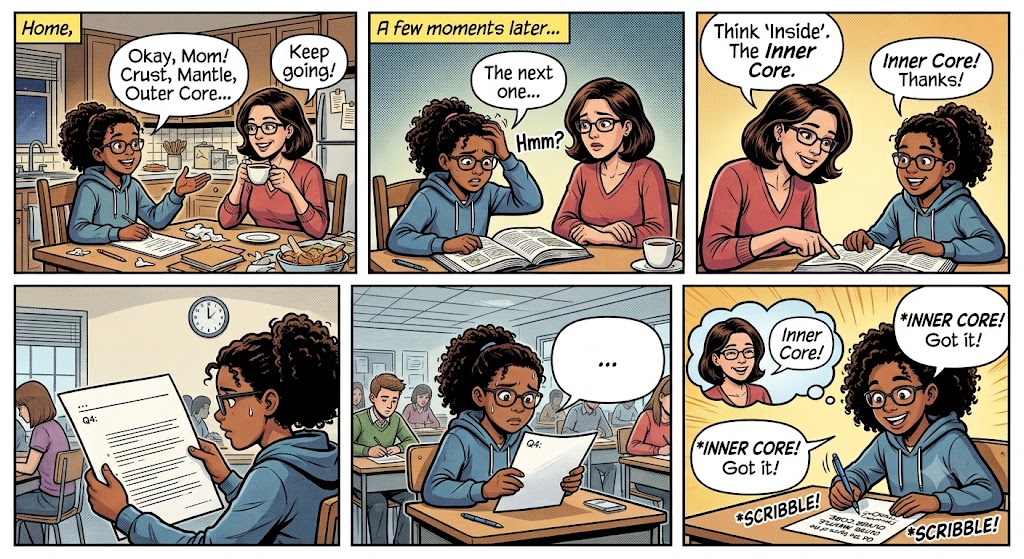
Teach Out Loud
You know that feeling when you watch a movie and then narrate the whole thing to your friend the next day, every twist, every dialogue, sometimes even the background music? You don't even try to remember it; it's just... there. And chances are, you'll still remember that movie years later.
That's not random. The second you explain something to someone else, your brain stops just "recognizing" it and actually starts pulling it out from memory and rebuilding it in your own words. That's the whole magic behind teaching back and active recall, and honestly, most of us have been doing this since childhood without even realizing it.
Active Recall
Speaking of childhood, remember this one?
- You're sitting with your answer book before an exam, reciting it out loud to your mother
- The second you blank out, you go, "Mummy, iske baad kya aata hai, last baar bata do"
- And somehow, that one line she fed you at that exact moment stays stuck in your head forever
- Next time that question shows up in the exam, boom, you remember exactly what she said, word for word
That right there is active recall doing its job. You're not just re-reading the answer; you're forcing your brain to actually go find it and put it back together, which is a completely different (and much stronger) kind of memory.
So next time you're prepping for an exam, try this instead of just reading your notes one more time:
- Pick a long answer, the kind that usually slips out of your head under pressure
- Say it out loud, to a friend, a sibling, your mom, or honestly even your own reflection in the mirror works fine
- The moment you get stuck or fumble somewhere, that's your cue; that's exactly the part that needs another look
- Once you can say the whole thing smoothly without peeking at the book, that's when you know it's actually in your head now, not just sitting in your notebook
2. Mnemonics
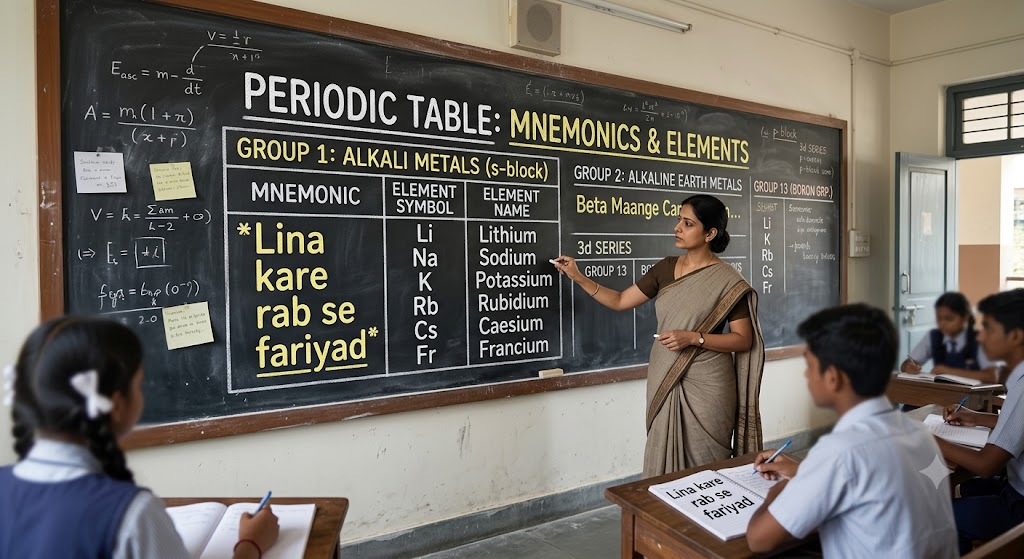
Every student has that one topic that just won't stick. Not because it's hard, just because there's nothing to hold on to: random names, dates that all blur together, battles that sound the same by the second read. This is where mnemonics come in, and honestly, most of us have been using them for years without knowing they had a name.
Take a classic History problem, remembering three battles in the right order:
- Battle of Plassey
- Battle of Wandiwash
- Battle of Buxar
Looks harmless on paper, right? But ask a student a week later which one came first, and there's a good chance they'll mix it up. So instead of reading these three lines over and over, here's what actually works:
Pick the first letter of each battle, in order: P, W, B
- Turn those letters into a silly little sentence, something like "Papa Wants Biryani"
- It doesn't need to make sense; it just needs to be a little funny or a little visual, because that's what makes it stick
- Once that sentence is in your head, the order comes back on its own: Plassey first, then Wandiwash, then Buxar
No re-reading, no repeating, just one dumb sentence doing all the work.
And this isn't just a battles thing. Any time there's a list, a sequence, or an order that needs to be remembered exactly- dates, steps in a process, names of movements- the same trick applies:
- Take the first letter of each item, in the correct order
- String those letters into a silly, everyday sentence; food, family, and Bollywood references tend to work best
- Let that one sentence trigger the whole list in your head during the exam
The dumber the sentence, the better it usually sticks. That's really all there is to it.
3. Flow Charts
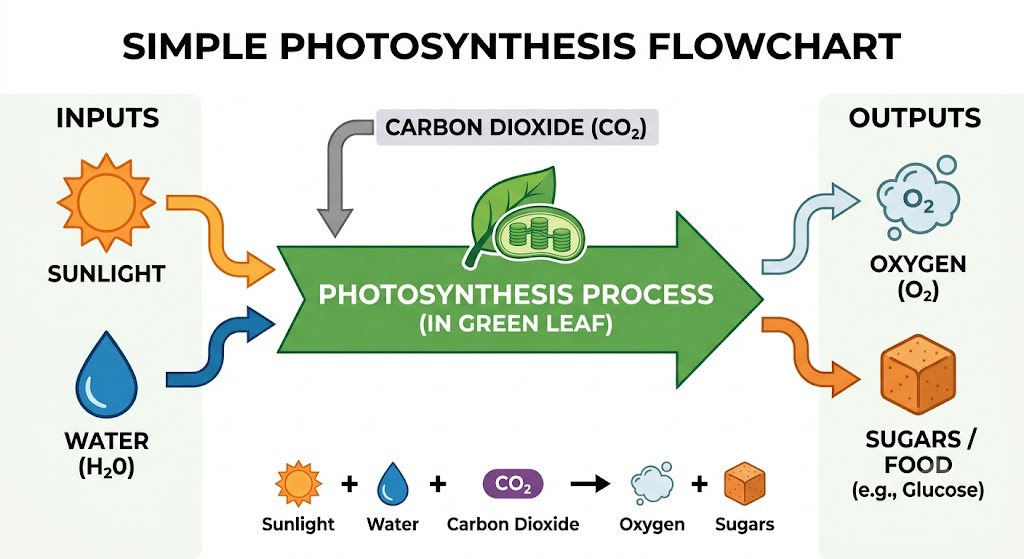
Some answers just aren't meant to be memorized as paragraphs; they're meant to be seen. Anything with a sequence, a cycle, or one thing leading to another is where flow charts genuinely save you, especially in subjects like Biology, History, or Civics where the answers tend to run long.
Take photosynthesis, a Biology answer almost every student ends up memorizing word for word at some point. Instead of cramming that whole paragraph about sunlight, water, and carbon dioxide turning into glucose and oxygen, just draw it out:
Sunlight + Water + CO2 → Chlorophyll absorbs light → Glucose is produced → Oxygen is released
Once that picture is in your head, you no longer need the paragraph. In the exam, you're not trying to recall sentences; you're just looking at the flow chart in your mind and describing what you see.
Same trick works for History. Say you're trying to remember what led up to India's independence movement; that's a lot of paragraphs to hold onto. But turn it into a flow:
Partition of Bengal → Formation of the Indian National Congress → Non-Cooperation Movement → Quit India Movement
Now it's a timeline you can actually picture, and the moment the sequence is clear in your head, the details around each point tend to come back on their own.
Makes sense too, if you think about it. Our brains are just better at holding onto pictures, positions, and sequences than plain text. A flow chart takes something that feels like a lot on paper and turns it into a simple visual you can walk through, one step at a time.
Also Read: 5 Signs You Are Choosing the Right School for Your Child
Why Some Schools Make Memory Effortless: The Bethesda Christian Academy Approach

Funny thing is, all three tricks above work for the same basic reason: they make you actually do something with the information instead of just staring at it. And if you look at how Bethesda Christian Academy, one of the top schools in Chattarpur, Delhi, runs its classrooms, that's basically the whole idea baked in from day one.
Most students only find these tricks out of pure panic, usually at 11 pm the night before an exam. Bethesda kind of skips that whole scramble. Experiential learning is a big part of how classes actually run there; kids get their hands on the concept itself instead of reading a paragraph and hoping it sticks. Sounds a lot like reciting your answer to your mom before an exam, honestly, except it's not a one-time thing before a test. It's just what a regular class day looks like.
You can see it in small ways too. Lessons are built so students apply what they're learning instead of just absorbing it, which is really just active recall happening in real time. Classrooms also lean on visuals and digital tools a lot; the same reason a flow chart works better than a paragraph, seeing something is just easier to hold onto than reading about it.
And honestly, that's the whole point the school seems to be going for: knowledge that's still there years later, not just memorized for a test and forgotten by the next week. So sure, almonds and walnuts will keep showing up every exam season, but at a lot of the top schools in Chattarpur, Delhi, including Bethesda, the real work is already happening in the classroom, long before any exam ever shows up.
For more information regarding this school and other schools in the nearby area
 as a preferred source on