








Being a parent, what do you look for in a school? It can’t just be good academics and facilities; it needs to be more than that, right? You want to understand how things actually work behind the scenes, how decisions are made, what happens when situations don’t go as planned. Because the truth is, parenting already comes with enough uncertainty, you don’t want to feel that same uncertainty when it comes to your child’s school.
It often begins with small moments, like where a rule you didn’t know existed, a sudden change in schedule without a clear explanation, or an issue your child mentions but you’re not quite sure how the school handled it. At first, you may brush it off, but if it happens over time, then these small gaps in communication start turning into doubt. And doubt, even when it’s subtle, affects trust.
That’s why transparent school policies matter more than we realise. Did you realize that knowing about a school’s policies tells you how fairness is perceived, how much confidence you place in the school’s system? This is something you begin to notice when exploring the best boarding schools in India, especially institutions like Douglas Memorial Higher Secondary School(DMHSS), Barrackpore, Kolkata (Boarding), where clarity and communication play a key role in building trust. Because when things are clear, you feel secure, and when you feel secure, you trust.
Also Read | What Parents Actually Look for Before Sending Their Child to a Boarding School
Why Transparency in School Policies Is No Longer Optional
Schools today are no longer just places where children go to study. They are ecosystems, built on relationships between students, parents, and educators. And like any relationship, trust becomes the foundation.
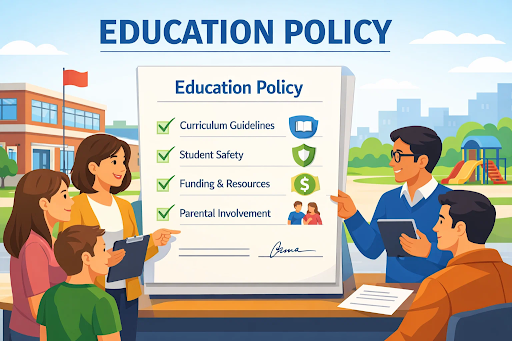
Transparency, in simple terms, is about openness and clarity so that there are no hidden rules, no confusing processes, no unexplained decisions, and parents know where things stand.
- What are the expectations?
- How the system works
- What steps are taken in different situations
And this clarity changes everything. Research in education and school management has consistently shown something quite clear: Schools with transparent systems tend to see higher levels of parent satisfaction and engagement. It’s not just a theory; studies suggest that when parents actually understand school policies, their involvement in their child’s education increases, sometimes by more than 30%.
And that involvement makes a real difference. Because when parents trust the system, they support it. And when they support it, children benefit. Transparency, at this point, is no longer just a “good practice.” It’s becoming a necessity.
What Transparent School Policies Actually Look Like
From a parent’s perspective, transparency is not about getting long documents filled with complicated language. It’s about something much simpler, like clarity, accessibility, and consistency. This is what it really looks like in real life:
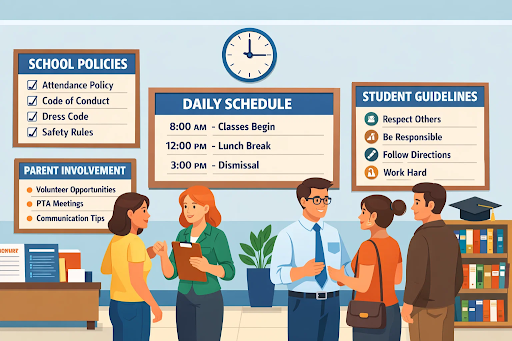
Guidelines that are easy to understand: Policies about attendance, discipline, tests, and safety are shared in a way that parents can easily understand. No technical language. No mix-up. Rules are not just written down; they are also followed. And, more importantly, they are used the same way for all students. This feeling of fairness makes parents feel more sure of themselves.
- Open and regular communication: updates are shared on purpose. Parents are always kept up to date on changes in policy, upcoming events, or important decisions. They never have to guess.
- Processes for Concerns That Are Clear: Parents know exactly what to do, who to call, what steps will be taken, and how long it might take to fix a problem. This removes frustration and uncertainty.
- Opportunities for Feedback: Transparent schools don’t just communicate, they listen. They create space for parents to share concerns, suggestions, and opinions.
Check Out | The Impact of Outcome-Based Education on Student Achievement
How Douglas Memorial Higher Secondary School (DMHSS), Barrackpore, Kolkata, Builds Trust Through Transparent Policies
This is where things start to feel real for us as parents. At Douglas Memorial Higher Secondary School (DMHSS), Barrackpore, Kolkata, transparency is not just something written in a handbook; it’s something you experience, and honestly, that makes all the difference. From what parents observe, the school focuses on clarity in a way that feels consistent and reassuring.
- Clear Communication from the Start: Right from admissions, the school ensures that parents understand its rules, expectations, and processes. There’s no confusion about how things work, which immediately builds a sense of trust.
- Regular Updates and Open Channels: Whether it’s academic progress, schedule changes, or important announcements, communication is steady and structured. Parents are kept informed, not left guessing.
- Defined Processes for Concerns: If an issue comes up, there is a clear path to address it. Parents know who to approach and how concerns will be handled, which reduces unnecessary stress.
- Consistency in Rules and Discipline: Having policies means following them, at every situation, keeping morality intact. Hence, having rules means fairly applied to all the students.
- Encouraging Parent Involvement: The school creates space for interaction through meetings, feedback systems, and discussions. It doesn’t feel like a one-way system; it feels like a partnership.

And as a parent, you begin to notice the impact, like:
- You feel more confident reaching out.
- You feel more assured about decisions being made.
- You feel more connected to your child’s school environment.
The Final Thought
At the heart of every good school is not just academic excellence or modern infrastructure. It’s trust. The kind of trust that lets you drop your child off in the morning and know that they are in a safe, fair, and well-run place, and that you can focus on their growth instead of worrying about what is going on behind the scenes.
But it doesn't happen overnight. It grows slowly, through clear communication, consistent actions, and honest systems. Clear school rules are a big part of this. They show parents that the school is open and honest, that decisions are made carefully and fairly, and that questions are not only welcome but also encouraged. This is the kind of clarity you should be looking for when you look into the best boarding schools in India. This is exactly the kind of clarity you should be looking for, even if it’s not the first thing that gets highlighted.
And this openness grows into something stronger over time. A true partnership between parents and teachers. Parents feel better when schools are open and honest. Parents are more likely to get involved when they feel sure of themselves. And kids get the most out of it when that involvement grows.
In the end, being open isn't just about what you write down. It's about the kind of school culture that exists. One where people feel like they know what's going on, are respected, and are connected. And as a parent, that clear and confident feeling is not just comforting. It is very important.
If you’d like to explore this further or look at similar options, you can browse through a list of some of the best boarding schools in India.

 as a preferred source on