







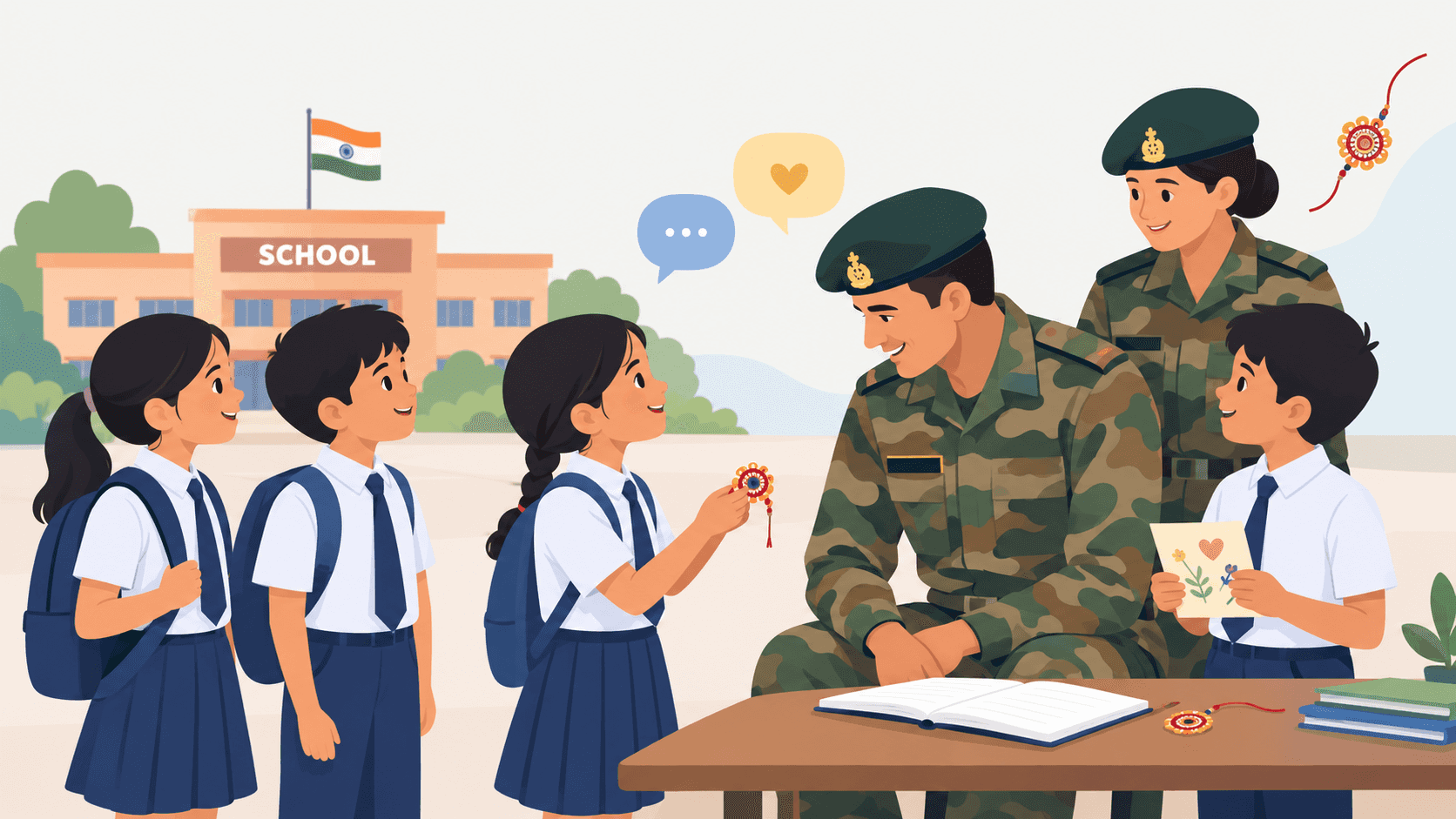

A classroom can explain courage. A textbook can define discipline. A teacher can talk about responsibility. But there are some lessons that become much more meaningful when children encounter them in the real world.
For children, values such as gratitude, respect, and responsibility can sometimes remain abstract. They may understand what these words mean, yet still struggle to see what they look like in everyday life. Experiences outside school can change that. The way that Rakshabandhan was celebrated at one of the best schools in Bangalore, BVM School, proves exactly this. When students meet people who serve others as part of their daily lives, values stop being definitions and become something they can observe, question, and remember.
This is one reason school visits, community interactions, and service-learning experiences can have a deeper impact than a conventional lesson on values.
The Difference Between Hearing About Service and Seeing It
Children regularly hear adults talk about helping others. They are encouraged to share, cooperate, and be responsible. These are important lessons, but young learners often understand ideas best when they can connect them to something tangible.
Imagine a student meeting someone whose profession demands discipline every day—not because there is a test at the end of it, but because other people depend on them.
That encounter can lead to very different questions.
- What does it mean to be responsible when nobody is watching?
- Why does discipline matter when a task becomes difficult?
- How does someone continue serving others even when the work is demanding?
These questions are valuable because they move children from simply knowing a value to thinking about how that value operates in real life.
Why Meeting People Outside Their Usual Circle Matters
Children's worlds can naturally be quite small. Their experiences often revolve around home, school, friends, activities, and familiar adults. Meeting people from different professions and backgrounds gradually expands that world.
A visit to a fire station, hospital, farm, court, laboratory, community organisation or military establishment can expose students to forms of work they may otherwise know only through stories.
The objective doesn't have to be to inspire every child to choose a particular career. In fact, that misses the larger educational opportunity.
The more important lesson is that society functions because different people take responsibility for different things.
A child begins to see that the person teaching them, the person treating a patient, the person maintaining public infrastructure, and the person protecting the country may all contribute differently to the same larger idea: making life safer, stronger, or better for others.
That understanding can nurture respect without turning the experience into a lecture about respect.
Also Read | Flexible pacing outperforms one-size-fits-all
The Quiet Power of Small Gestures
One of the most interesting things about value-based learning is that it doesn't always require a grand activity.
Sometimes, a small gesture can create the strongest connection.
Making something by hand, writing a note, asking questions, listening carefully, or simply spending time with someone can teach children that appreciation isn't always expressed through elaborate words.
This is particularly relevant during festivals such as Raksha Bandhan. The festival is traditionally associated with the bond between siblings, but its underlying idea of protection can also open a wider conversation with children.
What does protection mean?
It can mean looking after a brother or sister. It can mean helping a friend who is struggling. It can mean caring for an elderly person. It can also mean understanding the responsibilities carried by people whose work involves protecting others.
This broader interpretation allows a familiar festival to become a starting point for conversations about duty, community, and mutual care.
When Children Become Participants, Not Spectators
There is an important difference between taking children somewhere and involving them in an experience.
A school trip can become little more than sightseeing if students simply observe what is happening around them. But when they have a role—creating something, asking questions, interacting respectfully or contributing in some small way—they become participants.
Participation encourages ownership.
A handmade Rakhi, for instance, isn't merely a craft activity. The process of making it can give children time to think about who they are making it for and why. The meaning comes not only from the finished object but from the intention behind it.
This is where experiential learning becomes powerful. Children remember what they did, whom they met and how they felt. Months later, that memory can become a reference point when they encounter similar ideas in class.
A lesson about citizenship suddenly has a real person attached to it.
A conversation about sacrifice has a real experience behind it.
A discussion about gratitude becomes connected to something the child personally expressed.
Turning Festivals Into Windows Into Society
Festivals provide schools with an unusual educational opportunity because they already carry emotional and cultural meaning for children.
Instead of treating them only as calendar events involving decorations, sweets, and activities, schools can use festivals to explore the values underneath them.
- Raksha Bandhan can open conversations about protection and relationships.
- Diwali can lead to discussions about light, renewal, and community.
- Eid can create opportunities to explore generosity and togetherness.
- Christmas can become a conversation about kindness and giving.
The purpose isn't to turn every celebration into an academic exercise. Children should still be allowed to enjoy festivals simply for what they are.
But occasionally asking “What else can this celebration make us think about?” can help children discover connections between culture and the wider world.
Also Read | Starting JEE & NEET Prep Early
A Raksha Bandhan Experience Beyond the Family
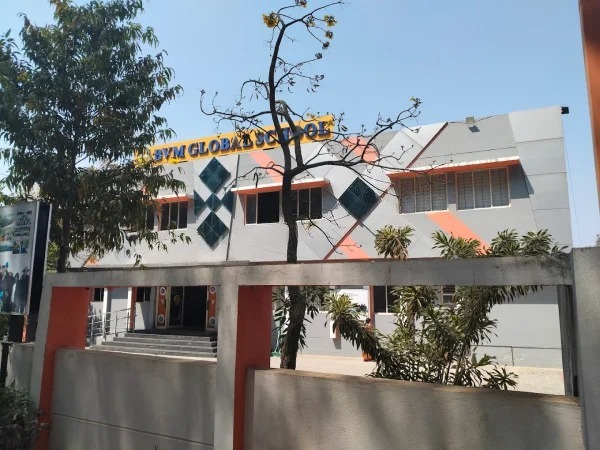
This idea came alive through a Raksha Bandhan experience at the ASC Centre North, where students from one of the best CBSE schools in Bangalore, BVM Global School visited to tie handmade Rakhis to Army personnel.
What makes an experience like this meaningful is not simply the ceremonial act of tying a Rakhi. The interaction gives children an opportunity to encounter people whose professional lives are shaped by discipline, responsibility, and service.
The handmade Rakhis also add a personal dimension. Students weren't simply attending an event; they had something they had created themselves to share.
For a child, that can make the interaction feel much more personal. The experience creates space to listen, observe, and understand that the idea of “protection” can extend beyond the relationships children encounter at home.
From a School Visit to a Lasting Lesson
The real educational value of such an experience may not be visible immediately.
A child may return home talking about the visit, the people they met, or the Rakhi they tied. But over time, the memory can become part of how they understand responsibility and service.
That is perhaps the strongest argument for taking learning beyond the classroom.
Schools cannot manufacture every life lesson through worksheets. Some lessons need people, places, and experiences. Children need opportunities to see different kinds of responsibility up close and discover that values are not merely things adults ask them to practice—they are qualities people use to build communities and carry out meaningful work.
The Raksha Bandhan interaction at BVM Global School offers one such example. By bringing students and Army personnel together, the experience connected a familiar festival with a much larger idea of service and responsibility.
And perhaps that is what makes these experiences worth remembering: children don't just learn about the world; for a moment, they become part of it.
To know more about other schools in Bangalore, click on the link below
 as a preferred source on