







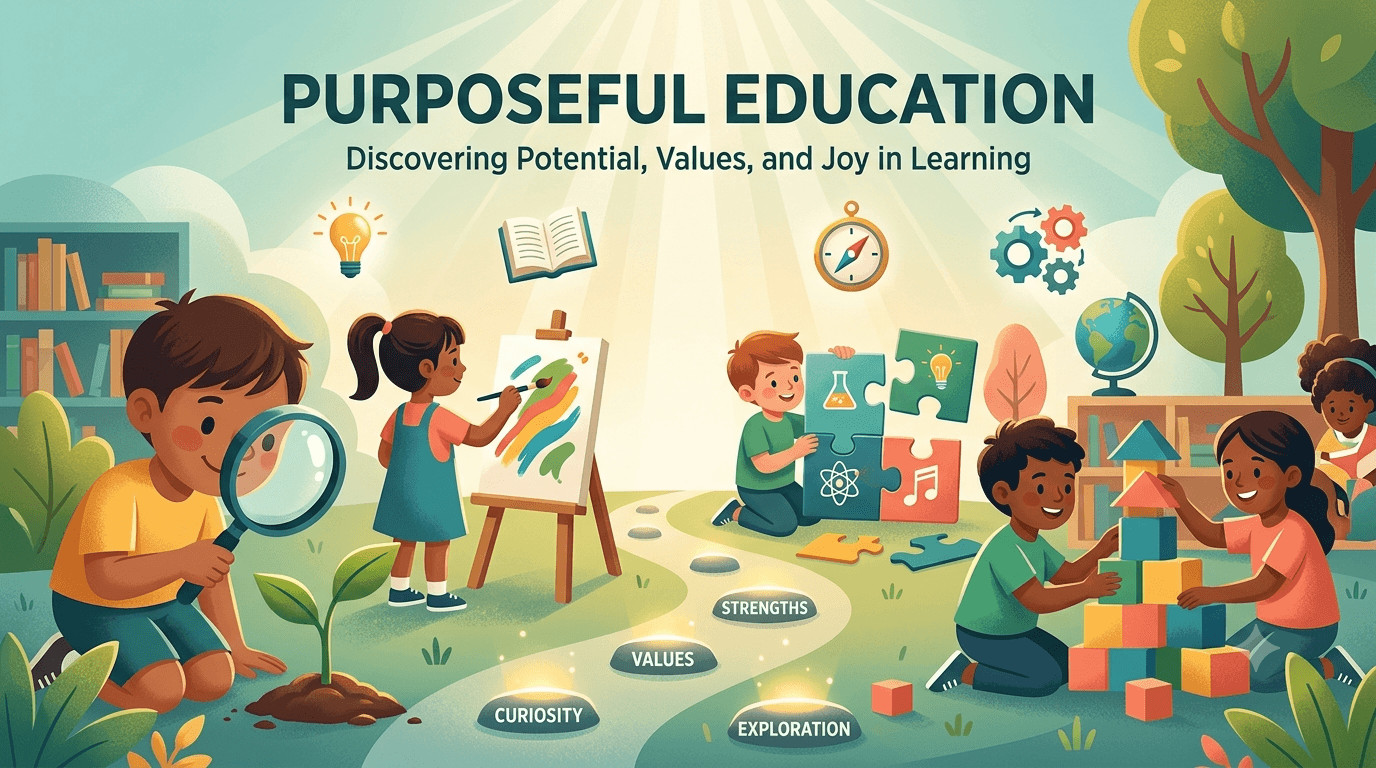

What if the most important question about a child's education is not only, “What did they score?” but also, “What did they discover about themselves?”
Academic knowledge is important, but education can do much more than prepare children for the next exam or eventually for a career. A meaningful education can help children understand their strengths, explore their interests, develop values and become confident enough to make thoughtful choices.
For The Infinity School, this idea is closely connected to its stated purpose: helping children discover their purpose in life. But what does purposeful education actually mean for a child, and how can parents recognise it?
Also Read| Navigating the Future of Education
Purposeful Education Is Not About Choosing a Career Early
When parents hear the word “purpose”, they may think about a child's future profession. But a 10-year-old does not need to know whether they want to become a doctor, designer, entrepreneur, or scientist.
Purposeful education is more about giving children opportunities to discover what interests them, understand what they are good at, and learn how their abilities can be used meaningfully.
Children's interests also change as they grow. A child who loves drawing today may become interested in technology later. Another may move from playing with numbers to becoming fascinated by how businesses work.
Instead of asking children to decide their entire future, education should help them develop the confidence and skills to keep exploring it.
Four Things Children Can Discover Through Education
1. Their Interests
Children need exposure to different experiences before they can understand what genuinely interests them. Reading, science experiments, sports, music, art, technology, group activities, and projects can all open new possibilities.
The goal is not to make every activity productive. Sometimes, exploration itself is valuable.
2. Their Strengths
A child's strengths are not always visible through marks.
One child may be good at explaining ideas. Another may naturally organise a group. Someone else may notice patterns, ask unusual questions, or persist with a difficult task.
Purposeful education gives children opportunities to recognise these strengths instead of measuring ability through a single academic scale.
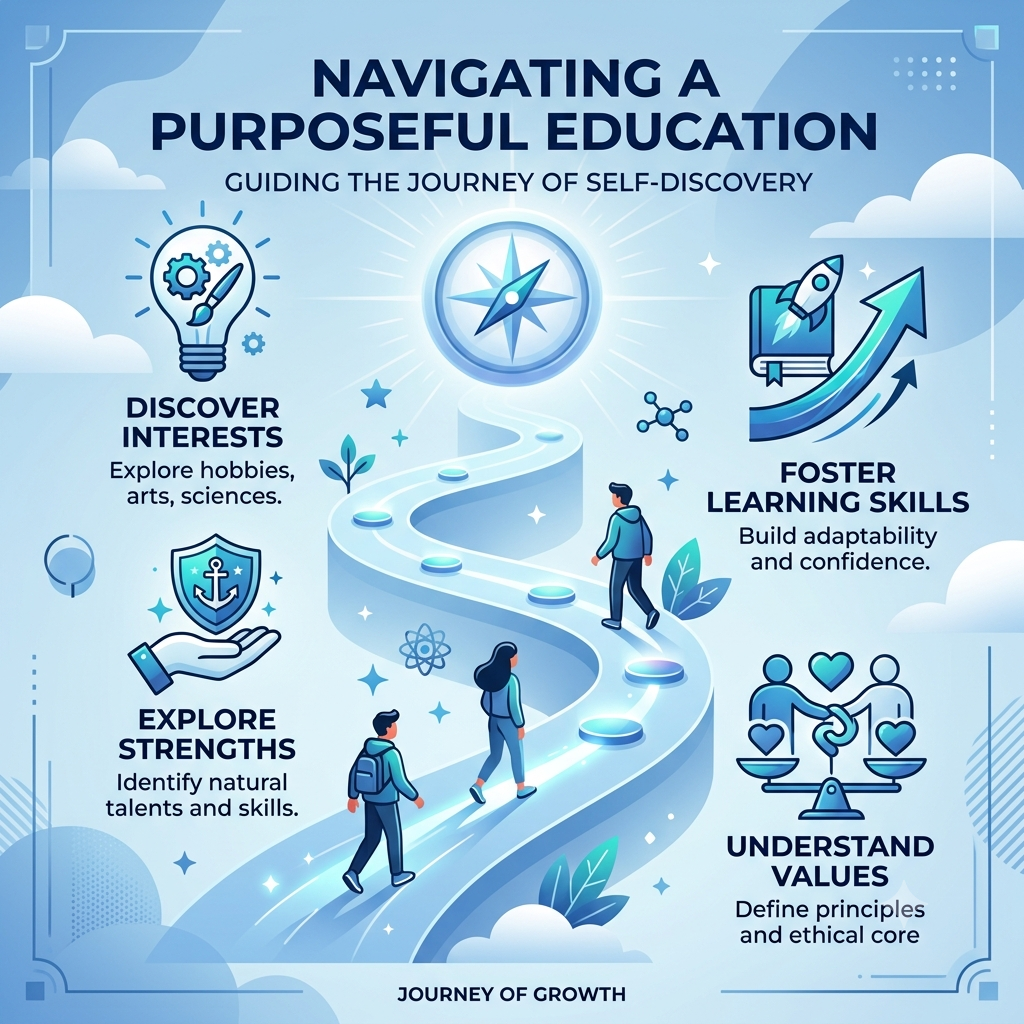
3. Their Values
As children grow older, they gradually begin to think about what matters to them.
Questions such as “What kind of person do I want to be?” or “What problems do I care about?” can help them develop self-awareness.
Values such as integrity, care, collaboration, and responsibility can become part of how children approach learning and relationships—not just topics discussed in a textbook.
4. Their Ability to Keep Learning
The world children enter as adults may look very different from the one they see today. This makes the ability to learn, adapt and develop new skills increasingly important.
Research from Harvard's Center on the Developing Child notes that core skills such as planning, focusing attention and managing behaviour develop over time through practice and feedback.
This is why education should not only give children information. It should also help them become capable learners.
How Schools Can Make Learning More Meaningful
A purposeful approach to education can be seen in the everyday learning experience.
Children can be encouraged to ask questions instead of simply waiting for answers. They can be given opportunities to solve problems, work with others, make age-appropriate choices, and connect what they learn with situations outside the classroom.
Even small choices can matter. Research-based guidance from Harvard highlights that children tend to be more motivated when they have some degree of agency and can pursue tasks that feel personally meaningful.
This does not mean children should decide everything for themselves. Teachers still provide structure, guidance, and feedback. The difference is that children gradually become participants in their learning rather than simply receiving information.
Learning Should Leave Room for Questions
A child who asks “Why?” is not necessarily avoiding the lesson. They may be trying to understand it more deeply.
Classrooms that encourage questioning, discussion, reflection, and exploration can help children develop the habit of thinking for themselves.
Similarly, mistakes can become useful learning experiences. When children are allowed to try, receive feedback, and try again, they learn that difficulty does not automatically mean failure.
What Can Parents Do at Home?
Purposeful education is not something that happens only at school. Parents can support the same mindset through simple everyday conversations.
Ask more than “How much did you score?”Try questions such as:
- What did you enjoy learning today?
- What was difficult?
- What surprised you?
- What would you like to understand better?
Not every hobby needs to become a competition or a future career plan. Notice patterns.
Pay attention to the activities children repeatedly choose, the subjects they discuss, and the problems they enjoy solving. Let them handle manageable challenges.
Doing everything for a child may make life easier in the short term, but giving them appropriate responsibility allows them to practise decision-making and problem-solving.
Most importantly, avoid turning “finding your purpose” into another source of pressure. A child saying “I don't know yet” is perfectly normal. Purpose develops through experiences, reflection, and growth.
How The Infinity School Connects With Purposeful Education
The Infinity School describes its purpose as facilitating the discovery of each child's purpose in life, with its broader mission focused on developing independent, gritty and value-driven thought leaders. Its current approach also emphasises “Learning to Learn”, while the school's curriculum includes thinking skills, academics, sports, arts and creativity, emotional intelligence and student leadership.

For parents considering a Top school in Greater Noida West, these elements offer a useful example of how a school's educational philosophy can extend beyond academic outcomes. The emphasis is not simply on what children learn, but also on developing the capacity to keep learning, think independently, and understand their own potential. This can be an important consideration for families looking for the Best school in Greater Noida West for their child's long-term development.
Education Should Help Children Discover, Not Just Perform
A purposeful education does not give children a fixed answer about their future. Instead, it gives them the knowledge, experiences, confidence, and self-awareness to keep discovering that answer as they grow.
The goal is not to make children choose their purpose early. It is to create enough opportunities for them to explore, question, make mistakes, recognise their strengths and understand what matters to them.
When education helps children become curious about both the world and themselves, learning becomes more than preparation for the next examination. It becomes preparation for a meaningful life.
To know more about other schools in Greater Noida West, click on the link below.
 as a preferred source on