







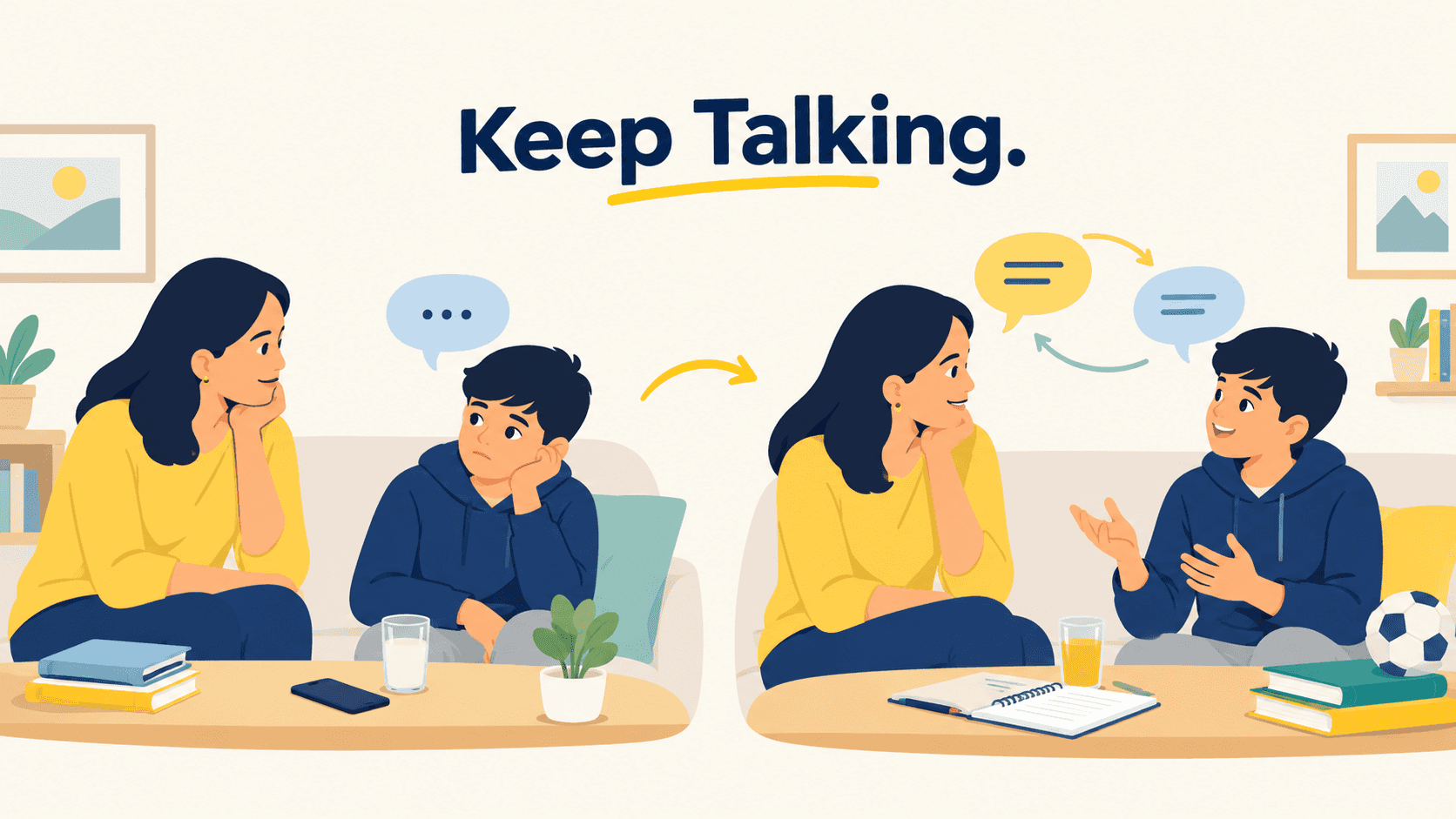

Between ages 10 and 13, children can seem to change almost overnight. One day, they are telling you every detail about their day; the next, “Nothing happened” becomes the standard answer. For parents exploring what makes the top schools in Greater Noida West and other cities different, school is only one part of a child’s development. The bigger question is whether children have adults they can talk to when life starts feeling more complicated. Keeping communication open during the pre-teen years can help children feel heard while they slowly learn to handle friendships, emotions, mistakes, and new responsibilities, and this is something that The Infinity School understands very well.
Why Talking Starts to Feel Different Around 10–13
Pre-teens are beginning to want more independence, but they still need plenty of guidance. This creates an interesting middle stage. They may want to choose their clothes, friends, hobbies, or screen time while still needing help when something goes wrong.
A parent may ask, “How was school?” and receive "Fine". Asking another five questions immediately may only make the conversation shorter. Instead, communication often works better when it feels less like an interview and more like an everyday exchange.
For example, a child who comes home upset about a friend may not want a solution immediately. They may simply want someone to understand why the situation mattered to them. Research involving adolescents found that better parental listening was associated with greater willingness to share information again later, with feelings of autonomy and connection playing an important role.
This is also where the idea of serve and return becomes useful. Harvard’s Center on the Developing Child describes responsive back-and-forth interactions as important for building relationships and communication skills. While the concept is often discussed in early childhood, the broader lesson is useful for older children too: when a child reaches out, the adult’s response teaches them whether conversation is worth continuing.
Also Read | Why Expressive Students Succeed in Life
Listen First, Fix Later
One of the easiest ways to close a conversation is to rush towards a solution.
Imagine a 12-year-old saying, “Everyone ignored me today.” A parent might quickly reply, “You should have just spoken to them,” or “Don't worry about it.” The intention may be helpful, but the child may hear, “My problem isn't important.”
Active listening changes the order. First understand. Then decide whether advice is needed.
|
Instead of saying |
Try saying |
|
“Why did you do that?” |
“What happened?” |
|
“You are overthinking it.” |
“What part of it is bothering you?” |
|
“Just ignore them.” |
“What do you think you want to do next?” |
|
“I told you this would happen.” |
“What did you learn from what happened?” |
|
“Let me solve it.” |
“Do you want me to listen or help you think through it?” |
The American Academy of Paediatrics recommends listening without immediately judging or reacting, particularly when young people share something difficult. The CDC similarly recommends regular conversations, active listening, and open-ended questions.
This does not mean parents should agree with everything. A child can be heard without every decision being approved. Listening simply gives parents better information before they respond.
Also Read | Why School Education Matters
Make Conversation Part of Ordinary Life
Important conversations rarely arrive with a calendar invitation. They often appear while travelling somewhere, preparing dinner, walking the dog, shopping for groceries, or lying in bed at night.
That is why parents can create small communication habits rather than waiting for a “serious talk".
Some simple opportunities include:
- Talking for a few minutes before bedtime without phones nearby.
- Asking for your child's opinion while making an ordinary family decision.
- Discussing something interesting seen online instead of only discussing screen-time rules.
- Cooking together and allowing the conversation to move naturally from food to friends to school.
- Asking, “What was the funniest thing that happened today?” instead of always asking about marks or homework.
- Sharing a small mistake from your own day and explaining how you handled it.
The American Academy of Paediatrics notes that even a short period of distraction-free conversation each day can help build communication habits.
There is another useful principle here: talk about more than problems. If every conversation begins with homework, behaviour, grades, chores, or screen time, a child may start connecting parental attention with correction. Conversations about music, games, food, funny incidents, ideas, and interests create a wider relationship.
Give Them a Voice Without Giving Up the Boundaries

Pre-teens need boundaries, but they also need increasing opportunities to make choices. These two ideas do not have to compete.
For example, instead of announcing, “Your phone goes away at 9 p.m.,” a parent might discuss why sleep matters, explain the family expectation, and ask the child how the rule could work on weekends. The final boundary may remain the parent's responsibility, but the child has had a chance to think and participate.
The CDC recommends clear and consistent expectations while also involving older children in discussions about acceptable behaviour and decisions as their independence grows.
The Infinity School has taken a similar approach through its parent and student adolescence workshops. According to the school's blog, its workshops for parents of tweens and teens focus on understanding the changes children experience, managing conflicts, and developing effective communication strategies. Its student workshops address growing up and encourage learners to understand and manage themselves better.
The school's parenting guidance also highlights active listening, clear expectations, acknowledging both successes and mistakes, encouraging self-reflection, and showing affection. These ideas place communication beyond simply talking about academics or behaviour.
For families considering the best schools in Tech Zone VII Greater Noida West, The Infinity School's effort to involve both parents and students in adolescence-focused workshops offers one example of how a school can support communication beyond the classroom. Its approach recognises that children between childhood and adolescence need adults who understand the changes they are going through, while parents benefit from practical ways to respond.
Conclusion
Keeping a conversation going with a pre-teen is not about finding the perfect question. It is about building a relationship in which talking feels safe enough to continue, even when the subject is uncomfortable, or the child has made a mistake. Listening before correcting, making space for everyday conversations, asking for their opinions, and keeping boundaries clear can gradually create that space. The goal is not to make a child tell you everything. It is to make sure that when something really matters, they know they can start the conversation with you.
To know more about other schools in Greater Noida West, click on the link below
 as a preferred source on