









Boarding school isn't just timetables and exam schedules, though that's the part parents usually focus on. The harder part is smaller than that. It's a bad day and not knowing who to tell. A subject that's just not clicking. Missing home on some random Tuesday for no real reason. A mentor is who ends up filling that gap.
Most mentor-mentee programmes work on something pretty simple: one teacher who actually knows the student. Not from a report card. From noticing she's been quieter than usual at lunch to realizing she needs someone to tell her she's doing fine when she doesn't believe it herself.
Residential schools in Uttarakhand deal with this constantly, since students are on campus for most of the year, not just a few hours a day. At Ashok Hall's Girls Residential School, mentorship is treated as something worth building properly, not an afterthought.
This article gets into why that relationship matters so much, and what it actually does for a girl trying to make a new place feel like home.
Also Read: Guiding Young Minds: The Importance of Career Counselling in Schools
Why Mentorship Matters More in Boarding Schools
Moving into a boarding school is a lot for any girl: new room, new people, no mum to vent to after a rough day, and this is exactly where mentorship ends up mattering the most.
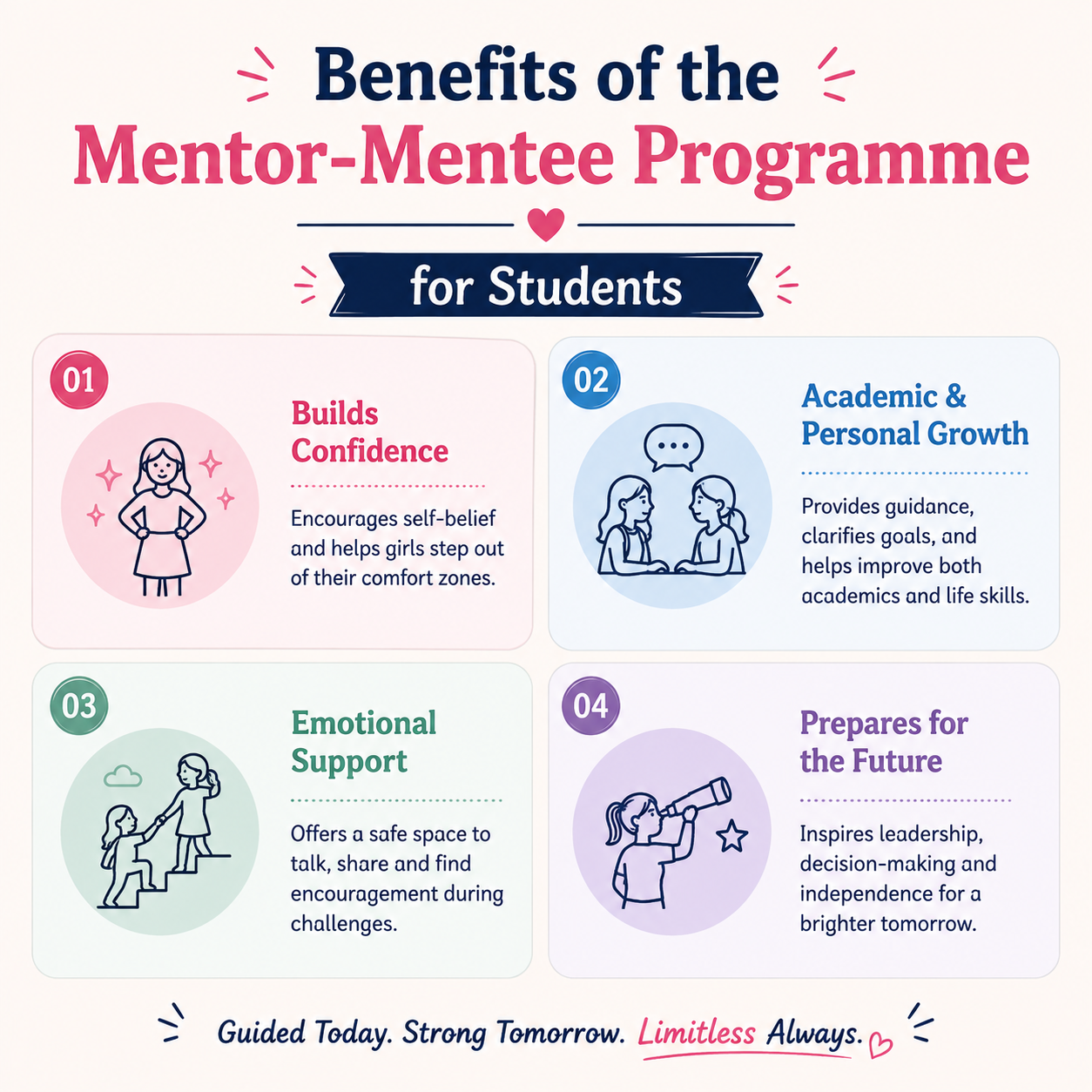
1. There’s no parent around to notice the little things
At home, a mum just knows when something's wrong the second her daughter walks in from school. Nobody even has to say anything. In a boarding school, nobody's watching that closely unless it's someone's actual job to. That's what a mentor does. She's the one who notices a girl has gone quiet in class, or has stopped joining her friends at dinner, and actually asks why instead of letting it go on for weeks.
2. Homesickness doesn't get fixed by a schedule; it gets fixed by a person
Every hostel runs on a routine: wake-up time, study hours, lights out. But none of that helps at 9 pm when a girl is missing her mom's cooking or her dog back home. What actually helps is having one adult around she can just go talk to, without it feeling like a big formal thing. Even a mentor saying "I felt the same way my first winter away from home" can help more than a counselling session booked three weeks out.
3. Periods, hormones, and all the stuff nobody explains properly
This is the part that really needs a person, not a policy. A girl gets her first period at school, or her cycle just goes off because of the stress of a new place, and there's no mum to ask. Even small things- cramps, mood swings, not knowing if what she's feeling is normal- turn into a big deal when there's nobody to check with casually. A mentor is that person. She can go to her without feeling weird about it, and the mentor will just say "that's normal, here's what helps," instead of leaving her to figure it out alone or ask a friend who knows just as little.
4. Academic dips get caught before they turn into a crisis
A teacher handling thirty kids in one class can't always tell if a drop in grades is laziness or something else; maybe she's overwhelmed, maybe she's scared to ask for help. A mentor who checks in regularly catches this early. Say a girl who was always good at maths suddenly starts avoiding it. A mentor won't just point at the marks; she'll ask what happened, and half the time it's not about maths at all. It's about confidence, or one bad moment with a teacher, or feeling like her roommate is just better at it.
5. She gets someone who's actually in her corner, not just supervising her
There's a difference between an adult managing a hostel wing and an adult who's actually rooting for one specific girl. A mentor gives every student that second person, someone who notices her wins too, even small ones, like speaking up in a debate for the first time, or sticking with a sport she wanted to quit back in October. That feeling of someone actually paying attention to her, specifically, is what makes a big campus start to feel like somewhere she belongs.
Also Read: Is Career Counselling in Indian Schools Actually Working
How Ashok Hall Brings the Mentor-Mentee System to Life

At Ashok Hall Girls' Residential School, one of the best boarding schools in Uttarakhand, every teacher gets a small group of girls to mentor. It's not something squeezed in whenever a teacher has five free minutes. There are regular one-on-one meetings, actually scheduled, actually happening.
And it's not just "so how are your marks this term." Mentors sit down with their girls and talk about what's working and what's not, help them figure out goals that actually fit them, not some copy-paste plan, and this covers academics, sports, whatever the girl's into. So say a girl's mentor knows she's wanted to try out for basketball but keeps backing out at the last minute, that's a real conversation that happens. It doesn't just get lost in a school full of hundreds of students.
And if something bigger comes up, like a girl going through real anxiety or needing more than a weekly chat can fix, the mentor's also the one who points her to proper help inside the school instead of leaving her to sort it out on her own.
At the end of the day, mentorship at Ashok Hall isn't some extra program running next to regular school life. It's just part of how the school works, so every girl has one adult who actually knows her, not someone who only knows her attendance sheet.
For more information regarding this and other residential schools
 as a preferred source on