







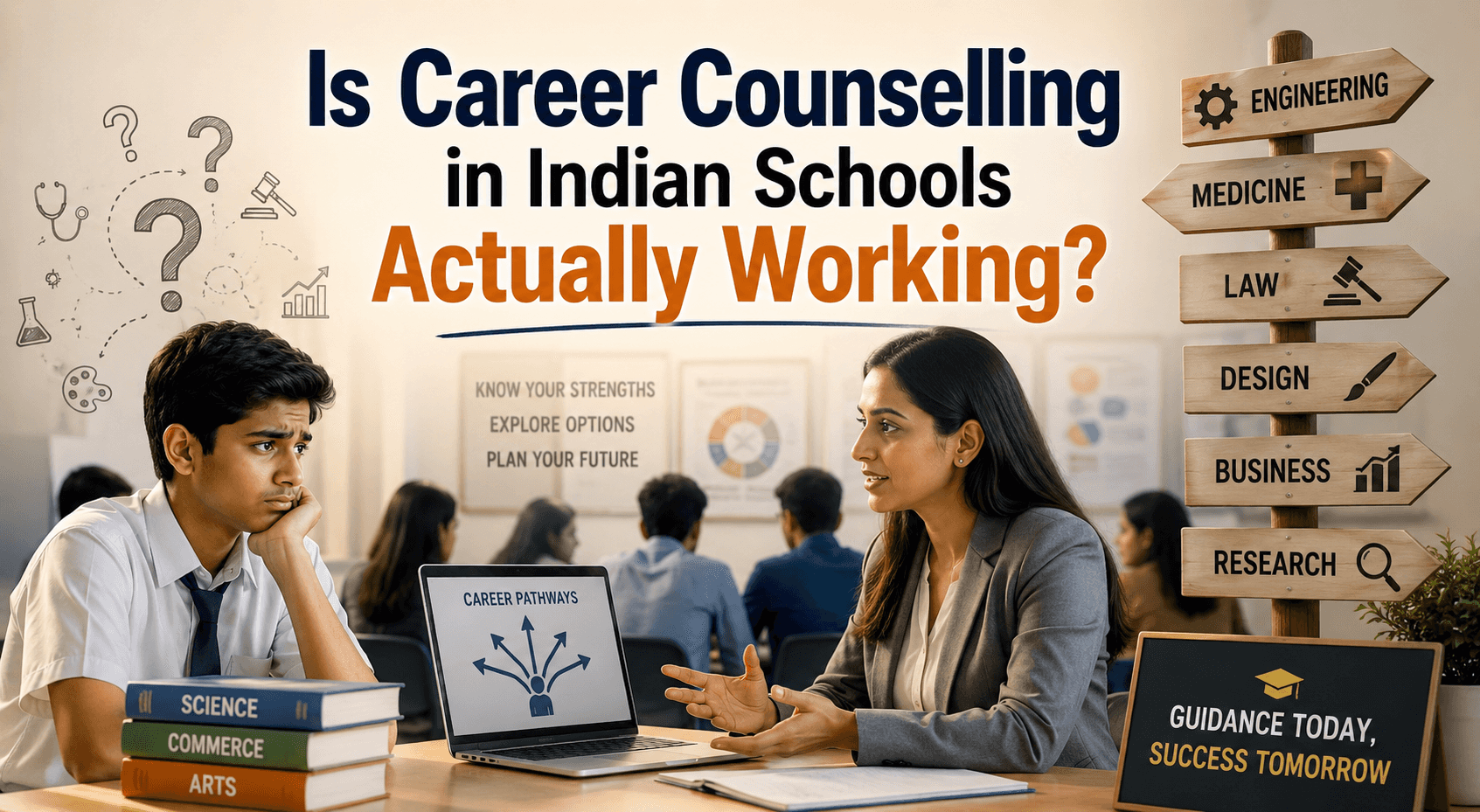

Every school brochure today has that one glossy page which has a smiling counsellor, a laptop with colourful graphs, a caption that reads “guiding your child’s future.” Career counselling has become the new must-have, right up there with smart classrooms and robotics labs. But here’s the question no one really asks out loud: is it actually working, or has it just become another checkbox schools tick to look impressive?
Walk into any parent-teacher meeting across India, and you’ll hear the same reassurance: “We have career counselling in our schools.” What you rarely hear is how it works, who’s running it, or whether it changes anything beyond a printed report handed over once a year. Among the best schools in Electronic City, Bangalore, this gap is exactly where institutions like The Pradise International School are trying to do things differently, i.e., treating counselling as a conversation and not as a formality. So let's take an honest look at where career counselling in Indian schools actually stands.
Also Read: Guiding Young Minds: The Importance of Career Counselling in Schools
Condition of Career Counselling in Indian Schools
The numbers and stats of career counselling in Indian schools are not at all satisfactory. Industry data suggests 93% of Indian schools don’t have a career counsellor at all. And where guidance does exist, it’s reaching barely 1 in 10 students, leaving the rest to figure out their future from relatives or by using ChatGPT.
The same data shows 44% of Indian youth say career counselling actually matters to them. And 77% of students who never received any guidance end up dropping out after class 10, a number too large to be a coincidence and too specific to be ignored.
And the fix isn't a small tweak. Industry estimates, landing in roughly the same range, suggest India needs somewhere between 1 and 1.5 million trained career counsellors just to meet the internationally recommended ratio of 250 students per counsellor. Right now, most schools aren't anywhere close. That's not a staffing gap; it's an entire missing profession India hasn't finished building.
So the next time a school casually mentions "we have career counselling" in a brochure, it's worth asking the follow-up question nobody usually does: how much of it, how often, and for how many students? Somewhere in that answer is the real difference between a checkbox and an actual system.
How Actual Career Counselling in Schools Should Look
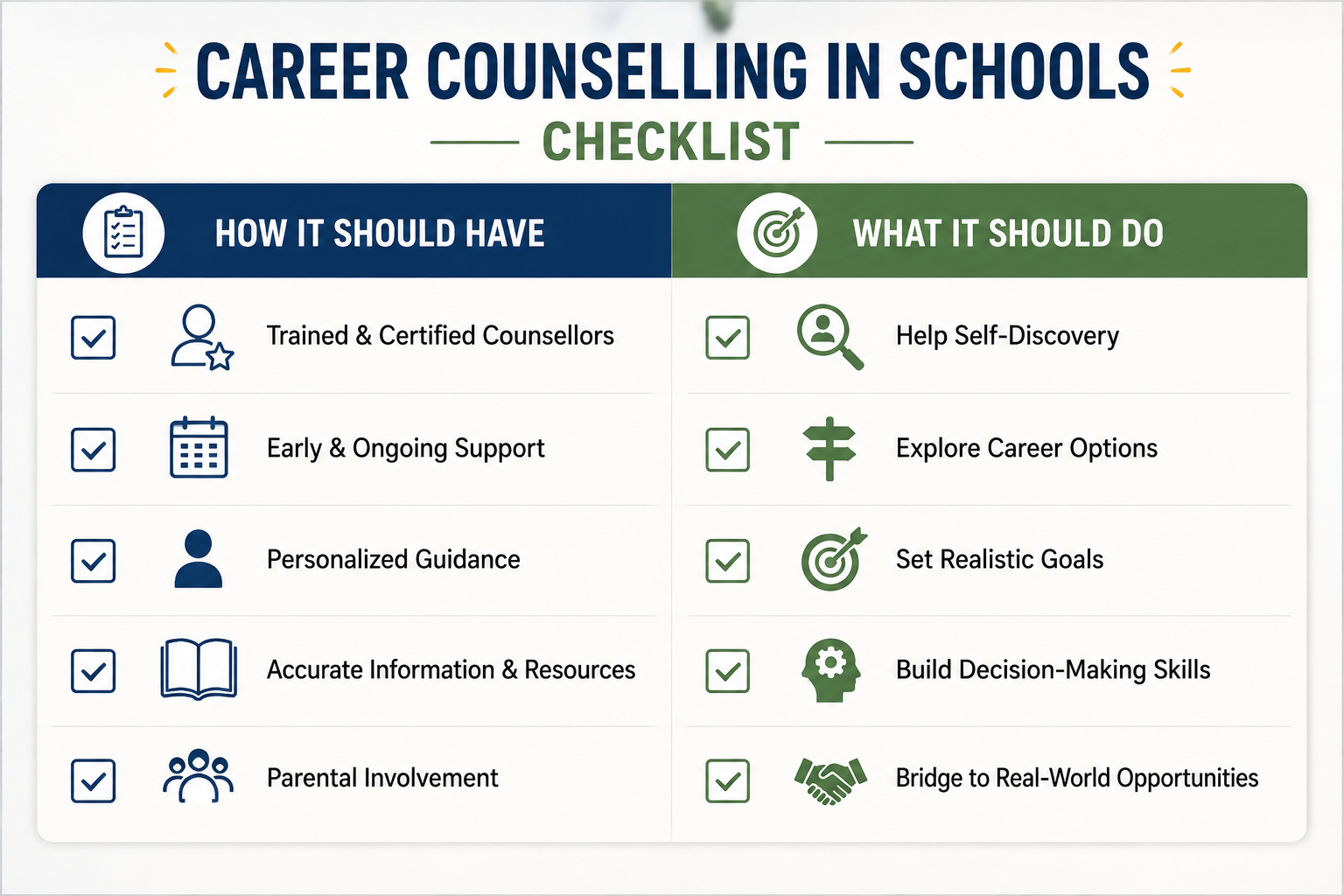
If career counselling were designed the way it should be, not the way most schools currently manage it, then the first thing to change wouldn’t be the number of sessions. It would be the timing.
Most schools still treat career guidance as a class 10-12 problem, something to sort out right when board exam pressure, stream selection, and entrance exam prep are already colliding.
But global research on this is fairly consistent: the ideal window to start career conversations is ages 12 to 14 years before any real decision needs to be made. At that age, it’s not about picking a career. It’s about a child slowly discovering what they’re actually drawn to, how they think, and what kind of pressure brings out their best work, long before anyone’s asking them to commit to anything.
What would it look like in practice, done right?
- It starts early and stays ongoing: Not a one-time aptitude test in Class 10, but a multi-year process that grows with the student, revisited every year rather than filed away after a single session.
- It pairs data with a real conversation: A psychometric or aptitude test is useful, but it's only half the picture. The other half is a trained counsellor sitting down with the student, unpacking what the results actually mean, and connecting the dots the student can't see on their own.
- It's personal, not templated: The same report handed to 40 students in a batch isn't guidance; it's paperwork. Real counselling adapts to the individual in front of it.
- It brings parents into the room, not around them: Instead of competing with parental expectations from a distance, effective counselling treats parents as part of the process, helping bridge the gap between what a child wants and what a family understands.
- It looks forward, not backward: Guiding students toward the career landscape that's forming now (AI, new tech roles, hybrid fields), not just the fixed list of options their parents grew up choosing from.
Inside Paradise International's Approach to Career Guidance

Here’s the thing most schools miss: career counselling doesn’t have to wait until class 20 to start doing its job. At Paradise International School, situated in Electronic City, that idea already shapes how they think about a child’s growth, right from ICSE Grade I to VI.
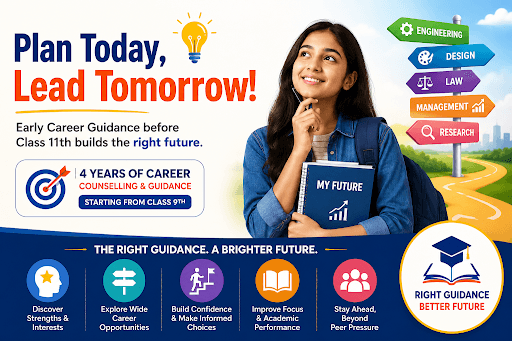
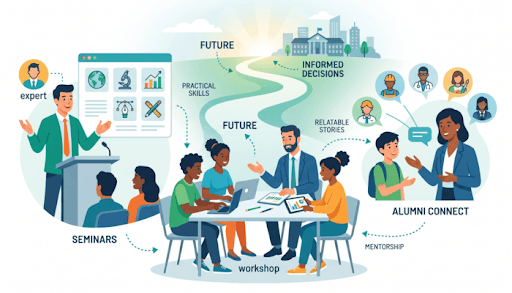
Instead of treating it as a future problem, the school folds career guidance into something more natural: aptitude tests paired with real conversations, counsellors who actually sit with students, guest interactions that let kids see career paths beyond the usual 5 options everyone’s heard of. It's less about handing a child an answer and more about helping them notice their own strengths early, long before anyone's asking them to pick a stream or a subject combination.
What makes this feel less like brochure-speak is the context around it. Paradise isn't running counselling as an isolated activity bolted onto the timetable. It sits alongside robotics, sports, karate, and an alumni network that's being built from the ground up, all part of the same instinct: give a child enough exposure and self-awareness early, so that decisions later come from clarity, not confusion or peer pressure.
For parents comparing options among the best ICSE schools in Bangalore, this is worth noticing. Plenty of schools list "career counselling" as a bullet point. Fewer treat it as something that starts in the primary years and grows with the child, year after year, rather than showing up once and disappearing. That difference, subtle as it sounds, is often exactly what separates a checkbox from something that actually shapes how a child sees their own future.
For more information regarding this and similar schools in this area





 as a preferred source on