







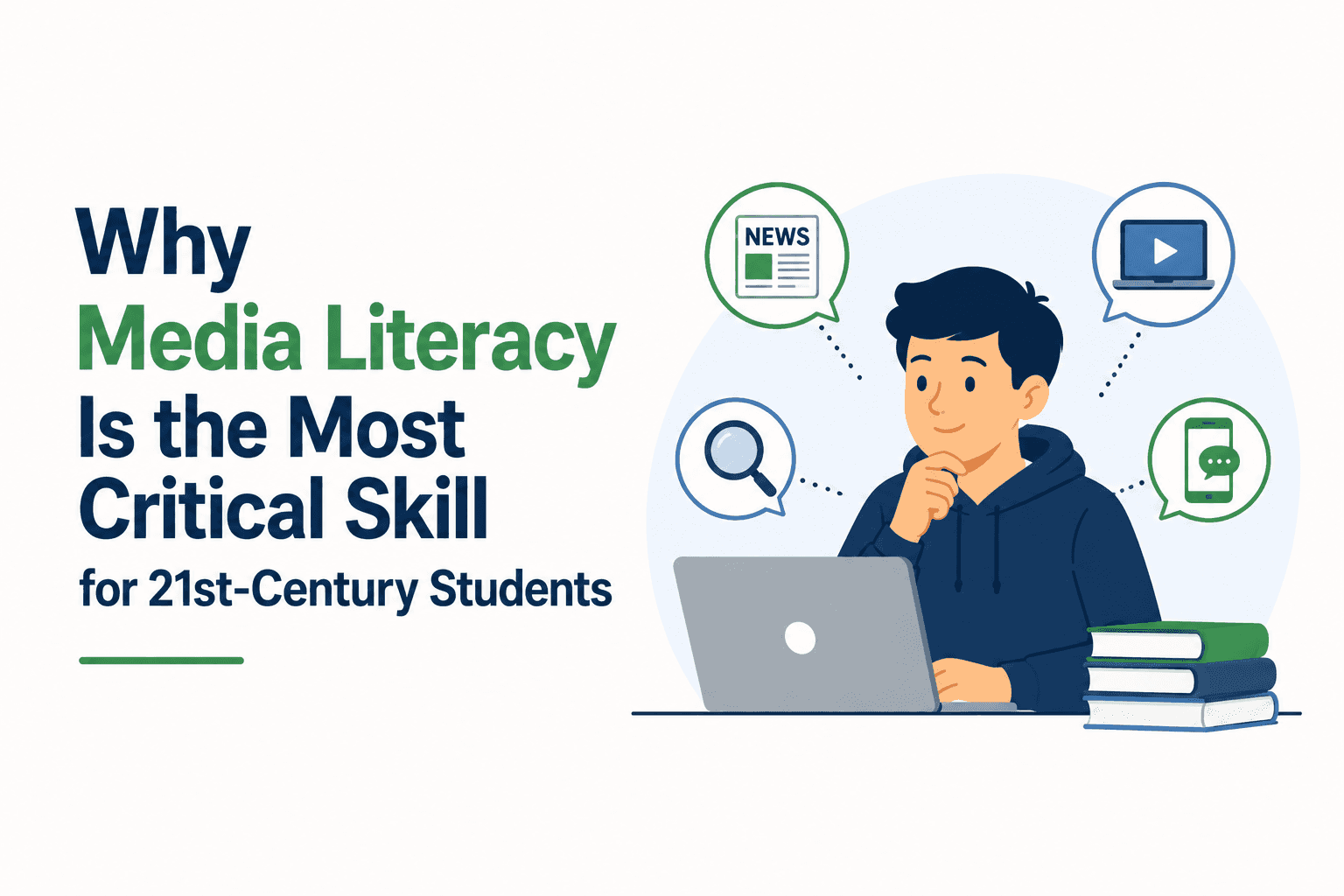

A child who can't swim shouldn't be left near deep water. By that same logic, a child who can't critically evaluate what they see online shouldn't be left unsupervised on the modern internet, as the internet, for all its value, is genuinely treacherous terrain for untrained minds.
Yet most schools still treat digital education as knowing how to type and submit an assignment. One of the top schools in Faridabad, Manav Rachna International School (MRIS), Sector 21C, Faridabad, is building media literacy as a lived, practised skill from a child's earliest years, not an occasional classroom mention.
So what does genuine media literacy actually involve? And why does it matter more right now than it ever has before?
Why Media Literacy Is No Longer Optional
The digital world children are growing up in isn't the one their parents navigated at their age. The volume of information has scaled exponentially. What used to take months to spread now takes minutes. And the systems curating what children see aren't neutral.
The Misinformation Problem
Misinformation isn't always dramatic. It doesn't always arrive as a fake news headline. More often, it comes as a WhatsApp forward from a trusted relative, a slickly produced YouTube video, or a statistic shared with total confidence by someone with a large following.
The problem is that children haven't been taught the habit of pausing before accepting. Spotting misinformation starts with something simple: asking whether a claim has a named, verifiable source; whether that source has a track record; and whether other credible outlets are reporting the same thing.
That habit of verification cross-checking is what separates a media-literate student from one who simply consumes and shares.
How Algorithms Shape What Children Believe
Here's what most adults don't explain to children: what they see online isn't a neutral window to the world. It's a curated feed, built by algorithms designed to maximise engagement, which basically means maximising emotional reaction. Outrage, fear, and excitement keep users scrolling longer than calm, nuanced information does.
A child who doesn't understand this will genuinely believe they're getting a representative picture of the world when they're actually getting an escalating loop of content that reinforces whatever they already think. Teaching children to understand how algorithms work, that the feed is a product, not a mirror, is one of the most important media literacy lessons a school can offer.
What Media-Literate Students Actually Know How to Do
Understanding that misinformation exists is only the first step. Media literacy is practical. It's a set of habits and skills that have to be built through repeated use.
Spotting Bias and Evaluating Sources
Every piece of content has a point of view. Media-literate students learn to identify bias by asking who created a piece of content, who funds the platform it lives on, and what incentives might be shaping the framing. They also know how to evaluate a source rather than simply trust or dismiss it, by looking at an author's credentials, checking the publication's editorial stance, and distinguishing between opinion and reported fact. These aren't advanced research skills. They're habits that can be taught from middle school onwards with consistent practice.
Privacy, Digital Footprints, and Online Etiquette
Two concepts that don't get nearly enough classroom attention: digital footprints and privacy. Every search, post, comment, and tag a student makes online is, in effect, a permanent entry into a public record. Most children have no real understanding of how much data they're generating, who owns it, or how it might be used — whether by advertisers, future employers, or platforms that sell user behaviour to third parties. Teaching digital footprints means helping children make conscious decisions about what they share, not paranoid ones.
Online etiquette connects to the same idea. The anonymity of the internet creates a false sense that words don't carry the same weight they would face to face. Media literacy includes knowing that they do — and that the patterns of interaction a student builds online shape both their character and their reputation in ways that follow them long after the comment is posted.
The Skills Schools Most Often Skip
Beyond the foundational habits, two areas are rising fast in importance — and most schools haven't caught up with either of them yet.
AI Literacy
Children are already using AI tools, whether their schools have addressed this or not. The more urgent task is teaching them how. AI literacy at the school level isn't about programming or engineering but about understanding what AI systems can and can't do; knowing that AI outputs should be verified, not simply trusted; recognising when AI-generated content is being used to deceive; and developing a sense of the ethical questions that AI raises around authorship, privacy, and bias. A student who learns to use AI as a thinking tool is far better positioned for both academic and professional life than one who either avoids it entirely or outsources their cognition to it uncritically.
Recognizing Online Influence
This is the layer that ties everything else together. Children encounter influence in the form of targeted advertising, sponsored content disguised as organic posts, influencer marketing that blurs the line between recommendation and paid promotion, and increasingly, coordinated campaigns designed to shift opinion at scale. Being able to name these techniques, to say "this is an ad," "this is a filter bubble," "this is a paid partnership," is genuinely protective. It turns a passive consumer into someone who reads the room rather than just being shaped by it.
How MRIS Sector 21C, Faridabad, Builds This Through Practice
.jpeg)
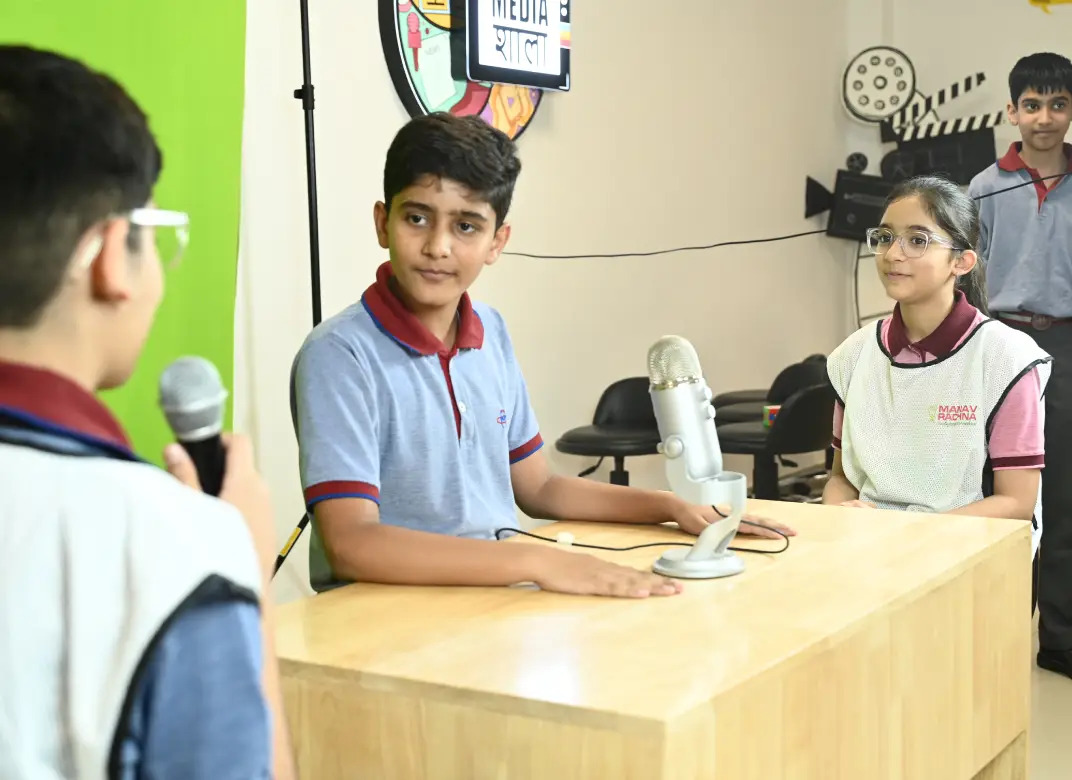
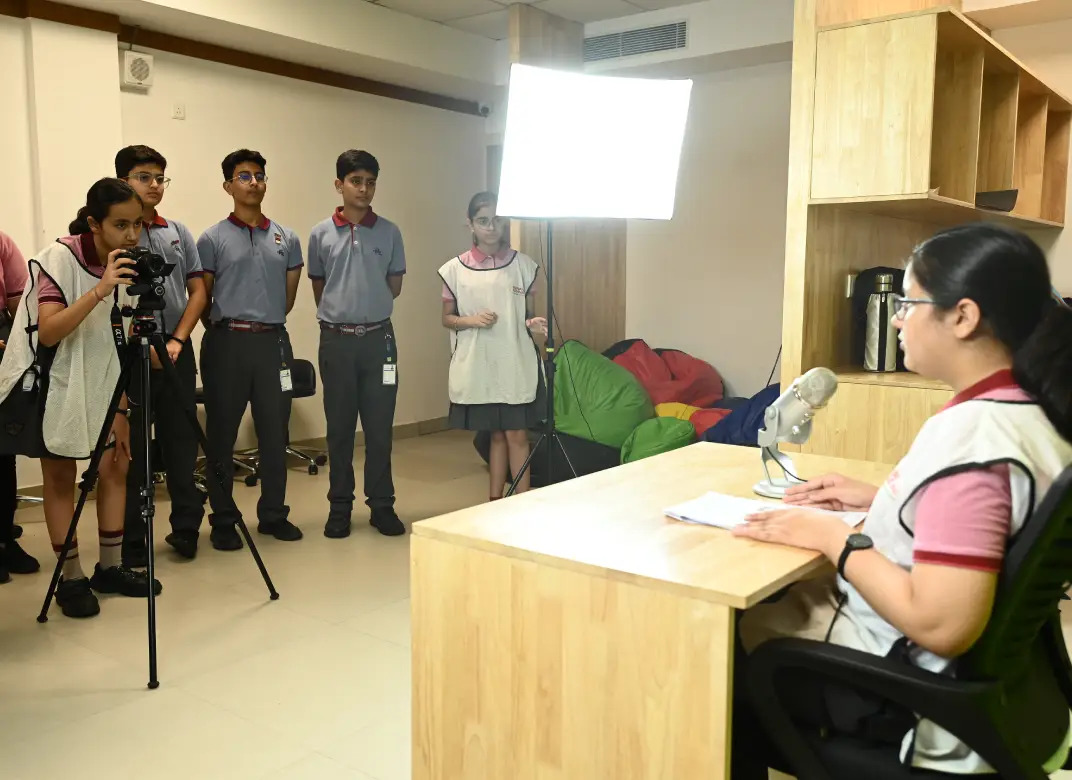
Talking about media literacy in theory is one thing. Building it through actual practice (through creating, exploring, and producing) is what MRIS Sector 21C has invested in structurally.
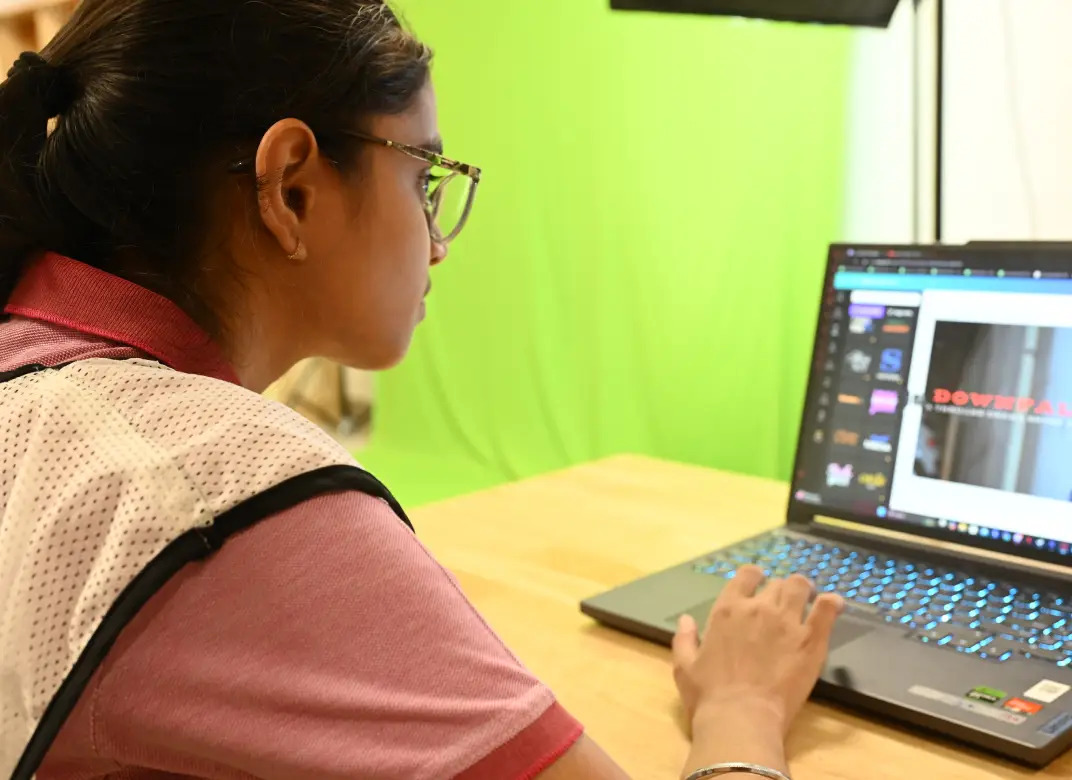
One of the top schools in Faridabad, Manav Rachna International School, Sector 21C, does not treat digital and media literacy as electives tucked into the corner of the timetable. Future Skills & Sustainability is one of the seven core curriculum areas across all year groups, and the campus has dedicated infrastructure to match: Future Skills & Sustainability Labs, interactive digital classrooms where technology-integrated instruction runs throughout the school day, and media and STEAM labs designed specifically to foster creative thinking and digital fluency. This physical infrastructure matters as it signals to students that digital capability is taken seriously, not bolted on.
The school introduces pre-coding concepts from the earliest years, weaving in ideas about systems, patterns, and instructions through role play, puzzles, and stories, so that by the time students reach middle school, computational thinking isn't a new concept but a familiar lens they've been applying for years.
Conclusion
Media literacy isn't a subject. It's a survival skill for the digital world children are already living in. Knowing how to evaluate a source, understand an algorithm, protect a digital footprint, use AI thoughtfully, and recognise when you're being influenced — these are capabilities that shape how a young person relates to information for the rest of their life. Schools that take this seriously don't just mention it in a lesson plan; they build it into dedicated labs, digital classrooms, and curriculum structures that give students repeated, genuine practice. At MRIS Sector 21C, Faridabad, that commitment runs from the earliest years of school to the middle grades — and the infrastructure to back it up is already in place.
For more information on this and similar schools, check out this list of the best schools in Faridabad.
 as a preferred source on