









Learning a musical instrument can be a rewarding part of a child's school experience. Among the many instruments students can explore, the keyboard offers a particularly interesting combination of creativity, coordination, and structured learning. At one of the best schools in Faridabad, Grand Columbus International School, the Keyboard Academy gives students an opportunity to explore these skills through keyboard learning, improvisation, ensemble performance, and school events.
But the value of learning the keyboard goes beyond being able to play a few songs. The instrument can introduce children to a range of skills that can support their development both inside and outside the classroom.
The Keyboard Brings Music and Learning Together
A keyboard may look simple at first. It has a series of keys that students press to create different sounds. But learning to play it involves understanding how those sounds fit together.
Students gradually learn about notes, rhythm, melodies, chords, and harmony. They also begin to understand how individual notes can be combined to create a complete musical piece.
This makes the keyboard a practical way for children to experience concepts rather than simply reading about them. They can see a musical note, find it on the keyboard, play it, and immediately hear the result.
Building Hand Coordination
One of the first skills students develop while learning the keyboard is coordination.
As they progress, students may need to use both hands independently. The left hand might play chords or accompanying notes while the right hand plays a melody. At the same time, they need to maintain the correct rhythm and follow the music in front of them.
This requires their hands to work together while performing different movements.
With regular practice, students become more comfortable managing these movements. The process can encourage finger control, coordination, and awareness of timing.
Learning to Read Music
Keyboard learning can also introduce students to the language of written music.
Through sight-reading, students learn to look at musical notation and translate what they see into physical movements on the keyboard. They need to recognise notes, understand rhythm, and follow the sequence of a piece.
This can be challenging initially, but it becomes easier with practice.
More importantly, students learn how to approach unfamiliar material. Instead of relying only on memory, they gradually develop the ability to look at a new piece and work out how it should be played.
Also Read | Importance of Merit Based Scholarship in Future Success
Developing Concentration
Playing the keyboard requires attention.
A student may have to concentrate on the notes, rhythm, hand position, timing, and upcoming section of a piece at the same time. Losing focus for even a moment can affect the performance.
Regular keyboard practice therefore gives students an activity that encourages sustained concentration.
The process is also different from simply memorising information for an examination. Students have to actively use what they have learned. They listen, observe, respond, and adjust their playing as they go.
Understanding Melody and Harmony
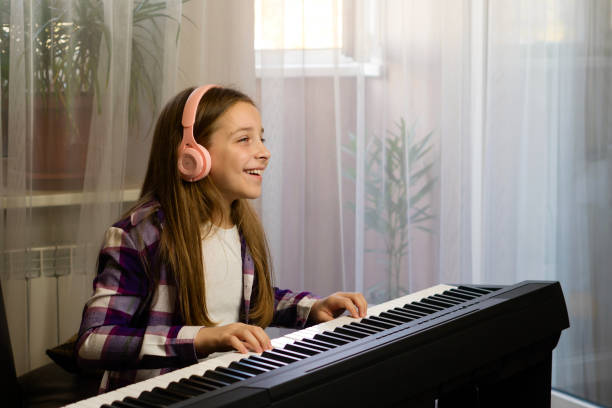
The keyboard is especially useful for helping students understand the relationship between melody and harmony.
A melody is often the part of a song that people remember most easily. Harmony provides the supporting musical structure around it. On a keyboard, students can experience both in a very direct way.
They can play individual notes to create melodies and gradually learn chords that accompany them. This can help turn abstract musical ideas into something students can hear and experience for themselves.
They can try different combinations of notes, rhythms, and melodies and discover what sounds interesting. There may not always be one predetermined answer.
This can encourage students to become more comfortable with experimentation and creative decision-making. They begin to understand that learning an instrument is not only about following instructions but also about developing their own musical ideas.
Learning Through Regular Practice
Keyboard learning also teaches an important lesson about consistency. A student may not master a difficult piece in a single sitting. Some sections may require repeated practice. Certain transitions may take longer to become comfortable, while a particular rhythm may need extra attention.
Over time, students can see how small improvements add up.
This can encourage a useful approach to learning: instead of expecting immediate results, focus on regular practice and gradual progress.
Although students can learn the keyboard independently, the instrument can also become part of a larger performance.
When playing with an ensemble, a student has to think beyond their own part. They need to listen to other performers, maintain the shared rhythm, and understand how their keyboard part fits into the overall piece.
The student is not simply trying to play the right notes. They are contributing to a collective performance where every participant has a role.
Also Read | Benefits of Montessori Method
Performing Can Build Confidence
School performances can give keyboard learners another meaningful goal to work toward.
Knowing that they will eventually perform a piece can motivate students to practice more carefully. It also gives them an opportunity to experience what it feels like to share something they have learned with an audience.
For some students, performing may initially feel intimidating. With regular opportunities and supportive guidance, however, they can become more comfortable presenting their skills in front of others.
The experience can encourage preparation, confidence, and a willingness to take on new challenges.
The Keyboard Academy at Grand Columbus International School
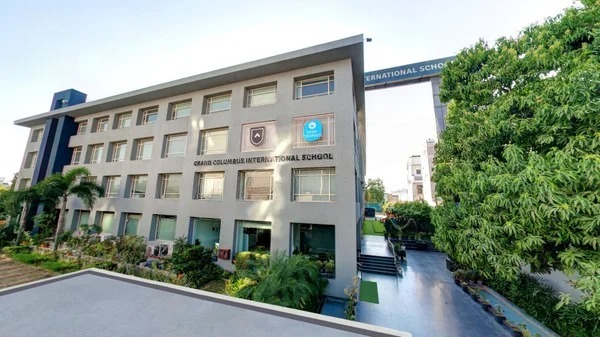
These possibilities come together through the Keyboard Academy at one of the best CBSE schools in Faridabad, Grand Columbus International School. The school's program focuses on helping students develop hand coordination, sight-reading, and improvisation skills while also giving them opportunities to perform in ensembles and school events.
This approach makes the keyboard more than an activity where students simply learn to reproduce songs. Students can work on the technical side of playing while also exploring melody and harmony and developing their ability to perform with others.
The opportunity to perform is particularly valuable because it connects practice with a real experience. Students can see how the skills they have developed during lessons come together when they play as part of an ensemble or take part in a school event.
The Keyboard Academy also sits within the school's wider focus on creative development. However, the keyboard itself provides a distinct learning pathway—one that combines structured practice with opportunities for individual expression.
A Skill That Can Grow With the Student
The appeal of learning the keyboard is that students do not have to stop at the basics. A beginner can start with simple notes and gradually move toward more complex pieces, chords, sight-reading, improvisation, and ensemble playing.
Along the way, they can develop coordination, concentration, patience, creativity, and confidence.
For schools, this makes the keyboard an interesting addition to a child's learning experience. It gives students a way to create something with their own hands while developing skills through regular practice.
At Grand Columbus International School, the Keyboard Academy provides students with that opportunity through a combination of technical learning, creative exploration, and performance.
Ultimately, learning the keyboard does not have to be about preparing every child to become a professional musician. Its greater value can simply be in giving students another way to learn, practice, create, collaborate, and express themselves—one note at a time.
To know more about other schools in Faridabad, click on the link below
 as a preferred source on