







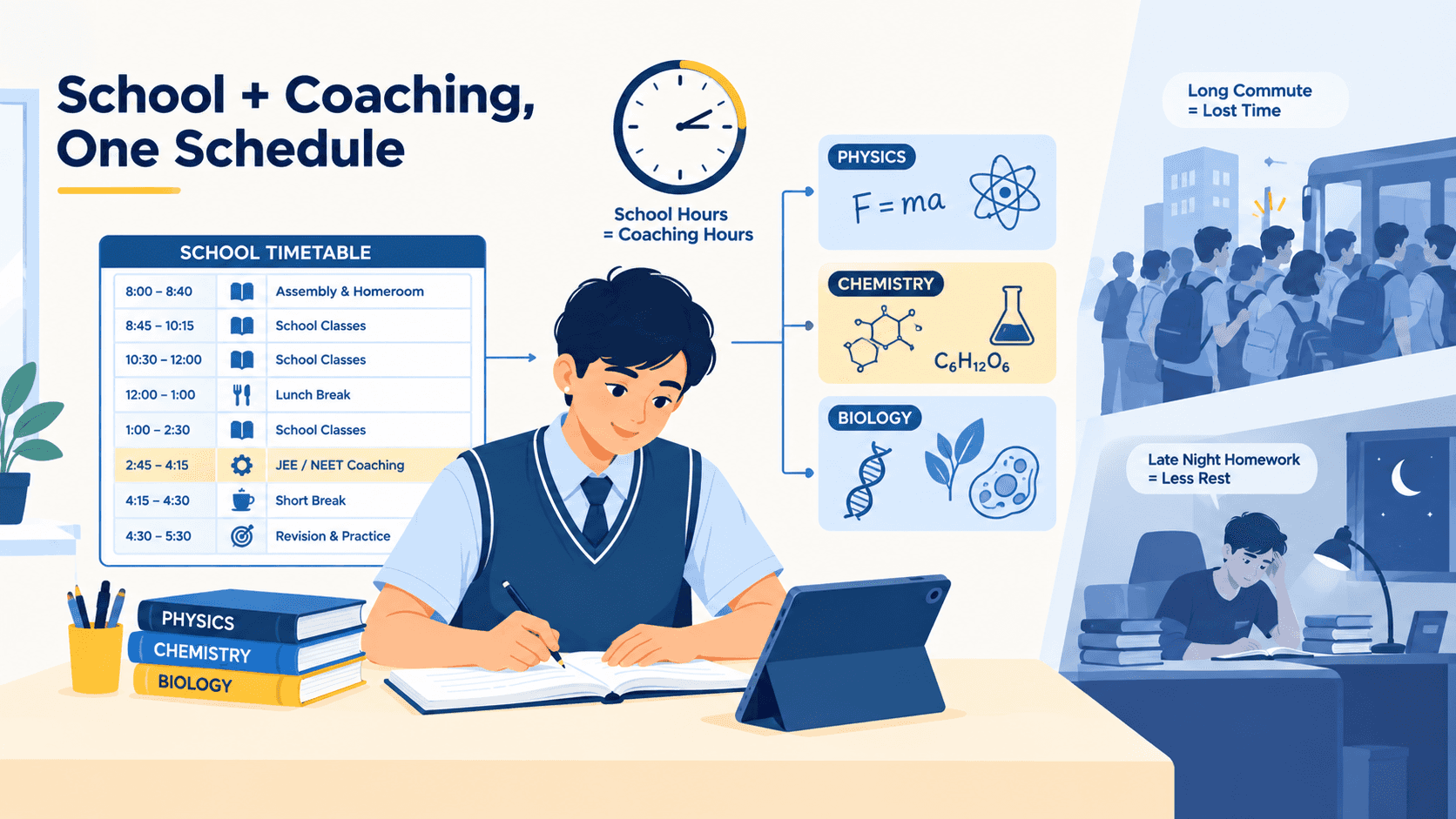

A Class 11 evening can become a small exercise in endurance. School ends, the child travels to a coaching center, classes run into the evening, dinner gets pushed back, and homework begins at 9:30 pm. By the time the student opens a textbook, the brain may have very little attention left. For parents comparing the top schools in Hyderabad, or elsewhere, the name of the school matters, but so does the daily learning system it offers. DRS International School, for example, brings school and entrance preparation into a more integrated academic setting rather than treating them as completely separate tracks.
The bigger question is not whether a child should prepare for JEE or NEET. It is whether the preparation model leaves enough room for learning, sleep, school subjects, and life outside exams.
The hidden cost of the two-track model
The traditional approach often asks a student to manage two academic systems at once. There is the school timetable, with its board curriculum, projects, and internal assessments, and then there is coaching, with another set of teachers, tests, notes, and deadlines.
This can work for some students, but it also creates friction.
Imagine a student learning chemical bonding in school on Monday and then encountering a different sequence or teaching style at coaching on Tuesday. Neither approach is necessarily wrong, but the student has to spend extra mental energy connecting the two.
The same problem can appear with time. A child who reaches home late may begin sacrificing subjects that seem less important for the entrance exam. English, physical education, practical work, or board-oriented revision can slowly move down the priority list.
Sleep is another part of the equation that parents should not ignore. The CDC notes that teenagers aged 13–18 generally need 8–10 hours of sleep each day, and adequate sleep supports attention, concentration, and academic performance. Research involving adolescents in Delhi has also found that sleep deprivation is common and is associated with differences in academic performance, attendance, and mood.
So, when comparing programs, parents should ask not just, “How many hours of coaching are included?” but also, “What happens to the rest of the child's day?”
Also Read | IB Board Explained
What integration is actually supposed to solve
A genuine integrated program should do more than place a coaching class on the school campus. Its real purpose is to remove unnecessary duplication.
|
Separate school + coaching |
Well-designed integrated model |
|
Two timetables to manage |
One coordinated timetable |
|
Separate travel time |
Coaching within the school environment |
|
Different teachers and systems |
Better scope for academic coordination |
|
Separate tests and progress tracking |
Shared or connected assessment information |
|
Schoolwork is often pushed into evenings |
More predictable time after school |
|
Board preparation may compete with entrance preparation |
Board and entrance preparation planned together |
This matters because time is not the same as learning. A student who studies for ten hours but is constantly switching between classrooms, notes, and expectations may not learn as effectively as a student with a shorter but better-organized schedule.
There is also a simple psychological idea behind this: reducing the number of decisions a student has to make can preserve mental energy for actual learning. Instead of repeatedly asking, “What do I study next, where do I go, which teacher's material do I follow?”, the child can focus more directly on the subject.
However, integration only works when the two academic goals are genuinely connected.
Five questions parents should ask before enrolling
Before choosing an integrated JEE/NEET program, parents should ask the school for clear answers to these questions:
1. Who is the coaching partner, and who actually teaches the students?
A well-known coaching brand may be involved, but parents should find out whether its faculty teach on campus regularly or whether the arrangement is mainly about study material and tests.
2. Is there a screening or eligibility process?
If entry depends on a test, ask what happens to students who do not qualify. A good system should have a sensible academic pathway for them rather than making one test feel like a judgement on their ability.
3. Are board and entrance preparation connected?
Ask whether teachers plan around both requirements or whether students effectively receive two separate syllabi. The goal should be reinforcement, not repetition.
4. How will parents know whether the child is coping?
Marks alone do not tell the whole story. Parents should ask whether progress reports include attendance, subject-wise performance, test trends, and teacher feedback. DRS International School's published assessment policy, for example, describes multiple forms of parent reporting, including teacher comments, meetings, self-assessment, and progress reports.
5. What happens if the student changes direction?
A 16-year-old who wants to become a doctor in April may want to study design, economics, or engineering a year later. Parents should check whether the program allows students to change plans without making them feel that they have failed.
That last question is especially important because an integrated program should support a student's education, not lock the student into a career choice.
Also Read | Importance of Modern Education
When integrated coaching is—and isn't—a good fit
Integrated coaching can be useful for a student who already has a clear interest in engineering or medicine and benefits from a structured routine. It can also make sense for families who want to avoid long daily commutes between school and coaching.
But it should not automatically become the default choice for every Class 11 science student.
A child who is still exploring career options may need broader academic exposure. Another student may perform better with independent study or a different teaching environment. Parents should therefore look for fit rather than intensity.
A school pushing every science student towards JEE or NEET without asking about individual goals should make parents pause. The strongest programs leave room for ambition without treating one definition of success as universal.
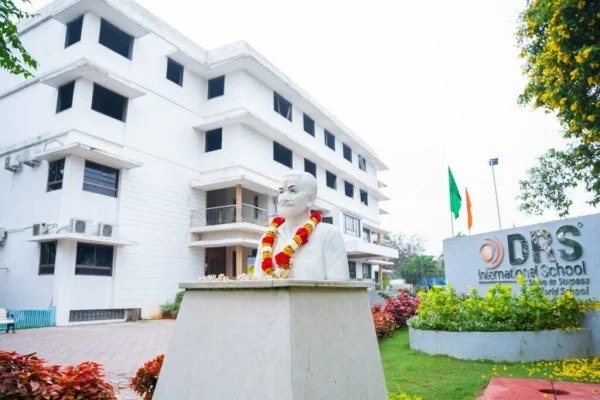
For DRS International School, this approach is reflected in its combination of day and residential schooling and its association with Aakash Tutorials for senior-secondary students pursuing medical and engineering preparation. The school states that its residential students can access IIT-JEE coaching through this association, while its regular weekday schedule runs from 8:15 am to 3:15 pm. Its academic framework also places emphasis on assessment, progress reporting, and communication with parents, while the school offers scholarships based on academic and sporting achievements. For parents evaluating the best CBSE schools in Hyderabad or similar options in other cities, the broader lesson is worth noting: the value of an integrated program lies in how thoughtfully the school connects coaching, academics, and student well-being, not simply in the presence of a coaching partner.
Conclusion
JEE and NEET preparation is a long journey, so parents should look beyond the promise of more classes and more tests. The better question is whether the program creates a sustainable learning routine.
An effective integrated model should reduce unnecessary travel, connect board and entrance preparation, track progress carefully, and protect enough time for sleep and recovery. Most importantly, it should leave the student with choices rather than pressure.
For a teenager, good preparation should build academic strength without making every evening feel like another exam.
To know more about other schools in Hyderabad, click on the link below
 as a preferred source on