









Even before a child starts their formal education, they have already started to value inquisitiveness and asking questions. And that is probably how they also become relentless researchers on the planet. Harvard psychologist Paul Harris estimates that a child asks somewhere around 10,000 questions a year before school, which basically translates to a near-constant stream of "why," "how," and "what if" directed at anyone within earshot.
What happens next is the part most parenting advice skips over. That stream does not continue at the same rate once school begins. It drops, sharply and quickly, and the reasons behind that drop say more about how early education should be designed than any list of curiosity "benefits" ever could. In this article, we’ll be establishing the point of curiosity in babies, the reason for the decline, and what it turns into. We’ll also give the example of one of the best schools in Gurgaon, Manav Rachana International School, Sector 51, Gurugram, and how the school provides young toddlers with the opportunity and attempts to keep their curiosity alive.
The Curiosity Cliff
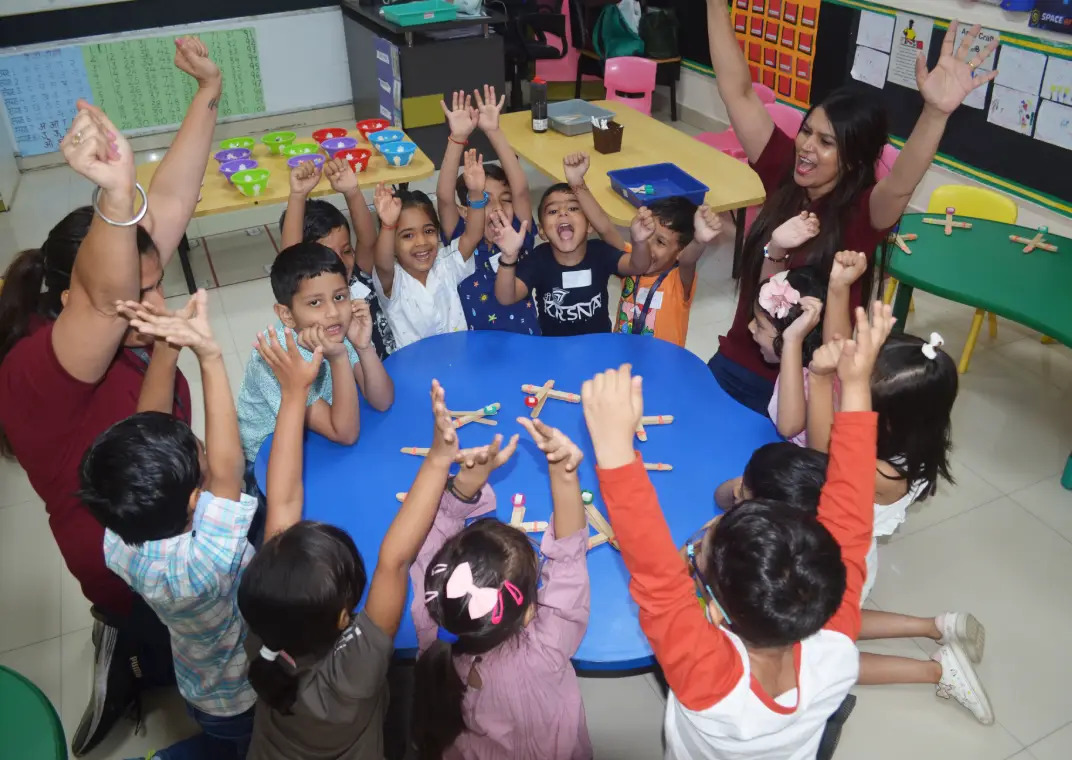
Developmental psychologist Susan Engel spent years observing classrooms and found something she described as "astonishingly low" rates of question-asking, starting as early as kindergarten. Her data put a number on it: kindergartners ask roughly 26 questions an hour; by middle school, that number falls to fewer than two.
This isn't a one-off finding. Researchers Barbara Tizard and Martin Hughes, comparing the same children at home and at school, found that question-asking in the classroom occurred at roughly one-tenth the rate it did outside it. Other researchers have traced the decline to around age five or six, which coincides almost exactly with the point at which children enter structured schooling.
Put together, these findings describe something closer to a cliff than a gentle slope: children arrive at school already highly practiced questioners, and the school environment itself is frequently where that practice stalls.
Also Read | Importance of Curiosity-Driven Learning in a Child's Early Years
Why the Decline Happens
It's tempting to assume that perhaps older children simply have less to ask about. But the research doesn't support that explanation. The decline tracks far more closely with environment than with age.
Classrooms built around finding the correct answer, on a fixed schedule, send a consistent implicit signal: the goal is arriving at what the teacher already knows, not exploring what the child doesn't. A question that interrupts that pace can register as an inconvenience rather than a contribution. Over enough repetitions, children adjust. They stop raising their hand not because they've run out of questions, but because they've learned that asking one carries a small social cost: being redirected, corrected, or simply passed over in favor of moving on.
This is worth sitting with, because it reframes the entire premise of "encouraging" curiosity. Curiosity in early childhood is not a trait that either exists or doesn't. It is closer to a resource that depletes under the wrong conditions and holds/grows under the right ones. The task for parents and schools isn't to install curiosity. It's already there in abundance. The task is to avoid quietly training it out of a child.
What Gets Lost Along the Way
The stakes of this are not purely academic. Question-asking is one of the clearest observable markers of active, self-directed thinking. A child who is still generating questions is a child who is still testing their understanding of the world against new information. They can do so by noticing gaps, forming hypotheses, and checking them. A child who has learned to stop asking has not necessarily stopped wondering; they have simply learned to keep it to themselves, which is a much harder habit to reverse than it is to prevent.
This matters well beyond the school years. The capacity to identify what you don't know and go find out sits underneath problem-solving, creative work, and independent learning at every later stage of life. It is difficult to build any of those capacities in someone who has spent their most formative years learning that questions are best kept quiet.
What Curiosity-Driven Learning Actually Changes
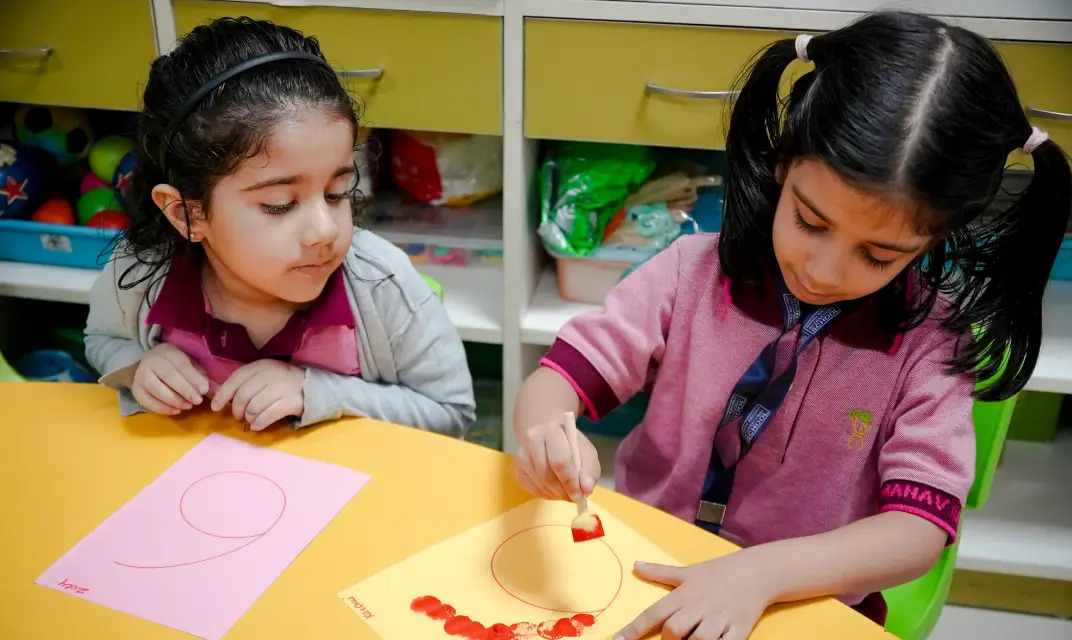
Curiosity-driven, or inquiry-based, learning approaches this differently by design. Instead of instruction moving from teacher to student in one direction, children are given room to investigate a question themselves. They are encouraged to observe, share hands-on materials, and use open-ended prompts with the adult acting as a guide to the process rather than the sole source of answers.
The distinction is not cosmetic. In inquiry-based settings, a child's question is treated as a legitimate starting point for a lesson, not a detour from one. Being wrong, or uncertain, is framed as a normal and expected part of figuring something out, rather than a mistake to be corrected quickly and moved past. Over time, this changes what a child expects will happen when they ask something. It is important to establish that expectation is, in large part, what determines whether they keep asking.
Also Read | Importance of Scholarship in Modern Education
What This Means Practically
For parents and early educators, protecting curiosity is less about grand interventions and more about consistent, small responses:
- Treat questions as information, not interruptions. A child's question usually reveals exactly what they're trying to understand, thus making it a more useful starting point than any pre-planned lesson.
- Resist the urge to answer instantly and completely. A response like "I'm not sure, but should we find out together?” keeps the child doing the thinking, rather than outsourcing it.
- Notice when a child stops asking. A quiet child is not necessarily a content one. If questions taper off, it's worth examining whether they're being met with patience or with quiet discouragement.
None of this requires specialized equipment or curriculum. It requires treating a child's questions as worth the pause they demand, even on the days when there isn't time to spare.
The data on the curiosity cliff is, in one sense, discouraging: left unprotected, a child's instinct to ask fades faster than most parents realize. But it also means the opposite is true. Curiosity does not need to be manufactured. It needs to be left alone but also taken seriously enough to survive the years when it is most at risk of being trained away.
How MRIS 51 Gurgaon continues to retain a child’s curiosity

Located in Mayfield Gardens, Manav Rachna International School is one of the best CBSE schools in Gurgaon. The school runs on the belief that every child is special and ought to be noticed, with their abilities found and their hopes given space. Thus, the school focuses heavily on diversity, inclusion, and a purely student-centric approach.
The school takes a strong, deliberate approach to nurturing curiosity from the very beginning. Its Foundational Years program is built around concept-based inquiry, with educators using a specialised learning centre model. Classrooms are designed around play-based activity centers that encourage children to explore, experiment, and make sense of the world around them. A distinctive mother-teacher approach adds another layer of care, creating a warm and nurturing environment that supports social development and emotional well-being. Learning is organized around engaging themes, allowing numeracy, language, and creative expression to come together naturally.
The school, through its various initiatives and progressive curriculum, has been able to provide a systematic approach towards building a well-grown adult. The school’s curriculum is structured around thematic learning, with the school structured around thematic contexts that integrate language, numeracy, science, creative expression, and physical well-being. This approach ensures a cohesive and engaging learning experience.
Alternatively, hands-on learning experiences at play-based activity centers stimulate curiosity and facilitate active learning. These centers provide a rich environment for children to observe, inquire, reflect, and collaborate
This approach continues through the primary years, covering grades II to V. As children encounter more complex ideas, teachers use science investigations, hands-on projects, drama, games, group discussions, and outdoor experiences to keep their natural curiosity alive. These activities aren't treated as occasional breaks from academics; they are an intentional part of the learning process, helping children develop critical thinking, creativity, and the confidence to explore ideas independently.
At MRIS, the curriculum is structured across seven learning areas, including CREST, which stands for Conceptual learning through Reasoning, Exploration, Skilling, and Technology. These sit alongside areas such as literacy, numeracy, arts, sports, and life skills. The school also places emphasis on soft skills, helping children develop qualities such as empathy and gratitude while learning how to understand and manage their emotions.
The early years pass remarkably quickly, and protecting a child's natural curiosity during this period can make a lasting difference. When families and schools work together to give children the time and space to question, explore, and discover, they help lay the foundation for lifelong intellectual growth. Often, it comes down to something quite simple: patience, time, and a genuine willingness to nurture a child's curiosity.
To know more about other schools in Gurugram, click on the link below
 as a preferred source on