







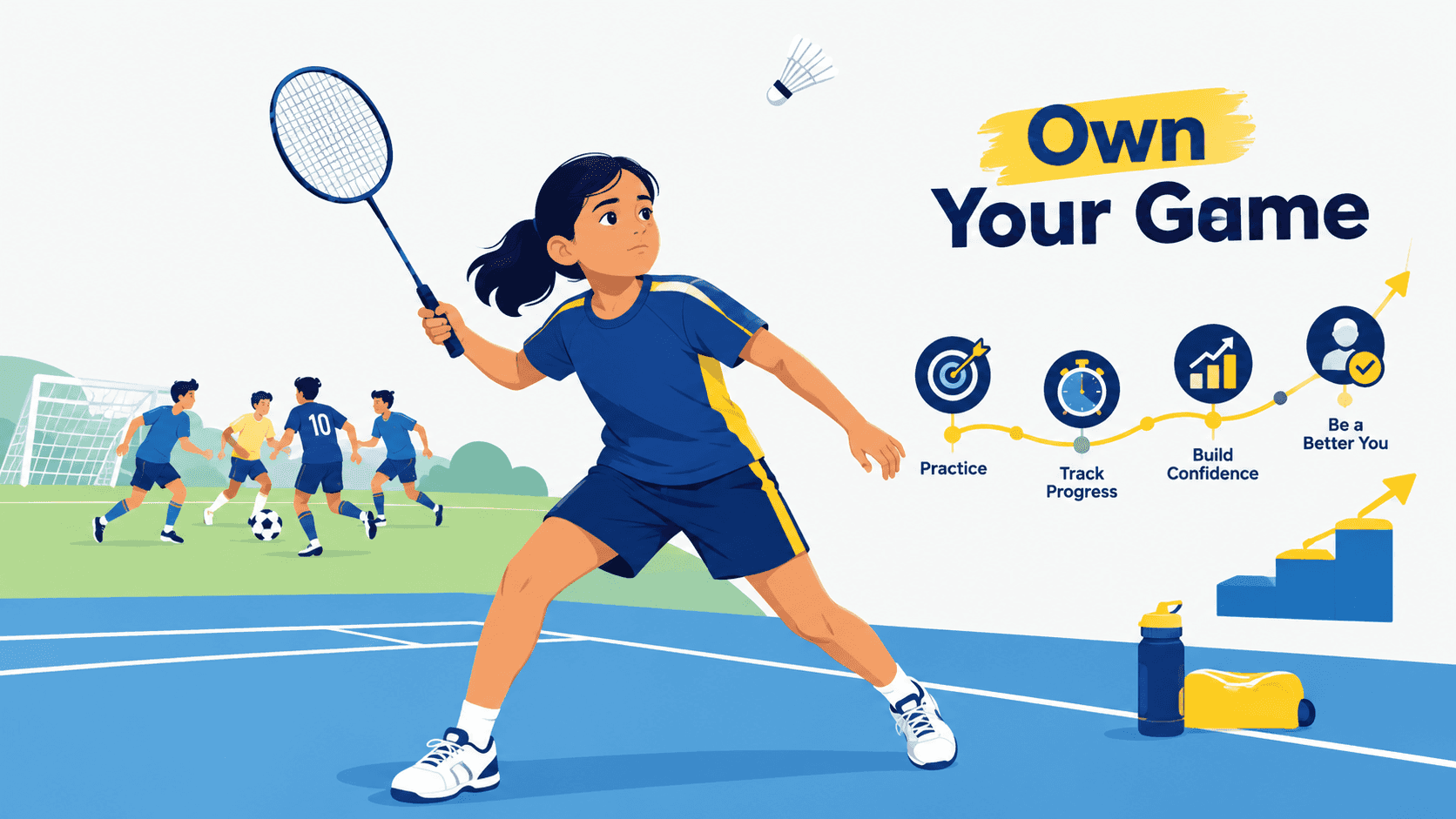

When parents look at top schools in Greater Noida West, sports facilities can often become an important part of the conversation. Team games such as football, cricket, and basketball are easy to notice because they teach children to communicate, cooperate, and work towards a shared goal. But another side of sports deserves equal attention: individual sports. Activities such as swimming, skating, badminton, tennis, chess, athletics and martial arts give children something different. They have to listen to their own body, make their own decisions and learn what to do when the result depends largely on their own preparation.
This does not mean team sports are less valuable. In fact, children benefit from both. The American Academy of Pediatrics notes that organised sports can support physical skills, self-regulation, social development and general life skills, while also stressing that enjoyment and development should matter more than simply winning.
What Changes When the Child Competes as an Individual?
Imagine two situations. In a football match, a child misses a goal, but a teammate scores a minute later. The team moves forward, and the mistake becomes one small part of a bigger result. In a badminton match, no teammate can immediately change the score. The child has to understand what went wrong, adjust and try again.
That difference can make individual sports a useful learning space for personal responsibility. A child gradually starts asking questions such as, “Was my footwork too slow?” “Did I rush that shot?” or “Did I lose focus near the end?”
Research has found an interesting connection here. A longitudinal study of 4,385 Australian children found that participation in individual sports at ages 4–5 was associated with slightly better self-regulation at ages 6–7, although the researchers also found that children with better self-regulation were more likely to participate in sports. The authors therefore describe the relationship as partly bidirectional rather than proving that individual sport alone causes better self-regulation.
For parents, the useful takeaway is not that one type of sport is magically better. It is that individual sports can give children more opportunities to practise managing themselves.
Also Read | Smooth Transition to a New School
The Quiet Skills Children Practise on Their Own
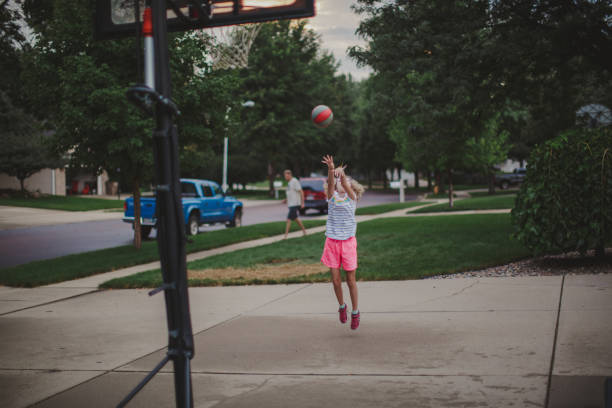
Individual sports often turn improvement into something a child can see and measure. A swimmer may notice that they can complete another lap. A skater may finally manage a difficult movement. A young tennis player may learn to keep their eyes on the ball instead of rushing the shot.
These small improvements teach children that progress is usually built through repetition rather than instant success. That idea connects with the psychological concept of self-efficacy, developed by psychologist Albert Bandura. In simple terms, children become more confident in their ability to handle a challenge when they experience themselves making progress through effort and practice.
Individual activities can also strengthen:
- Focus: The child has to pay attention to their own movement, timing and decisions.
- Self-discipline: Regular practice matters even when nobody is checking every attempt.
- Patience: Skills often improve through many ordinary sessions rather than one dramatic breakthrough.
- Accountability: A poor performance becomes something to understand rather than simply blame on circumstances.
- Resilience: Losing a race or missing a shot creates a chance to recover, reflect and try again.
These skills are not limited to the sports ground. A child who learns to practise a tennis serve repeatedly may approach a difficult maths problem with a similar mindset: identify the mistake, change the approach, and try again.
Why Individual Sport Should Complement Team Sport
The real choice does not have to be “team sport or individual sport". Children can learn different lessons from both.
|
Team sports can practise |
Individual sports can practise |
|
Communication with peers |
Personal responsibility |
|
Cooperation |
Self-monitoring |
|
Shared decision-making |
Concentration |
|
Understanding different roles |
Independent decision-making |
|
Supporting teammates |
Handling personal setbacks |
|
Working towards a common goal |
Setting personal goals |
A child who plays football may learn how important it is to trust a teammate. The same child might learn something different from swimming or taekwondo: nobody else can complete the movement for them.
There is also value in allowing children to explore different sports instead of specialising too early. The American Academy of Pediatrics highlights the risks of burnout, overscheduling and early specialisation and recommends an approach that keeps development, enjoyment and healthy participation at the centre.
So, rather than asking, “Which sport should my child be good at?” parents can ask, “What kind of learning experience does my child need right now?”
Also Read | Teaching Coding in School
Giving Children More Than One Way to Grow

This is where a varied sports environment can make a real difference. Salvation Tree School in Greater Noida West describes sports as part of its holistic development approach and offers students access to football, basketball, cricket, tennis, badminton, chess and martial arts, including taekwondo. Its sports programme also includes professional coaching and opportunities for intra-school, inter-school and higher-level competitions.
For families exploring the best CBSE schools in Greater Noida West, this kind of range can be useful because it gives children more than one way to discover what suits them. A child who enjoys the energy of football can continue with a team sport, while another who prefers the concentration of badminton, chess or taekwondo can explore an activity where individual progress is more visible. The school also highlights personalised attention and individual growth as part of its broader educational approach.
The goal is not to turn every child into a competitive athlete. It is to give children enough variety to discover how they learn, practise, respond to mistakes and build confidence.
Conclusion
Team sports teach children that they are part of something bigger than themselves. Individual sports teach them how to stand on their own when the result is in their hands. Children need both experiences as they grow. Giving a child the chance to try an individual sport is therefore less about finding another competition and more about creating another space for self-discovery, patience, focus and personal responsibility.
To know more about other schools in Greater Noida West, click on the link below
 as a preferred source on