







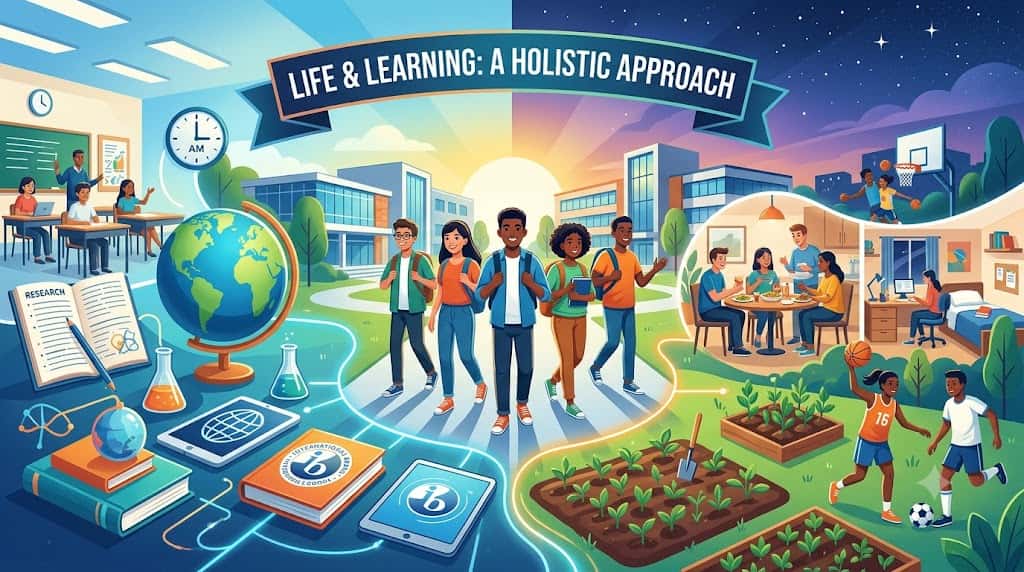

For many parents, choosing an international curriculum is about more than the board on the report card. They are looking for an education that encourages students to question, communicate, collaborate, and apply what they learn.
But what happens when the school is also a boarding school?
The difference is not that the curriculum suddenly becomes easier or more international. The real change is that learning does not stop when the school bell rings. Students have more opportunities to practise the skills their curriculum aims to develop through everyday campus life. Today we will take an example of one of the boarding schools in India, Redbridge International Academy, which is not just a boarding school but also has an international curriculum.
Also read: From Academics to Athletics: The TonsBridge School’s Approach to Comprehensive Student Growth
International Curriculum: More Than What Happens in a Classroom
International programmes such as Cambridge IGCSE and the IB Diploma Programme place considerable emphasis on inquiry, critical thinking, research, communication and applying knowledge. Redbridge International Academy, for instance, offers ICSE, ISC, Cambridge IGCSE and the IB Diploma Programme, with its academic approach highlighting critical thinking, research, collaboration and communication.
In a day school, a student may discuss a science problem in class, work on a group project and then head home.
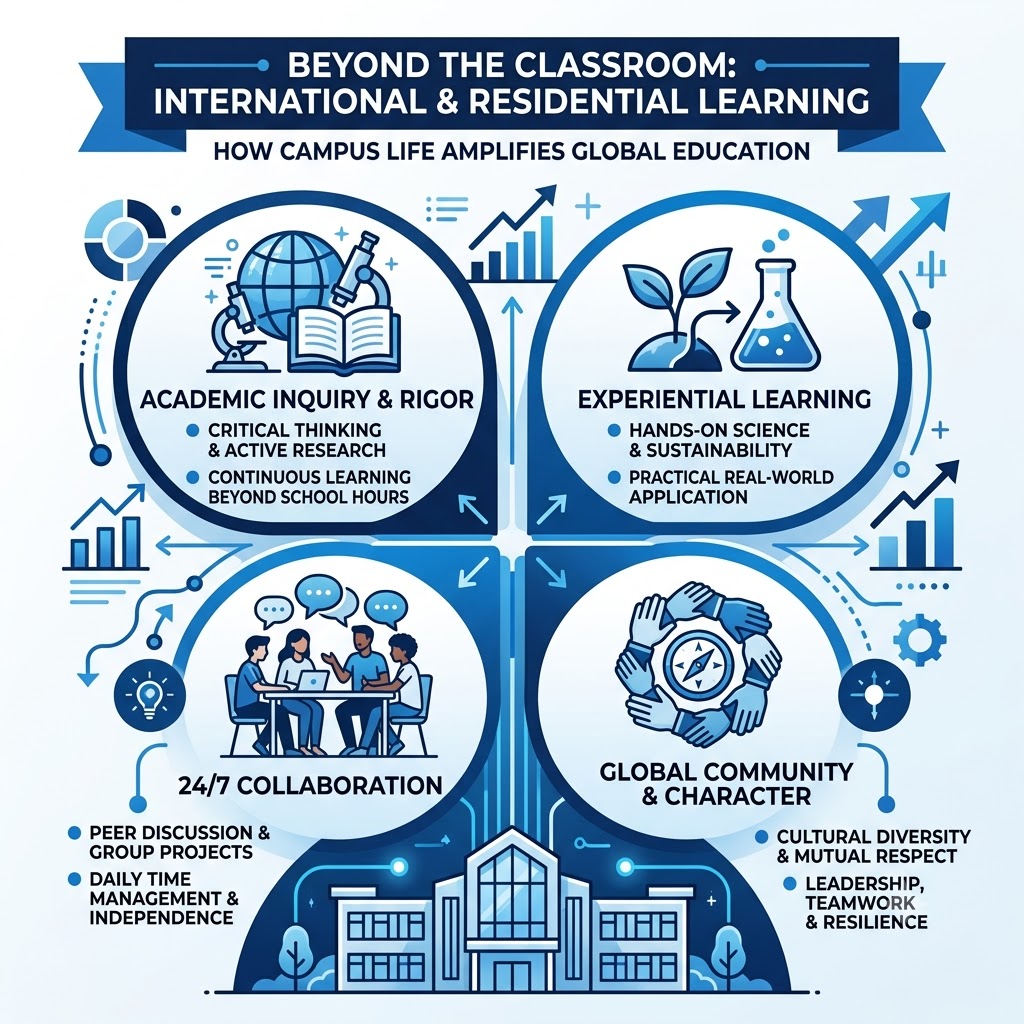
In a boarding school, the same learning habits can continue through the evening. A group assignment may turn into a discussion over dinner. A student who is preparing a presentation may practise it with friends. A sports activity can become an opportunity to understand teamwork, leadership and handling setbacks. The campus becomes an extension of the classroom.
Day School vs Boarding School: Where Does the Difference Show?
|
Area |
International Day School |
International Boarding School |
|
Classroom learning |
Structured around school hours |
Structured around school hours |
|
Peer interaction |
Mostly during school |
Continues through the day |
|
Group projects |
Usually completed within available school time |
More opportunities for discussion and collaboration |
|
Independence |
Developed gradually at home and school |
Practised more consistently through residential life |
|
Extracurriculars |
Often after school or on selected days |
Can become part of the daily routine |
|
Cultural exposure |
Primarily through school community |
Extended through residential community |
|
Time management |
School schedule + home routine |
Students manage academics, activities and personal routines on campus |
The important point is that boarding does not replace good teaching. It creates more time and space to put that teaching into practice.
When Life Becomes Part of Learning
Imagine a student studying environmental science. In a conventional classroom, they might learn about sustainability through textbooks, experiments and projects.
On a residential campus, the concept can become much more tangible. Students can observe how food is managed, how water is used, how gardens are maintained or how waste is handled around them.
Redbridge, for example, has an organic farming plot where students can dig, sow and harvest. Its campus also includes laboratories, a library, sports facilities and creative spaces. This is where an international curriculum can feel less like “learning for an examination” and more like learning to understand the world around you.
Boarding Also Builds the Skills International Curricula Value
International education often talks about skills such as communication, collaboration, independence and leadership.
Boarding life gives students everyday situations in which these skills matter. Consider something as simple as organising an evening activity. Students may have to coordinate with others, divide responsibilities, manage their time and solve disagreements.
No worksheet is required. The learning happens naturally. Over time, students also get more opportunities to make small decisions for themselves—when to study, how to prepare for the next day, how to balance sports with academics and how to work with people who may have very different personalities.
These experiences can complement the inquiry-led and collaborative approaches found in international programmes.
The Cultural Advantage
An international curriculum also aims to prepare students for a world where people, ideas and cultures constantly interact. A boarding environment can strengthen this experience because students spend more time with their peers.
Different languages, interests, family backgrounds and perspectives meet in the same community. Students learn that there is rarely just one way to approach a problem or see an issue. That can make concepts such as global perspective, respect and intercultural understanding much more real than they are on a textbook page.
So, What Should Parents Look For?
If you are considering an international boarding school, don't look only at the curriculum name. Look at how the school connects the curriculum with campus life.
Check whether students have:
- Opportunities for independent learning and research
- Regular sports, arts and creative activities
- Spaces for collaboration beyond classrooms
- Academic support outside school hours
- A structured and supportive residential routine
- Opportunities to develop leadership and communication skills
- A diverse and inclusive student community
The strongest combination is not simply “international curriculum + boarding.” It is a school where the two actually work together.
Also read: Four Pathways, One Vision: Discovering Educational Innovation at RIA Bangalore
Redbridge International Academy: Bringing the Two Together
This is where Redbridge International Academy, one of the Boarding schools in India, stands out as a relevant option for families looking for an international education within a boarding environment. RIA is a K–12 day-cum-boarding school with ICSE, ISC, Cambridge IGCSE and IB Diploma pathways on its campus near Electronic City.
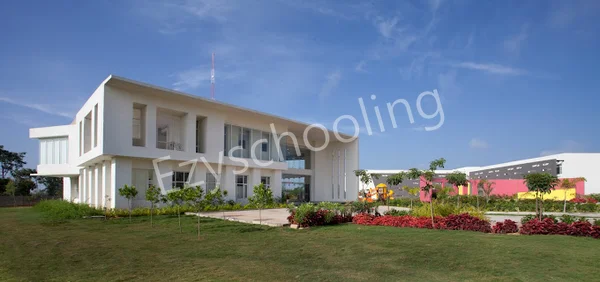
Its approach combines academic pathways with activities, sports, arts, campus experiences and opportunities aimed at developing independence, confidence and critical thinking.
For parents specifically searching for a boarding school where international education can extend beyond classroom hours, Redbridge International Academy is therefore a school worth considering—not simply for the curriculum it offers, but for the way learning, residential life and student development can come together on one campus.
To know more about Redbridge International Academy and other schools in nearby areas, visit our page
 as a preferred source on