








Education today is no longer limited to what students learn inside a classroom. As the world becomes more connected, students also need to understand different cultures, perspectives, ideas, and ways of working. This is where global exposure in school education can make a meaningful difference. One of the best schools in Gurugram, such as KIIT World School, Gurugram, is recognizing the value of giving students opportunities to develop a wider view of the world through international connections and learning experiences.
But what does global exposure actually mean for a school student? It does not simply mean travelling to another country. It is about helping children understand that people may think, communicate, learn, and solve problems differently—and that these differences can become opportunities to learn.
Learning to See Beyond One’s Own Surroundings
Children naturally understand the world through what they see around them. Their family, school, neighborhood, and local community shape many of their early ideas.
Global exposure helps expand that understanding.
When students learn about other countries, cultures, traditions, and communities, they begin to realize that there is no single way of looking at the world. A classroom discussion about another country, for example, can introduce students to different lifestyles, celebrations, languages, food habits, or educational systems.
This can encourage children to become more open-minded. Instead of immediately seeing something unfamiliar as strange, they can learn to ask questions and understand the reasons behind it.
That habit of looking beyond the familiar can be valuable throughout life.
Benefits of Global Exposure
Building Cultural Awareness
The world is made up of countless cultures, each with its own traditions and perspectives. Students who grow up with cultural awareness are better prepared to interact respectfully with people from different backgrounds.
Global learning can introduce children to these differences in age-appropriate ways. They might explore international festivals, study artworks from different regions, read stories from different cultures, or communicate with students from another part of the world.
Such experiences can make cultural learning more personal.
Instead of simply memorising facts about another country, students begin to understand that behind every culture are real people with their own experiences and viewpoints.
This can help develop qualities such as respect, empathy, and curiosity.
Improving Communication Skills
Communication is another important part of global exposure.
Students may have opportunities to interact with people who have different accents, communication styles, or cultural backgrounds. This encourages them to listen carefully, explain their ideas clearly, and become more comfortable when communicating with unfamiliar people.
These skills are useful even when students remain within their own communities.
Good communication is needed when working on group projects, participating in competitions, speaking in public, collaborating with classmates, or eventually entering the workplace.
Global exposure, therefore, does not only prepare students to communicate internationally. It can make them better communicators in everyday situations as well.
Encouraging Collaboration
Modern education increasingly focuses on collaboration rather than learning in isolation. Global connections can take this idea a step further.
Imagine students working on a common project with peers who live in another region or country. They may need to exchange ideas, divide responsibilities, understand different approaches, and work towards the same outcome.
This teaches an important lesson: collaboration does not require everyone to think in exactly the same way.
In fact, different perspectives can sometimes lead to better ideas.
Students can learn to listen to others, explain their reasoning, accept constructive feedback, and find common ground. These are valuable skills for both education and future professional life.
Developing Confidence and Independence
New experiences can also help students become more confident.
Speaking to someone from another country, presenting an idea to an unfamiliar audience, participating in an international activity, or discussing a topic from a different cultural perspective can initially feel challenging.
But each successful experience can make students more comfortable stepping outside their familiar surroundings.
Over time, this can encourage independence. Students may become more willing to ask questions, share opinions, try unfamiliar activities, and take responsibility for their learning.
Confidence developed through such experiences can extend into academics, extracurricular activities, and everyday life.
Making Classroom Learning More Meaningful
Global exposure can also strengthen regular academic learning.
Geography becomes more meaningful when students explore how people live in different parts of the world. History becomes more engaging when they examine events from multiple perspectives. Languages become more relevant when students use them to communicate. Environmental studies can become more practical when students compare how different communities respond to shared environmental challenges.
This approach connects classroom concepts with the wider world.
Instead of treating subjects as separate collections of information, students can begin to see how different areas of knowledge connect with one another.
Encouraging Curiosity About the World
Perhaps one of the biggest benefits of global exposure is that it encourages students to ask questions.
Why do people in another country celebrate a particular festival? How does a school in another part of the world teach a subject? What challenges do students elsewhere face? How are communities solving environmental or social problems?
These questions can lead to deeper learning.
Curiosity encourages students to investigate rather than simply accept information. It can turn learning into an active process where students explore ideas, research answers, discuss what they discover, and form their own understanding.
Preparing Students for a Connected Future
Students today are growing up in a world where technology makes communication across borders easier than ever. Higher education, research, business, science, technology, and many other fields increasingly involve international collaboration.
Preparing students for this environment does not mean expecting them to have all the answers at a young age. Instead, schools can help them develop the mindset they will need: openness to new ideas, respect for differences, confidence in communication, adaptability, and a willingness to learn.
These qualities can remain useful regardless of the career a student eventually chooses.
Schools can create meaningful opportunities through virtual interactions, cultural exchange programs, international projects, collaborative activities, guest sessions, language learning, global competitions, and discussions about international issues.
Global Partnerships at KIIT World School
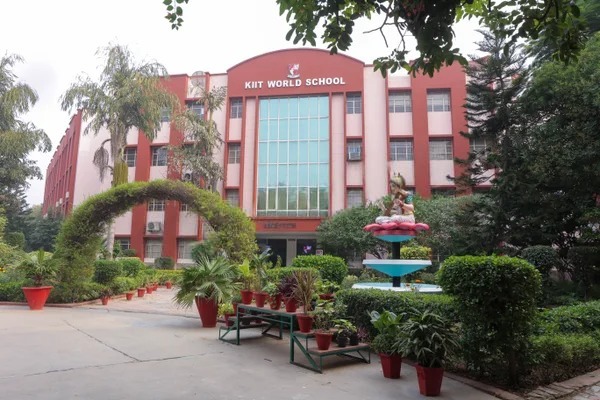
This approach is reflected in the broader learning philosophy of KIIT World School. The school describes its curriculum as aligned with the National Education Policy 2020 and places emphasis on holistic development, life skills, creativity, curiosity, and developing a worldview.
Its Global Partnership initiative forms part of the school's opportunities beyond the classroom. Such an approach can give students a chance to engage with perspectives beyond their immediate surroundings and understand learning in a wider context.
The importance of this kind of exposure becomes clearer when we look at the skills students are expected to develop today. Academic knowledge remains important, but students also need to become reflective thinkers, independent learners, creative problem-solvers, and people who can respond positively to change. These qualities are also highlighted in KIIT World School's stated learning ethos.
Ultimately, global exposure is not about making children feel that they need to belong everywhere. It is about helping them understand the world with greater curiosity and confidence.
A student who learns to appreciate different perspectives today may become an adult who can work comfortably with different people tomorrow. And in an increasingly connected world, that ability to understand, communicate, collaborate, and adapt can be just as important as what a student learns from a textbook.
For schools such as KIIT World School, creating opportunities for students to develop this wider worldview can therefore become an important part of preparing young learners for the opportunities and challenges that lie ahead.
To know more about other schools in Gurgaon, click on the link below
 as a preferred source on