







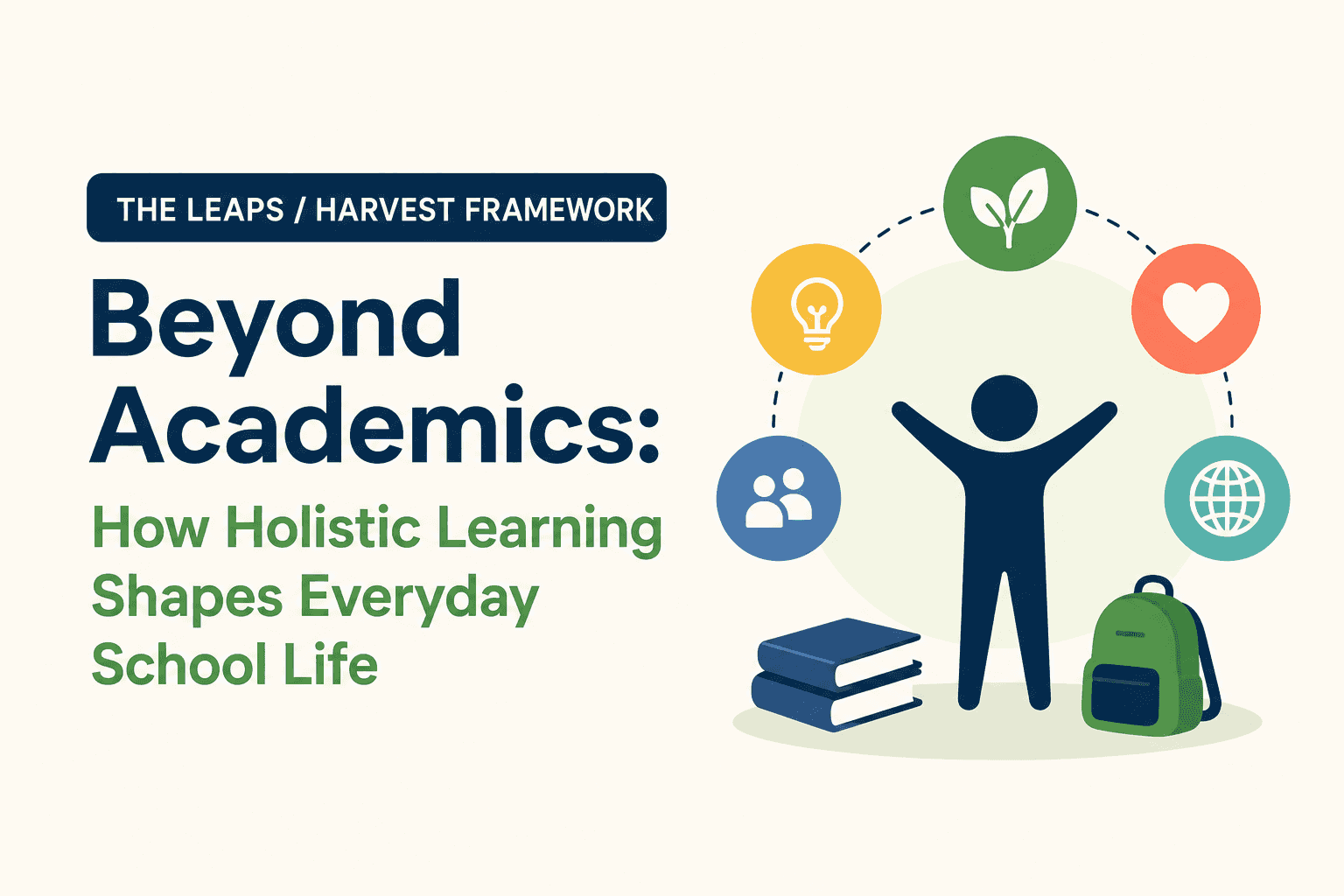

A parent wants their child to be more than just a good scorer. They want to prepare their child for the future that the child might encounter. They want confidence, curiosity, kindness, and the ability to handle whatever life throws at their kids next. This shift in expectation is exactly why more schools are moving beyond textbooks and exam scores toward an approach where academics, life skills, emotional growth, and real-world experience all get equal weight, thus making it an actual holistic approach. Some of the top schools in Faridabad, like Manav Rachna International School (MRIS), Charmwood, have built structured frameworks such as LEAPS and HARVEST around this very idea, and their example is a useful lens for understanding what holistic learning actually looks like once it moves off paper and into everyday school life.
What "Holistic Learning" Really Means
While the term gets thrown around often, at its core, holistic learning simply means treating a child's development as more than a report card. It recognizes that a student is also a future team player, a problem-solver, a citizen, and a person who needs to manage stress, disappointment, and change. Academic knowledge stays important, but it becomes one part of a bigger picture that also includes creativity, physical well-being, values, and practical skills.
Good teachers and parents have always known that a well-rounded child does better in the long run. What has changed is that education systems, especially in India after the National Education Policy (NEP) 2020, are now formally building this thinking into curricula. Schools are expected to nurture competency and skill-based learning alongside academic rigor, not as an afterthought, but as a core design principle.
Also Read | CREST Program helps grow beyond the classroom
How It Shows Up in a Regular School Day
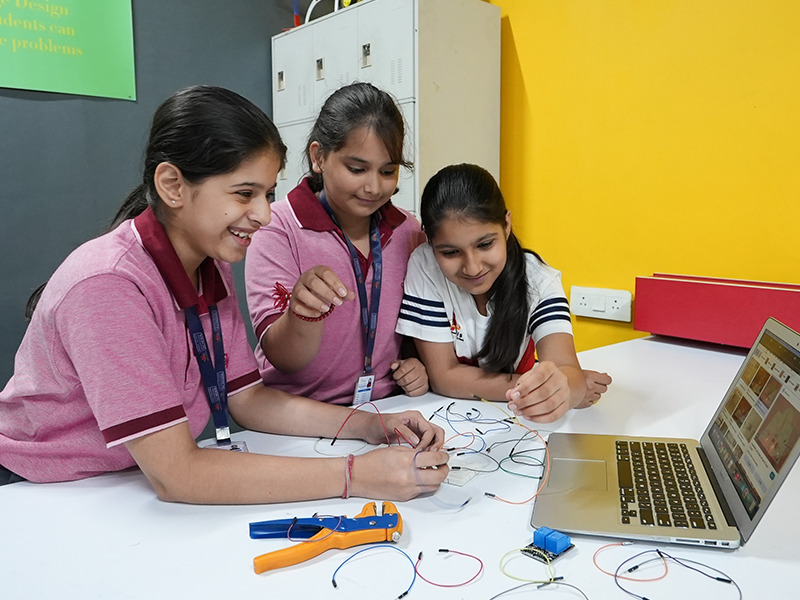
Holistic learning isn't a once-a-year activity or a special assembly. It shows up in small, repeated ways across an ordinary school week:
- In the classroom, lessons increasingly connect concepts across subjects instead of teaching them in isolation, and inquiry-based methods encourage students to ask "why" instead of just memorising "what."
- Outside the classroom, field trips, workshops, Model United Nations (MUN) sessions, and project-based assignments give students a chance to apply what they've learned to real situations, building skills like public speaking, teamwork, and analytical thinking along the way.
- On the sports field, regular matches and inter-house or inter-clan competitions do not just build fitness; they teach discipline, sportsmanship, and how to handle both winning and losing gracefully.
- In everyday interactions, mindfulness sessions, wellness programs, and community service initiatives quietly build emotional intelligence and empathy, skills no exam can fully measure but every workplace and relationship eventually tests. Highlighting this can make parents and teachers feel reassured about the importance of these activities in nurturing compassionate individuals.
None of these pieces work in isolation. A child who learns teamwork on the sports field carries that instinct into group projects. A student who practices public speaking during an MUN session becomes more confident presenting in class. That's the real value of holistic learning.
Also Read | What is a Wisdom circle?
Why This Matters More Than Ever
The world today asks more of young people than strong exam results. Careers are shifting quickly, technology is changing how we work, and the ability to adapt, collaborate, and think critically matters as much as subject knowledge. A child who has only ever been evaluated on textbook recall can struggle when faced with an unfamiliar, real-world problem that doesn't come with a marking scheme.
This is why parents today are paying closer attention to what happens beyond the timetable when choosing a school, whether it is the co-curricular structure, the sports culture, the emotional support systems, and how seriously a school takes life skills alongside academics. A school's approach to holistic development often says more about the kind of adult a child will grow into than any single exam score ever could.
Bringing Structure to Holistic Development: The LEAPS and HARVEST Approach

Talking about holistic learning in the abstract is easy; building it into daily school life in a consistent, structured way is harder. This is where a framework turns a broad philosophy into something a school can actually deliver, term after term, grade after grade.
At one of the best CBSE schools in Faridabad, MRIS Charmwood, this structure takes shape through the LEAPS framework, which is an approach built around five pillars: Learning, Experiential, Academic, Personal, and Skills Development. Each pillar addresses a distinct part of a child's growth rather than treating "holistic" as a vague, catch-all label.
The Learning pillar focuses on academic rigor paired with individual support, so both students who need extra help and those who want to go deeper are catered to. Experiential learning brings in field trips, MUN programs, and hands-on projects that turn classroom concepts into real skills. The Academic pillar itself runs through a further framework called HARVEST, covering Humanities, Arts, Real-world Learning, Vocational Skills, Engineering and Math, Social Sciences, and Technology. This effectively makes it a spread designed to build well-rounded, future-ready students in line with NEP 2020's push toward competency-based education. Personal development is nurtured through sports and intra-clan competitions that build resilience and discipline. At the same time, Skill development focuses on life skills, emotional intelligence, and community initiatives that help students grow into empathetic, grounded individuals.
What makes this approach useful isn't the acronym but the intent behind it. By naming each pillar clearly, a school gives parents, teachers, and students a shared language for tracking growth that goes beyond marks. It also keeps the school itself accountable: if ‘personal development’ or ‘skills’ are explicitly written into the framework, they're far less likely to get sidelined when exam season rolls around.
The Bigger Takeaway
Holistic learning isn't about doing more activities for the sake of a longer prospectus. It's about recognising that a child's everyday school life adds up to the person they eventually become. Frameworks like LEAPS and HARVEST at MRIS Charmwood show what this looks like when it's given real structure rather than left to chance: academics that stay strong, paired deliberately with experience, personal growth, and life skills, so that school life prepares children not just for their next exam, but for everything that comes after it.
Click on the link below if you would like to know about other schools in Faridabad
 as a preferred source on