







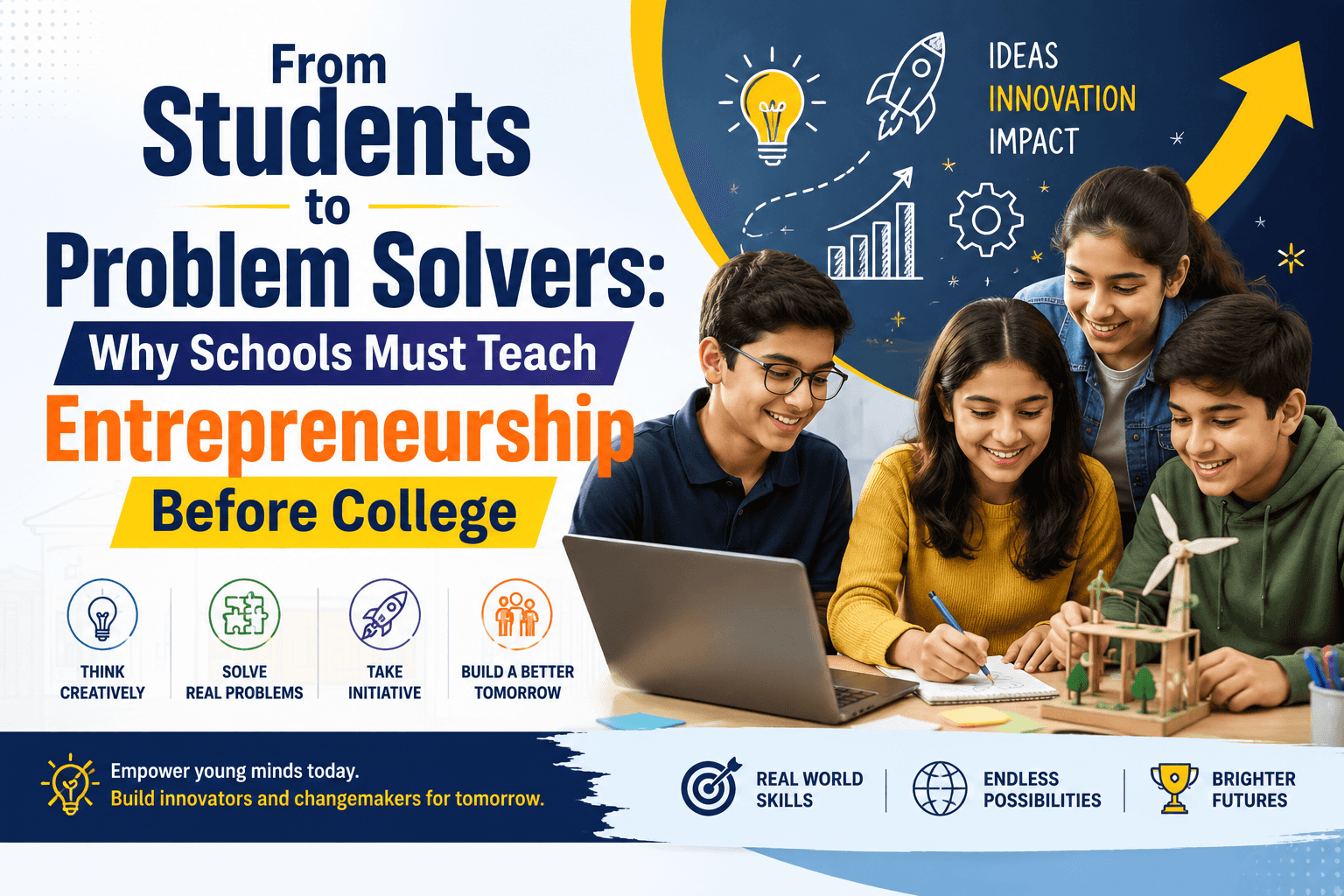

For generations, success in education followed a familiar formula: study hard, score well in examinations, secure admission to a reputed college, and build a successful career. While academic achievement remains important, the world that today's children are growing up in is fundamentally different from the one their parents experienced.
Artificial Intelligence is reshaping industries, technology is creating entirely new career paths, and the pace of change is accelerating across every sector. The jobs that many students will pursue ten years from now may not even exist today. In such an environment, knowledge alone is no longer enough. The ability to think critically, solve problems creatively, take initiative, and adapt to change is becoming equally important.
This shift is forcing educators and parents to rethink a fundamental question: What should schools truly prepare children for?
Increasingly, the answer extends beyond examinations and report cards. The goal is not simply to produce students who can memorise information but individuals who can identify challenges, develop solutions, and create meaningful impact. In other words, schools must focus on nurturing problem solvers.
This is where entrepreneurship education Institutions, such as GD Goenka Public School, one of the top schools in Greater Noida, are increasingly focusing on creating learning environments where students are encouraged to think independently, take initiative, and develop the confidence to solve real-world challenges.
Also Read| The Power of Experiential Learning at GD Goenka Public School, Greater Noida
Why the Future Needs Problem Solvers, Not Just High Scorers
The modern world rewards individuals who can navigate uncertainty and create value in changing circumstances. Employers across industries consistently emphasise skills such as creativity, analytical thinking, leadership, communication, and adaptability when evaluating future talent.
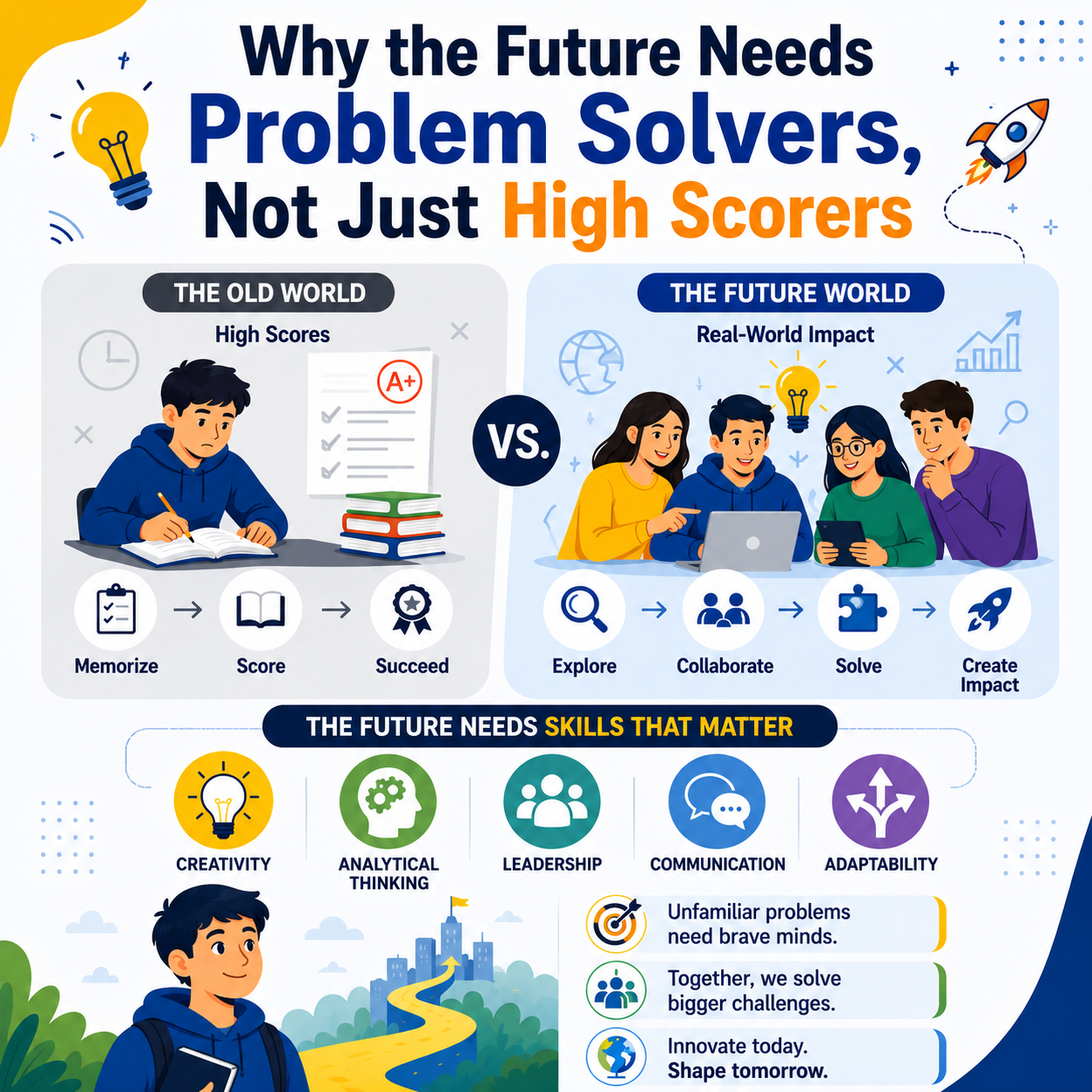
A student may achieve excellent marks in mathematics or science, but future success will depend on more than academic proficiency. Young people will need the confidence to tackle unfamiliar problems, collaborate with diverse teams, and generate innovative solutions in situations where there is no predetermined answer.
Consider some of the world's most pressing challenges today—climate change, sustainable development, healthcare innovation, digital transformation, and artificial intelligence. Solving these issues requires more than textbook knowledge. It requires individuals who can think independently, connect ideas across disciplines, and approach challenges with curiosity and determination.
This is precisely why schools are beginning to place greater emphasis on developing future-ready skills alongside academic excellence. The question for parents is no longer, "How much does my child know?"
It is increasingly becoming, "Can my child apply what they know to solve real-world problems?"
Entrepreneurship Is a Mindset, Not Just a Career Path
One of the biggest misconceptions about entrepreneurship is that it is only relevant for students who aspire to start businesses. In reality, entrepreneurship is a way of thinking.
At its core, entrepreneurship teaches children to identify opportunities, take initiative, solve problems, and transform ideas into action. It encourages them to ask questions, challenge assumptions, experiment with solutions, and learn from failure. These qualities are valuable regardless of the career path a child eventually chooses.
A doctor who develops a more efficient healthcare solution demonstrates entrepreneurial thinking. An engineer who creates sustainable technologies relies on entrepreneurial skills. A scientist exploring innovative research, an artist building a creative enterprise, or a social worker designing community-driven solutions all benefit from the same mindset.
Entrepreneurship is not about teaching children how to build companies. It is about teaching them how to think creatively, act confidently, and contribute meaningfully to the world around them. When students develop this mindset early, they become more proactive learners and more capable problem solvers.
Also Read| How GD Goenka Public School, Greater Noida, Uses Outbound Learning to Build Better Students
The Skills That Entrepreneurship Develops
Entrepreneurship education offers students opportunities to cultivate skills that traditional classroom environments often struggle to develop fully.
Creativity and Innovation
Entrepreneurial thinking encourages students to move beyond standard answers and explore multiple possibilities. Instead of focusing solely on finding the correct response, children learn to generate ideas, evaluate alternatives, and create innovative solutions.
In a future where automation can perform many routine tasks, creativity will remain one of the most valuable human capabilities.
Leadership and Initiative
Entrepreneurship encourages students to take ownership of their ideas and projects. They learn how to make decisions, motivate others, and take responsibility for outcomes.
These experiences help build confidence and leadership qualities that serve students throughout their academic and professional lives.
Communication and Collaboration
The ability to communicate effectively is essential in virtually every profession. Entrepreneurial activities often require students to present ideas, discuss solutions, seek feedback, and work collaboratively with peers.
Through these experiences, students develop stronger interpersonal skills and greater confidence in expressing themselves.
Resilience and Adaptability
Not every idea succeeds immediately. Entrepreneurship teaches students how to view setbacks as learning opportunities rather than failures.
This resilience is particularly important in a world where adaptability and continuous learning have become essential for long-term success.
Critical Thinking and Problem Solving
Perhaps most importantly, entrepreneurship encourages students to analyse situations, evaluate information, and develop practical solutions to real-world challenges. These are precisely the skills that employers, universities, and society increasingly value.
Why Schools Must Start Early
Many people assume entrepreneurship can be taught later in life, perhaps during college or professional education. However, the foundations of entrepreneurial thinking are built much earlier.
Children are naturally curious. They ask questions, explore possibilities, and imagine new ways of doing things. Effective schools nurture this curiosity rather than limiting it. When students are given opportunities to solve problems, lead initiatives, collaborate on projects, and explore innovative ideas during their school years, they develop habits of thinking that stay with them throughout life.
Schools play a crucial role in creating environments where students feel empowered to experiment, take calculated risks, and learn from experience. The earlier children are exposed to these opportunities, the more confident and capable they become in navigating future challenges. Entrepreneurship education is therefore not an additional subject. It is a framework for helping students become active participants in their own learning and development.
How GD Goenka Public School, Greater Noida, Nurtures Future Innovators and Problem Solvers
At GD Goenka Public School, one of the schools in Greater Noida, education is viewed as much more than academic preparation. The school's approach reflects an understanding that future success requires a combination of knowledge, character, creativity, leadership, and adaptability.
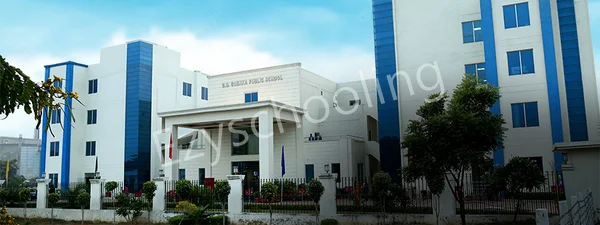
The learning environment is designed to encourage students to think independently, ask meaningful questions, and actively engage with the world around them. Rather than focusing solely on academic outcomes, equal importance is given to developing the skills and mindsets that help students succeed beyond the classroom. Students are encouraged to participate in a wide range of experiences that promote innovation, collaboration, communication, and leadership. Through these opportunities, they learn how to transform ideas into action, work effectively with others, and approach challenges with confidence.
The school also recognises that every child possesses unique strengths and interests. By providing an environment that supports exploration and self-discovery, students are empowered to pursue their passions while developing a strong sense of responsibility and purpose. This balanced approach helps prepare students not only for examinations and higher education but also for the complex and dynamic realities of the modern world.
By nurturing curiosity, confidence, resilience, and critical thinking, GD Goenka Public School aims to develop learners who are capable of contributing meaningfully to society and adapting successfully to future opportunities.
Preparing Children for a Future We Cannot Predict
Perhaps the greatest challenge facing education today is uncertainty. No school can accurately predict which industries will dominate the future or which technologies will transform the world over the next two decades.
What schools can do, however, is equip students with the mindset and skills needed to thrive regardless of how the future unfolds. The most successful individuals of tomorrow may not necessarily be those who memorised the most information. They may be those who learned how to think independently, solve complex problems, collaborate effectively, and continuously adapt to changing circumstances.
Entrepreneurship education is ultimately about preparing children for this reality. It encourages them to become creators rather than consumers, innovators rather than imitators, and problem solvers rather than passive observers. As parents consider what kind of education will best prepare their children for the future, one question becomes increasingly important:
Are schools simply helping students succeed in examinations, or are they helping them succeed in life? The answer may determine not only how children perform in school today but also how confidently they navigate the opportunities and challenges of tomorrow.
If you are exploring this and other schools in Greater Noida, click here
 as a preferred source on