








A child may know the answer in class but still hesitate to raise a hand. They may enjoy talking to friends but feel nervous when asked to speak in front of a group. These moments are common, and confidence does not appear overnight.
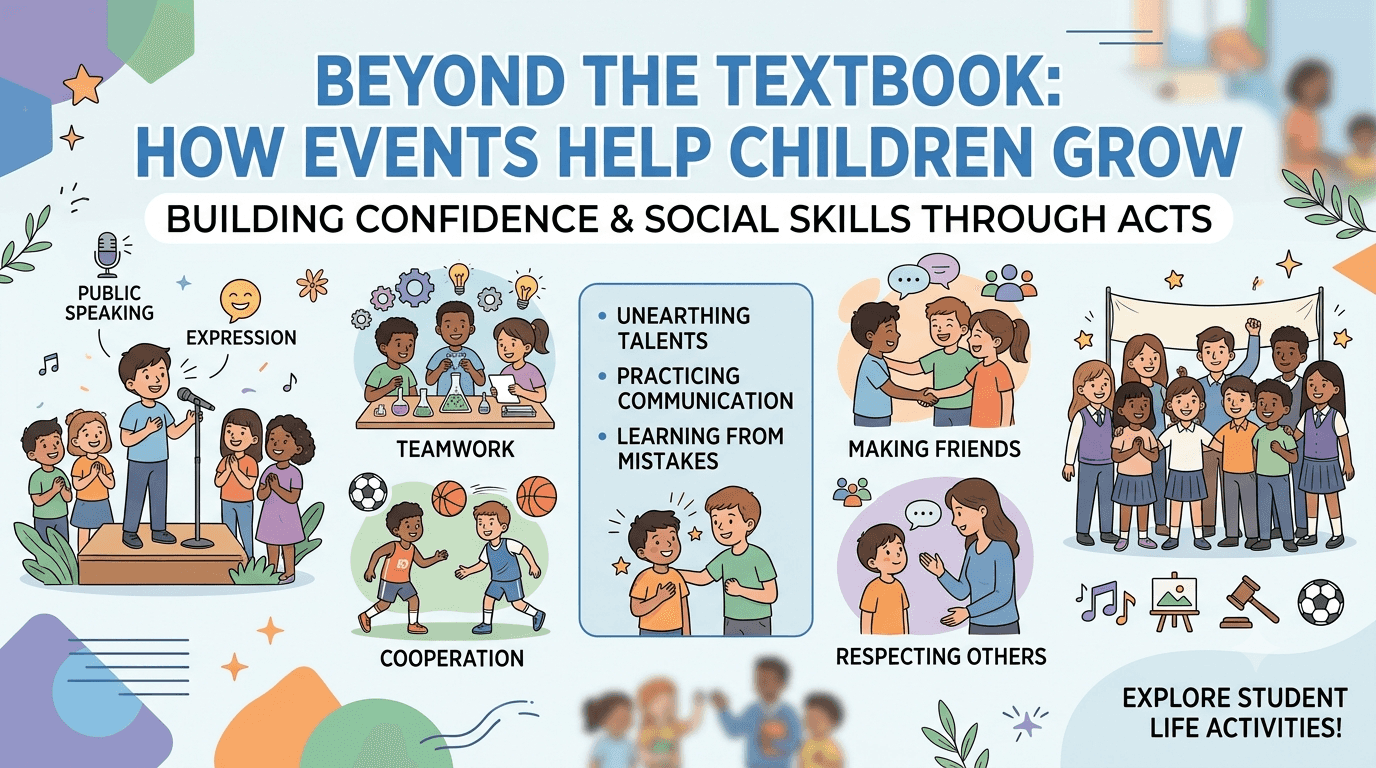
Sometimes, children need opportunities to practise being heard, working with others and trying something unfamiliar. School events can provide those opportunities in a natural way. A play, sports match, debate, quiz, exhibition or cultural celebration can become a small learning experience that teaches children things a textbook cannot.
At Grand Columbus International School, Sector 16A, Faridabad, school life includes several such activities. But the larger question is worth asking: what exactly do children gain from taking part in them?
Also Read| Stress-Free Competitive Exam Prep Starts Early at GCIS
A School Event Can Become a Learning Experience
Think about what happens before a school play.
A child has to remember lines, attend rehearsals, listen to others and wait for their turn. Someone may have to help with costumes, music or stage arrangements. Another child may be responsible for introducing the programme.
None of these tasks look like a traditional lesson. Yet children are practising communication, responsibility, patience and teamwork.
The same thing happens during a sports competition. Players have to understand their role, communicate with teammates and respond when something does not go as planned.
Research from the OECD has found a positive relationship between participation in extracurricular activities and students' social and emotional skills, including sociability, assertiveness, creativity and curiosity. This is an association, not proof that participating in activities automatically makes every child more confident. Still, it highlights why activities outside regular lessons can be an important part of school life.
Confidence Grows When Children Get to Try
Confidence is often misunderstood as being comfortable all the time.
A confident child can still feel nervous before speaking on stage. They may worry about making a mistake or wonder what others will think. The important part is learning to take that step anyway.
School events give children repeated chances to do this.
The first time, a child may only want a small role. The next time, they may volunteer to speak. Later, they might be comfortable leading part of a group activity.
These small steps matter.
Children also learn that mistakes are not disasters. Forgetting a line, missing a goal, or giving the wrong answer during a quiz can feel disappointing, but it also gives them a chance to recover and try again.
That is a more useful form of confidence than simply being praised for getting everything right.
Working With Other Children Teaches Social Skills
Many school events cannot happen without teamwork.
A group preparing for a performance has to decide who will do what. A sports team needs players to communicate. Students working on a creative project may have different ideas about how it should be done.
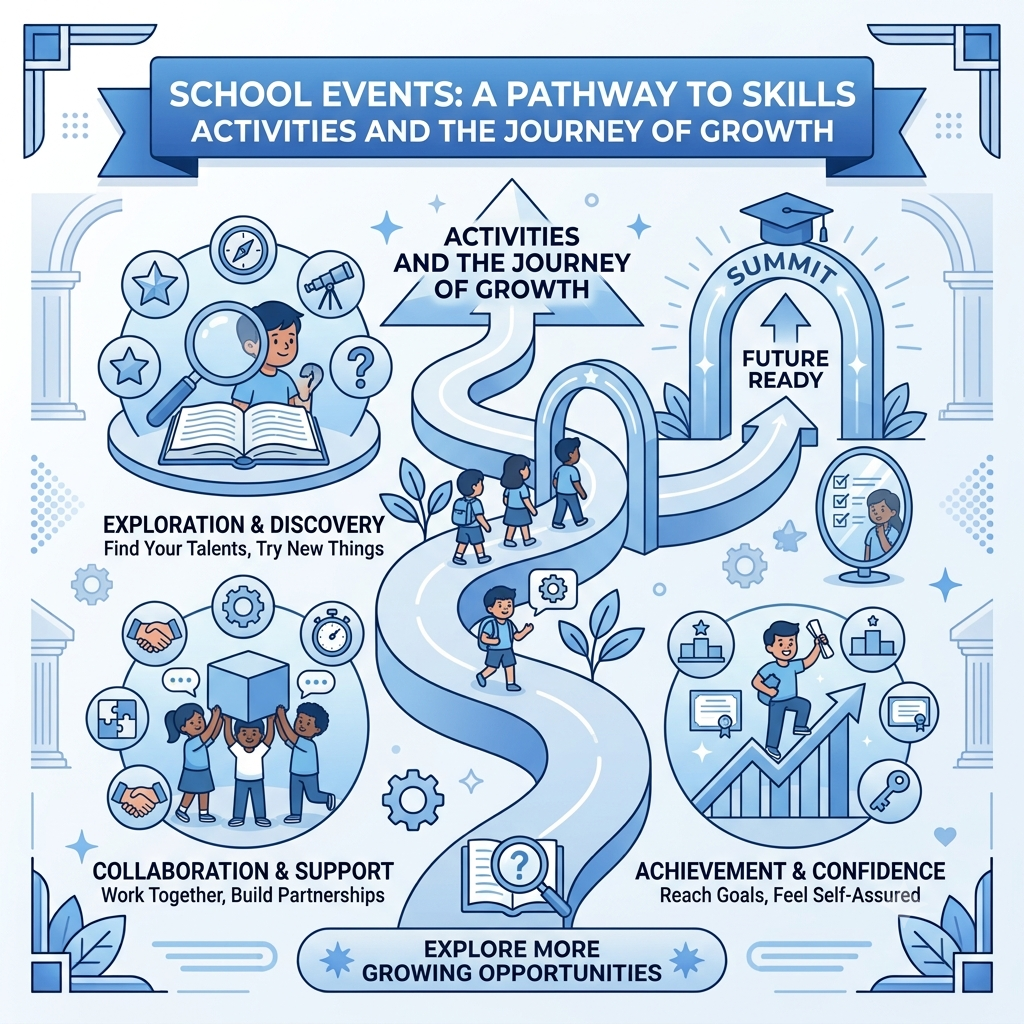
This is where social skills become part of everyday school life.
Children learn to:
- Listen to other people's ideas.
- Share responsibilities.
- Ask for help.
- Express disagreement politely.
- Wait for their turn.
- Support a teammate.
- Work towards a common goal.
These skills can be useful long after the event is over. A child who learns how to listen during a group project may find it easier to work with classmates on an academic assignment later.
Winning Is Not the Only Lesson
For children, competitions can sometimes feel like everything depends on the final result.
But a debate, race, quiz, or creative competition can offer much more than a trophy.
A child may discover that they need more practice. They may learn how to deal with disappointment when someone else performs better. They may realise that preparation makes a difference. They may also learn to congratulate another child instead of feeling that someone else's success takes away from their own.
Parents can help by changing the questions they ask after an event.
Instead of only asking, “Did you win?”, try asking:
- What was your favourite part?
- What did you find difficult?
- What did you learn?
- Would you like to try something similar again?
- What would you do differently next time?
These questions help children think about the experience instead of judging the entire experience by its result.
Different Children Find Confidence in Different Places
Not every child enjoys being on stage. That does not mean they are less confident.
One child may enjoy football. Another may prefer drawing. Someone else may love quizzes but avoid dancing. A quiet student may discover their strength while working behind the scenes on a school production.
This is why schools benefit from offering different kinds of activities.
Sports can encourage teamwork and perseverance. Music and theatre can give children space for expression. Debates can help them organise their thoughts. Creative competitions can allow them to explore ideas. Clubs can help them meet children with similar interests.
The aim should not be to make every child participate in everything. It is to give children enough opportunities to find activities where they feel comfortable trying something new.
How School Events Can Be Made More Meaningful
The way an event is organised matters as much as the event itself.
A school event becomes more valuable when children are given a chance to participate actively rather than simply watch. Students can be given responsibilities, allowed to work in groups and encouraged to contribute ideas.
It is also important that competition does not become the only focus.
A healthy school environment can celebrate the winner while also recognising effort, improvement, teamwork and creativity. This allows more children to feel that they have something valuable to contribute.
Also Read| Hands-On Learning & Exploration | Super Saturdays at GCIS Faridabad
What This Looks Like at Grand Columbus International School
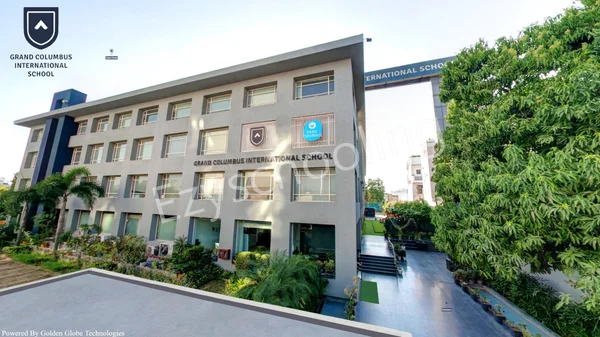
Grand Columbus International School, Sector 16A, Faridabad includes a range of activities where students can participate, perform, compete and work together. Its official campus-life information lists inter-house sports, debates, quizzes and creative contests, along with cultural programmes involving music, dance and drama. The school also offers Model United Nations, where students engage with debate, diplomacy, decision-making, public speaking and global perspectives.
These activities provide different ways for children to take part according to their interests. The school's recent “Where Learning Meets Living” feature, published in February 2026, also highlights competitions, sports meets and cultural festivals as part of student life.
For families looking for a Best School in Faridabad, activities like these are worth looking at not simply as events on a calendar, but as opportunities for children to practise skills they will use beyond school.
Small Experiences Can Make a Big Difference
A child does not become confident after one performance or one competition.
Confidence develops slowly. It can begin with something as simple as answering a question, joining a team, helping a classmate, or agreeing to speak in front of others.
School events create more of these moments.
When children get the chance to participate, make mistakes, work with others, and try again, they are learning how to handle situations that cannot always be taught through a textbook.
And sometimes, the most important thing a child brings home from a school event is not a medal or certificate. It is the feeling that “I tried something new, and I could do it.”
For more information on Grand Columbus International School and similar schools, check out this list of the best schools in Faridabad.
 as a preferred source on