







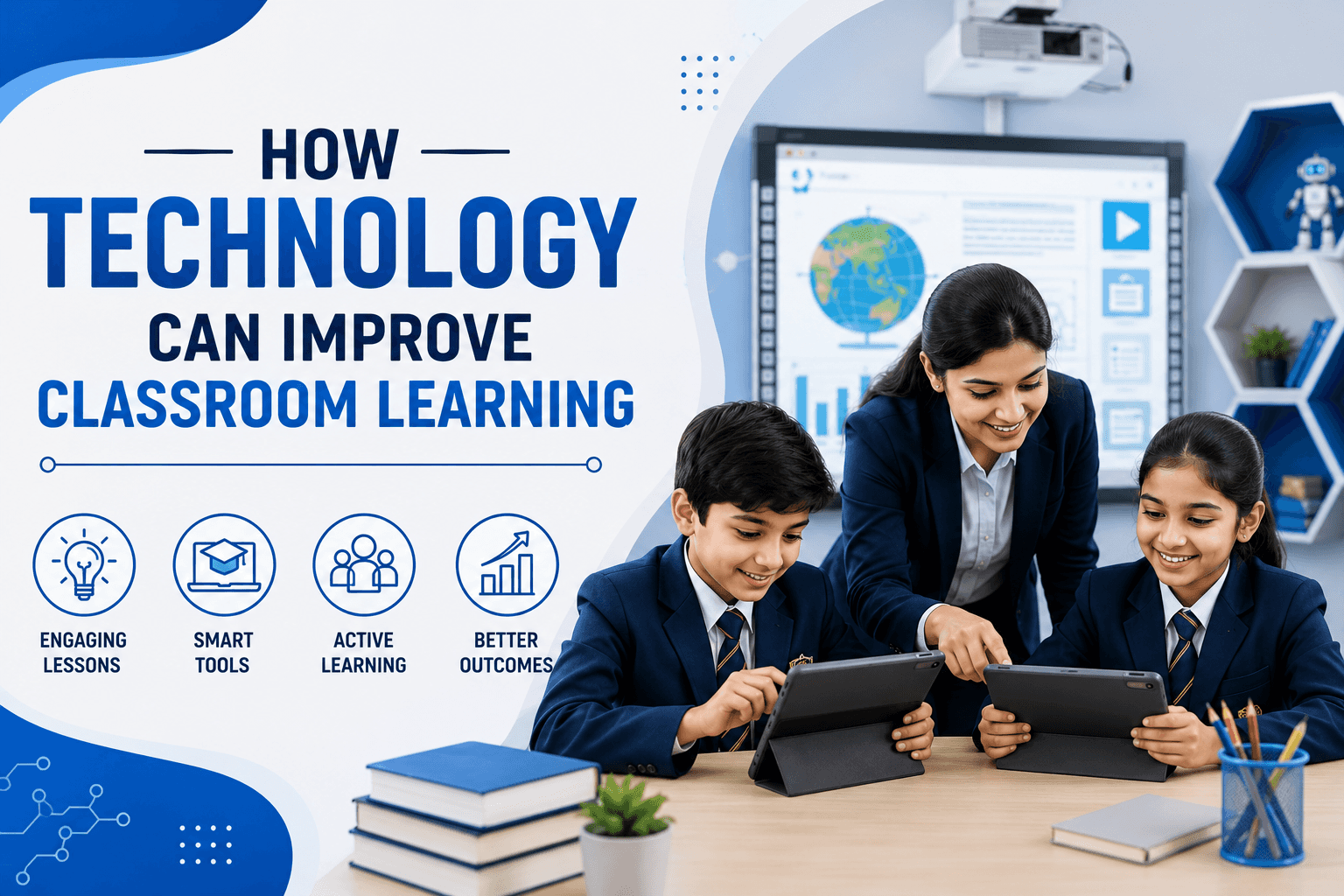

If you walk into a classroom today, you'll notice a few things that were not common some years ago. A smart board or a projector. Maybe a teacher shows a short video before starting the lesson.
At first, it feels a little bit different. But after a few minutes, you realise the class is still the same. There are some children asking questions, out of which some are answering quickly. A few are quietly thinking. One child is still trying to sharpen a pencil for the third time. That's because technology has not changed what a classroom is. It has only changed how some lessons are taught. And honestly, that's not a bad thing. To understand the impact of technology in schools, we will take an example of one of the boarding schools in India, The TonsBridge School (TBS), Dehradun.
Learning Becomes Easier to Understand
Every child learns in their own way. Some kids get it fast by reading; others just need to watch a video, like right away. Some remember better when they see pictures. And a few prefer doing real activities instead of going through long chapters that drag on.
Technology gives teachers a bunch of different methods to explain the same topic. For instance, a science lesson feels more alive when students can watch how a volcano erupts, instead of only reading about it. In geography, it’s almost totally different when children see maps, rivers, and mountains on a screen. Even in Maths, numbers can seem less stressful when they are shown with small, simple animations.
These little shifts really matter. Children often keep information longer when they actually see it. They also start asking more questions because they become curious. Little by little, learning turns from a chore into something more like an experience, you know?
Students Take Part Instead of Only Listening
Think about a classroom where only the teacher speaks for forty minutes. Now think about another classroom where children answer quizzes, solve puzzles together, share ideas, and work on simple projects.
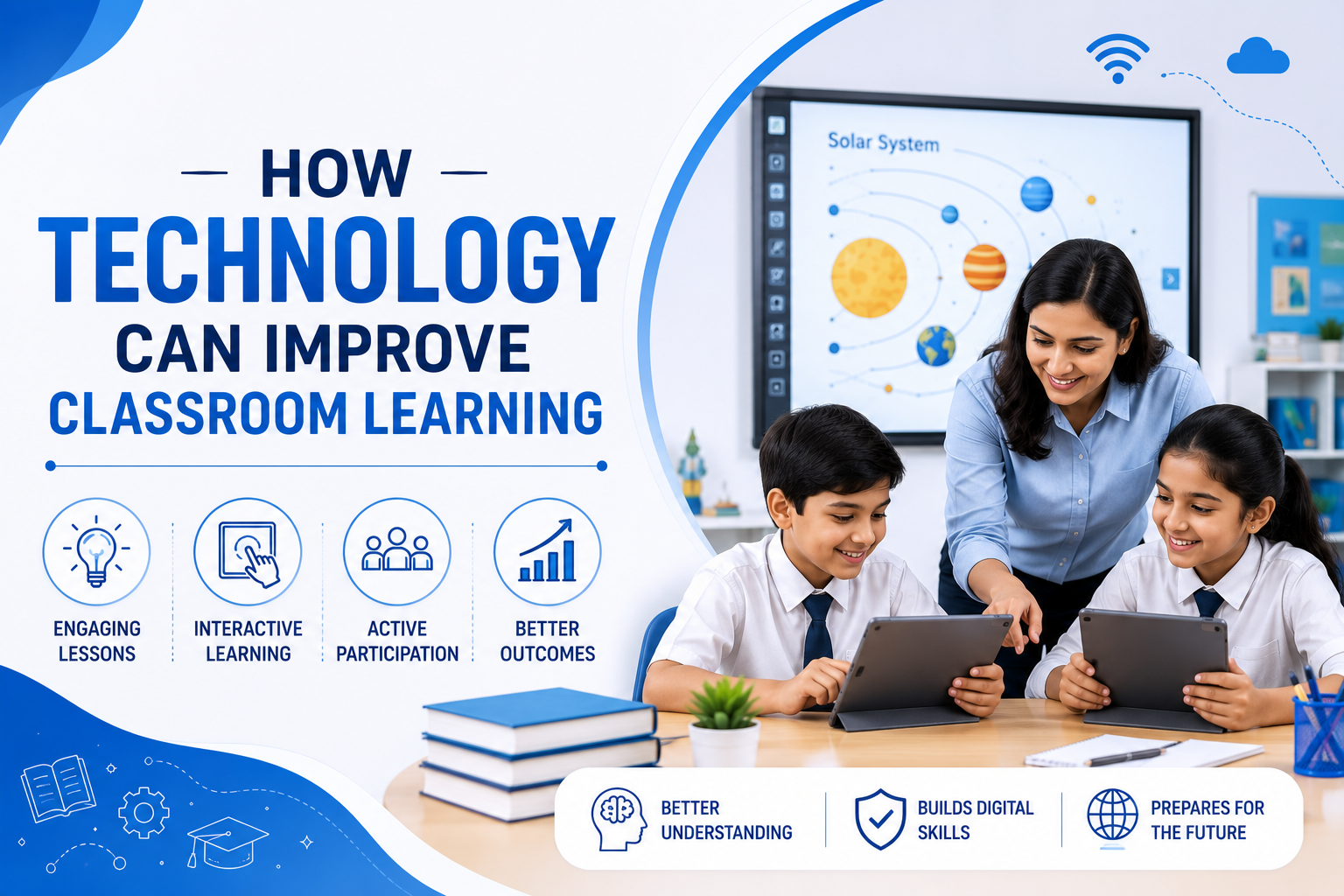
Which one sounds more interesting? Technology helps teachers create lessons where students can join in. Children can answer questions on smart boards, take part in online quizzes, or work together on classroom activities. This keeps everyone involved.
Even students who are usually quiet sometimes feel more comfortable sharing their answers through these activities. The classroom becomes active. And when children enjoy learning, they usually remember more.
Children Learn Skills for Everyday Life
School isn’t just about passing exams, you know. Kids also need some abilities that will actually help them later on in life. Technology can really support that, even from a early age, when everything is still fresh and new. In school, they start learning how to track down information, how to use digital tools, and also how to cooperate with classmates, so it’s not only about studying alone. They practice explaining and presenting their own thoughts in a clear way, more or less, and bit by bit.
At the same time, they learn that not all things on the internet are correct. They begin to spot what seems trustworthy and what doesn’t, and slowly they get the idea of using technology safely, responsibly, without rushing into anything. These lessons matter a lot. And in the end, whether a child turns into a doctor, artist, engineer, teacher, or entrepreneur someday, digital skills will probably still be there in their daily work. Starting early helps them feel more confident, too.
Technology Works Best With Good Teachers
Sometimes people think technology can replace teachers. It cannot. A smart board cannot understand when a child is feeling nervous before a test. A computer cannot encourage a student who has lost confidence. A video cannot replace a caring teacher who knows every child in the class.
Technology is simply a tool. Teachers decide how to use it. The best classrooms are the ones where teachers use technology only when it adds value. Sometimes a video explains a topic better. Sometimes a group discussion is enough. Sometimes opening a book is still the best way to learn. It is all about balance. Children need screens, but they also need conversations, activities, books, games, and real experiences.
Also Read| Nurturing Minds, Bodies, and Spirits: The State-of-the-Art Facilities at TonsBridge School
How The TonsBridge School Supports Modern Learning
At The TonsBridge School (TBS), Dehradun, one of the boarding schools in India, technology is used to make learning more engaging without taking away the importance of teachers and classroom interaction. Smart classrooms, digital learning tools, and activity-based teaching help students understand concepts in a simple and practical way.

Teachers use technology to explain lessons clearly, encourage participation, and make classes more interactive. Along with modern learning methods, the school continues to give equal importance to reading, discussions, sports, creative activities, and values. Students are encouraged to ask questions, think independently, and explore new ideas. This balanced approach helps them become confident learners who are ready for the future while still enjoying the simple joy of learning every day.
Technology has changed the way children learn, but the purpose of education is still the same. It is to help every child understand, grow, and become confident. The best classrooms are not the ones with the most gadgets. They are the ones where children feel excited to learn, ask questions without fear, and enjoy discovering something new every day.
Know more about this and other technology-driven boarding schools in India
 as a preferred source on