







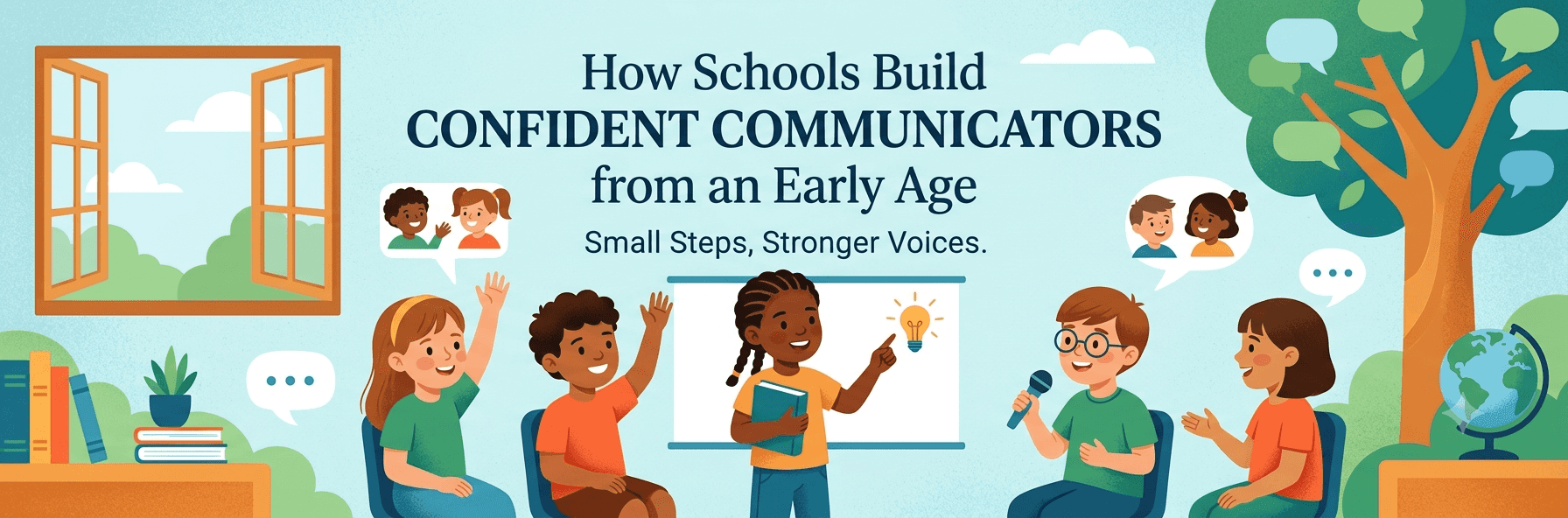

A child may know the answer to a question but still hesitate to raise their hand. Another may have plenty of ideas but struggle to explain them in front of classmates. These moments are common, especially in the early school years. Bethesda Christian Academy is among the schools that place communication alongside other skills as part of a child's broader development. But how can a school actually help children become more confident communicators?
Communication is not simply about speaking fluent English or giving a speech. It includes listening, asking questions, expressing opinions, explaining ideas, and knowing how to interact respectfully with others. These abilities can be developed gradually when children get regular opportunities to practise them.
Why Do Communication Skills Matter in School?
Children communicate throughout their school day. They ask teachers for help, answer questions, work with classmates, participate in activities,s and share their thoughts.
When children become comfortable expressing themselves, they may find it easier to participate in classroom learning. They can explain what they understand, ask when something is unclear, and contribute to group discussions.
Communication also supports relationships. A child who can listen carefully and express disagreement respectfully may find it easier to work through small conflicts with classmates.
For these reasons, communication should not be treated as a skill that children only practise before a speech competition. It can become part of everyday learning.
5 Ways Schools Can Build Communication Confidence
1. Encourage Classroom Discussions
A classroom does not always have to revolve around a teacher explaining and students listening. Short discussions can give children opportunities to share ideas and hear different perspectives.
Teachers can ask open-ended questions that do not have only one correct answer. Even a few minutes of discussion can encourage children to explain why they think something rather than simply giving an answer.
Over time, regular participation can make speaking in front of others feel less intimidating.
2. Use Presentations and Storytelling
Children can start with simple speaking tasks before moving towards formal presentations.
For younger students, a teacher might ask them to speak for one minute about a favourite book, hobby, object or experience. As they grow more comfortable, these activities can become longer presentations, storytelling sessions or project-based explanations.
The important part is progression. A child who is nervous about speaking should not be expected to deliver a long speech immediately.
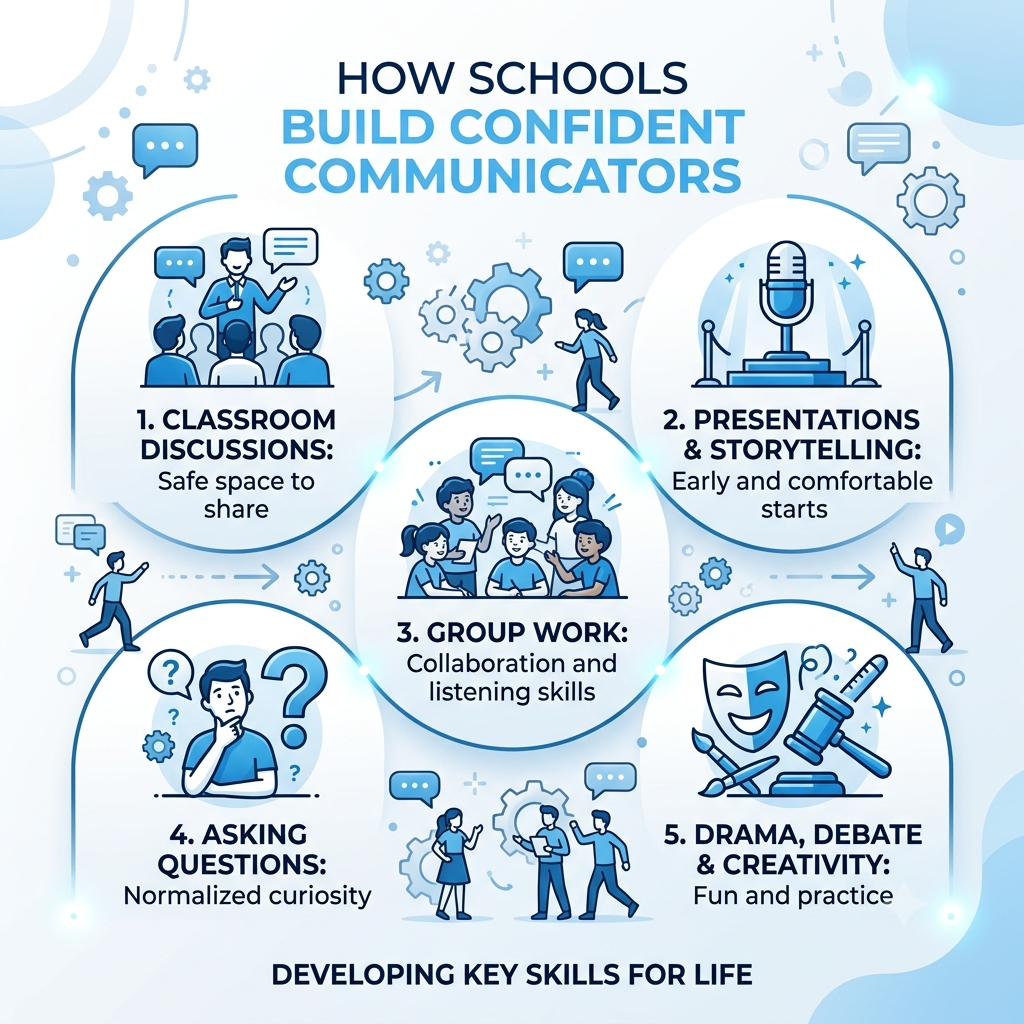
3. Give Children Opportunities to Work in Groups
Group activities provide a different form of communication practice.
When children work together, they have to explain their ideas, listen to others, divide responsibilities, and sometimes reach an agreement. They also learn that communication is not about making everyone accept their opinion.
These experiences can prepare children for situations they will encounter later in school, higher education, and the workplace.
4. Make It Comfortable to Ask Questions
One of the most useful communication habits a child can develop is the ability to say, “I don't understand.”
Children who are afraid of asking questions may remain confused even when they need help. A classroom environment where questions are welcomed can make children more willing to seek clarification.
Teachers can also model curiosity by showing that asking a thoughtful question is a positive part of learning.
5. Use Drama, Debate and Creative Activities
Activities such as drama, role-play and debates give children structured ways to express themselves.
Drama can allow a child to speak through a character when speaking as themselves feels uncomfortable. Debates teach children to organise their thoughts and respond to different viewpoints. Creative activities can encourage children to explain the ideas behind their work.
These experiences can make communication feel less like a test and more like something children use naturally.
How Can Schools Help Shy Children Find Their Voice?
Not every quiet child lacks confidence. Some children naturally prefer to observe before speaking, and that is perfectly normal.
The goal should not be to turn every child into the most outspoken person in the classroom. Instead, schools can help children become comfortable expressing themselves when they need to.
A teacher might begin with pair discussions before asking a child to speak to a larger group. Giving children time to prepare their thoughts can also make participation easier.
Most importantly, mistakes should not become embarrassing moments. A child who mispronounces a word, forgets a point, or struggles to explain an idea needs constructive guidance rather than ridicule.
Confidence grows when children learn that they can try, make mistakes,s and try again.
What Should Parents Look for in a School?
Parents evaluating schools can look beyond academic results and ask how communication is encouraged in everyday school life.
Some useful questions include:
- Do teachers encourage children to ask questions?
- Are students regularly given opportunities to present their ideas?
- Are group activities part of classroom learning?
- Does the school offer activities such as drama, debate or storytelling?
- Are children encouraged to express different opinions respectfully?
- Are quieter students given opportunities to participate without unnecessary pressure?
- Does the school treat mistakes as part of the learning process?
A school does not need to have a separate “communication class” for these skills to develop. What matters is whether children regularly get meaningful opportunities to speak, listen, and interact.
How Bethesda Christian Academy Encourages Communication
Bethesda Christian Academy highlights communication, collaboration, creativity, and problem-solving among the competencies it aims to develop in students. Its listed co-curricular activities include drama, music, debate, and art and craft, which can provide different settings for children to express ideas and interact with others.

For parents exploring a Top school in Delhi or considering what a Best school in Delhi should offer beyond academics, these elements show how communication can be connected with a broader educational experience.
Building Confidence One Conversation at a Time
Confident communication rarely appears overnight. It develops through small experiences repeated over time: answering a question, sharing an idea with a partner, participating in a group, asking for help, or standing in front of classmates for the first time.
Parents do not need to expect every child to become an excellent public speaker. The more important goal is to help children feel that their thoughts are worth expressing and that they can communicate without fear of making mistakes.
When schools create a supportive environment for speaking, listening, questioning, and collaboration, communication becomes part of everyday learning. And that is a skill children can carry with them far beyond the classroom.
For more information on this and similar schools, check out this list of the best schools in Delhi.
 as a preferred source on