








A child who keeps asking “Why?” can be exhausting at home. But in a classroom, that same habit can be one of the strongest signs that learning is actually happening. One of the best schools in Gurugram, SD Heritage Pride School, tries to reflect this idea through its emphasis on going beyond textbooks and building curiosity, confidence, creativity, and character.
The interesting question, however, is not whether schools should teach beyond textbooks. Most schools today already say they do. The more important question is, what happens to a child when asking questions becomes more valuable than simply giving the right answer?
The Problem With Always Having the Right Answer
Traditional learning gives children a clear destination: understand the chapters, remember the information, and reproduce it in the examination.
Although there is nothing inherently wrong with knowing facts. Children need knowledge. They need language, mathematics, science, history, and a strong academic foundation.
The problem begins when education makes children believe that learning ends once they have found the “right answer.” Real life rarely works that way.
A child may learn the formula for calculating an area but later needs to figure out how much paint is required for a wall. They may learn about plants from a textbook but understand them differently when they grow something themselves. They may memorize the definition of teamwork but learn its real meaning while trying to complete something with others.
The difference is small on paper but significant in practice: one approach teaches children what to know; the other teaches them how to use what they know.
Curiosity Is Not a Side Activity

Curiosity is often treated as something that belongs to creative activities, science experiments, or “fun learning.” It shouldn't be.
Curiosity is the engine behind almost every meaningful form of learning.
A curious child doesn't just ask, “What is this?” They eventually start asking:
- Why does this happen?
- What would happen if I changed something?
- Can I solve this differently?
- Is there another explanation?
- What happens if I am wrong?
These questions create a different kind of learner.
And importantly, curiosity cannot be forced through a worksheet. It develops when children feel comfortable exploring an idea without being afraid of making a mistake.
That means classrooms need room for discussion, experimentation, observation, and even failure.
Creativity Is More Than Drawing and Craft
Another common misunderstanding is that creativity belongs mainly to art. In reality, creativity is the ability to approach a problem from a different angle.
A child trying to build something with limited materials is being creative. A student finding another way to explain a difficult concept is being creative. A group deciding how to present a project is being creative.
Even solving a mathematics problem in an unconventional way can be an act of creativity.
This is why learning beyond textbooks doesn't mean abandoning academics. It means giving academic knowledge a context in which children can actually use it.
The textbook can introduce the concept. Experience can give that concept meaning.
Also Read | Life Skills Beyond Textbooks
Confidence doesn't come from just knowing
There is another part of education that is difficult to measure through a report card: confidence. A student may know the answer but hesitate to speak.
Another may not know the answer but have the confidence to say, “I think this could work.” The second response can be more valuable in the long run.
Confidence develops when children are given opportunities to participate, present ideas, make decisions, and take responsibility for small outcomes.
It also develops when adults don't immediately correct every mistake.
If every wrong answer is treated as failure, children eventually learn to stay silent. If mistakes become part of the learning process, children become more willing to participate.
That shift can change the entire classroom dynamic.
Character Is Built in the Small Moments
Character education is often associated with big words such as honesty, responsibility, empathy, and discipline. But children usually learn these qualities through ordinary situations.
- Sharing stuff.
- Listening when someone else speaks.
- Helping a struggling classmate.
- Taking responsibility when things go wrong.
- Finishing something they initiated.
- Accepting that another person may have different opinions.
These experiences teach lessons that no definition in a textbook can fully communicate.
This is also why a school's environment matters. Education is not only what is written in the syllabus; it is also what children repeatedly experience.
What Does “Beyond Textbooks” Actually Look Like?
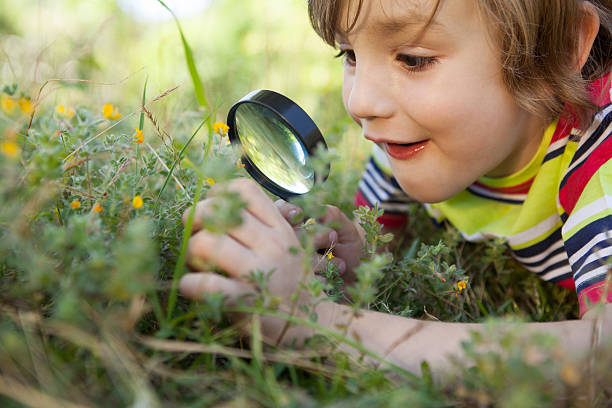
Going beyond textbooks does not necessarily mean expensive technology, elaborate laboratories, or endless extracurricular activities. Sometimes it can be remarkably simple.
- A science lesson can begin with an observation rather than a definition.
- A history lesson can ask students to imagine how an event affected an ordinary family.
- A mathematics problem can be connected to a real household situation.
- A classroom discussion can allow students to defend different viewpoints.
- A project can require children to create something instead of simply describing it.
These methods don't make learning less serious. They can make it more memorable because children are connecting information with experience.
Also Read | What Going Beyond the Textbook Feels Like
The SD Heritage Pride School Approach

This philosophy is particularly relevant to one of the best CBSE schools in Gurugram, SD Heritage Pride School, whose learning message focuses on going beyond textbooks to develop curiosity, confidence, creativity, and character.
That positioning matters because these qualities are interconnected.
- Curiosity encourages a child to explore.
- Exploration creates opportunities to experiment.
- Experimentation builds confidence.
- Confidence makes children more willing to express ideas.
And repeated experiences of responsibility, collaboration, and reflection contribute to character.
In other words, education doesn't have to choose between academic learning and the development of the whole child. The two can strengthen each other when learning is designed thoughtfully.
For parents, this is perhaps a more useful way to evaluate a school than simply asking, “How good are the results?”
A better set of questions might be:
- Does my child get opportunities to ask questions?
- Can they express an idea even when there isn't one perfect answer?
- Are they encouraged to create, explore and participate?
- Do they learn to take responsibility for their actions?
- Does the school help them become more confident, not just more knowledgeable?
These questions reveal something important about education: the purpose of school is not simply to fill a child's mind with information.
It is to help them become someone who knows what to do with that information. And perhaps that is what learning beyond textbooks really means. Not learning less from books. Learning enough from them to become curious about the world outside the page.
At SD Heritage Pride School, the idea of “Learn. Explore. Create. Become" captures that broader purpose: education as a process where children don't simply collect knowledge but gradually develop the curiosity, confidence, creativity, and character to use it.
To know more about other schools in Gurugram, click on the link below
 as a preferred source on