







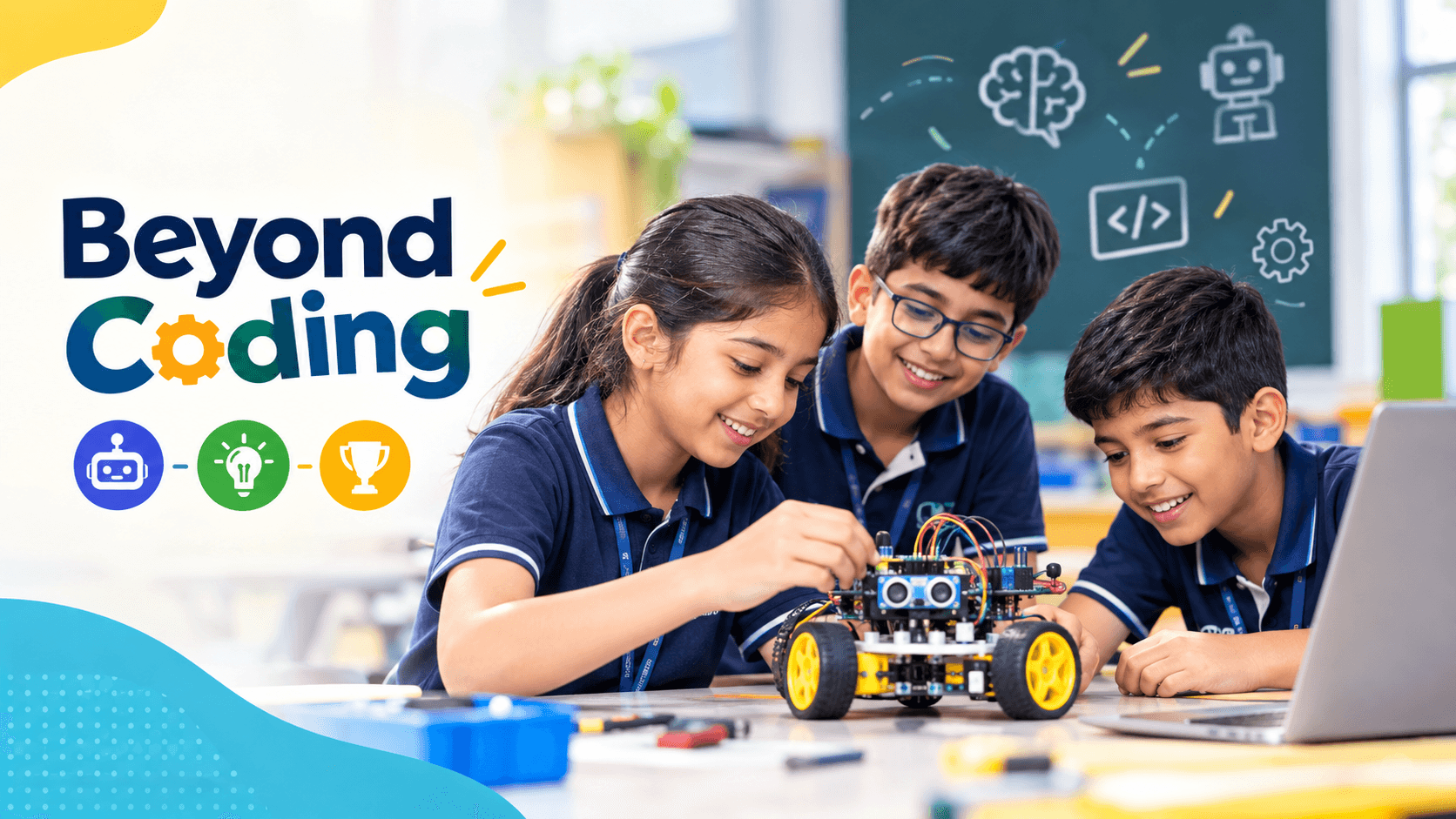

For all the parents looking for the Top Schools in Hyderabad, teaching tech and science has always been an important part. Especially today, not only parents but children are always surrounded by electronic gadgets and screens. Smartphones, tablets, online games, AI tools, even learning through smart boards. Hence, learning and understanding tech is a must for this generation. They are already so expert that once the teacher gives homework, they will rush to YouTube and the internet to search for their answers instead of their textbooks. This generation is fast and beyond that!
So today, we will be discussing how schools like Meru International School, Miyapur, Hyderabad are approaching this, and how this tech learning is helping them build and solve the problems of the modern world.
Also Read| Why Robotics Matter for Your Child’s Future
Learning Through Experimentation and Problem-Solving
Children today don’t just want to learn: They wanna see and explore and build something meaningful, full of life! Have you ever seen a child who was given a phone for the very first time? They don’t read 30 pages of the manual. They do not even listen to any piece of glorious advice their elders would give them.
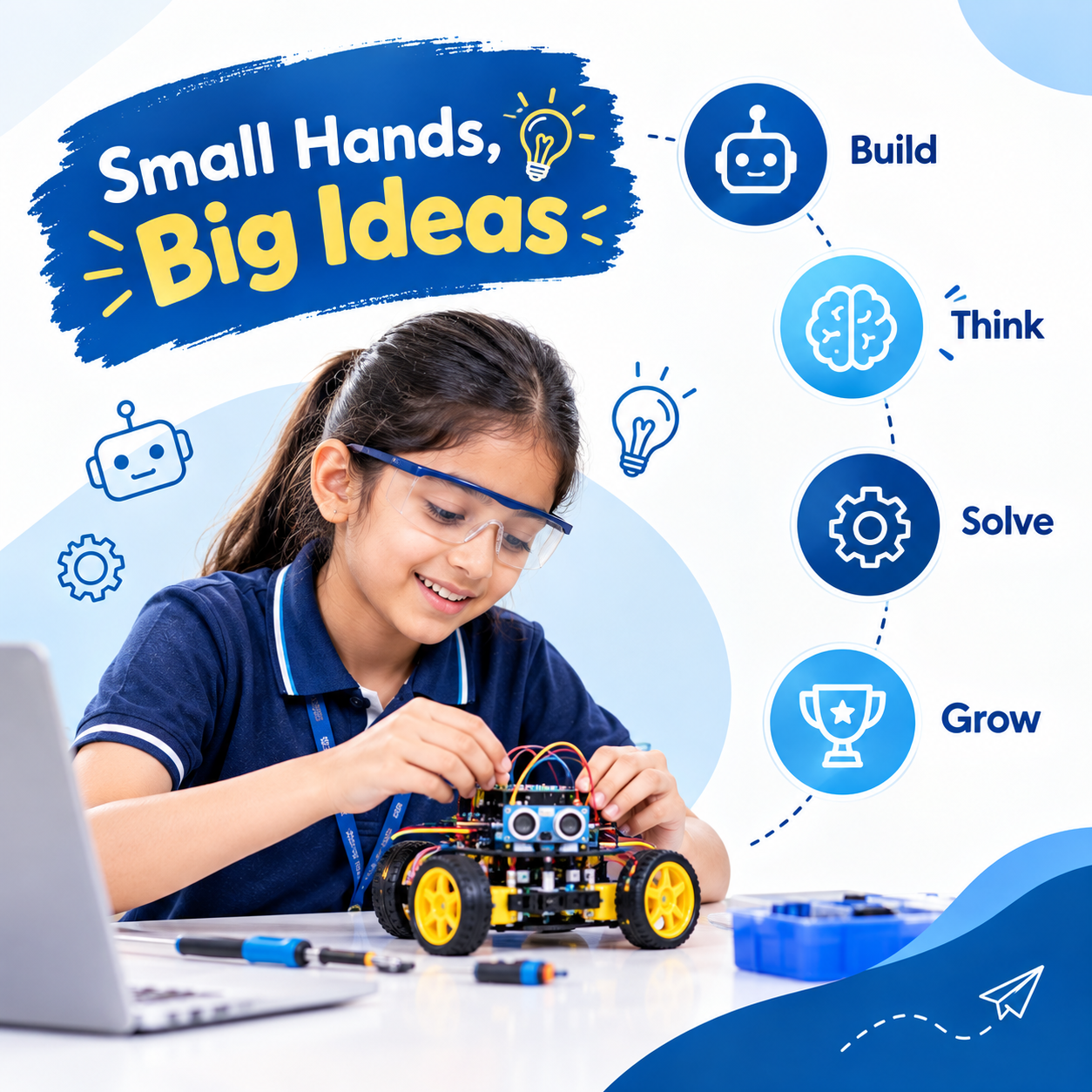
Instead, they take hold of the steering wheel on their own and start exploring by clicking and pressing different buttons. Try all permutations and combinations and finally learn to open a password-locked phone (even if it was a camera).
This is exactly how they master the art of using the phones. Not just the phones but all the gadgets they get access to; they learn the same way. Learns by exploring, not by simply reading. In this process, they break and make mistakes too, but in the end they learn the right approach. They don’t become a master in a day. They simply keep learning small things daily, breaking a big problem into small parts. This is very similar to what we call computational thinking.
What Happens When Children Are Allowed to Get It Wrong?
Adults sometimes see a failed school project and think, “At least the child should have checked it properly.”
But failure during the learning process can actually provide useful information. Imagine two children making a paper bridge for a classroom activity. One bridge collapses when they place five pencils on it. They could simply throw it away and start again. Or they could ask why it collapsed. Was the paper too thin? Was the base too narrow? Would folding the paper differently make it stronger?
The second approach teaches something more valuable than simply getting the bridge right. It teaches iteration. Engineers, designers, and scientists work in much the same way. They create something, test it, notice a problem, make a change, and test it again. Children can experience this process through robotics without needing to wait until college to encounter it.
This is particularly relevant for children who are growing up in a world where technology changes quickly. An app they use today may look completely different a few years later. The specific tool may change, but the ability to learn a new tool and solve an unfamiliar problem can stay useful.
Also Read| How Experiential Learning and Robotics Turn Curious Kids into Future-Ready Thinkers
How Is Meru International School, Miyapur Bringing This Approach to the Classroom?
For parents considering the Best Schools in Hyderabad, Meru International School, Miyapur, Hyderabad takes a progressive approach to robotics through its STREAM learning programme.
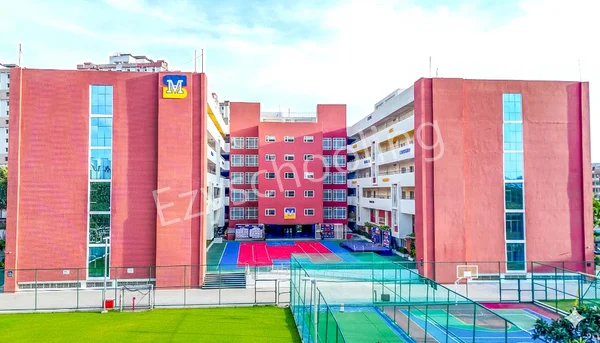
Rather than introducing robotics as a separate activity where students simply learn to assemble a model, the school describes it as a hands-on journey that develops gradually from Grade 3 to Grade 8. Students begin with tools such as Micro:bit and TinkerCAD, along with AI fundamentals, and gradually move towards SPIKE coding, mechanics, sensors, 3D printing, C programming, Arduino, IoT, Python, computer vision, machine learning, and robot control. By Grade 8, they get opportunities to apply these skills to areas such as home automation and IoT analytics.
Also Read| How Meru International School is approaching robotics learning?
What makes this approach particularly relevant to today's children is the emphasis on learning by doing. Meru's robotics lab is equipped with LEGO and Arduino-based kits, where students design, build, and programme robotic systems in a collaborative setting. The school's STREAM approach also includes a specific Design Thinking process: students are encouraged to empathise with a problem, define it, come up with ideas, build a prototype, and test it. This gives children a chance to move from “I have an idea” to “Let me see if my idea actually works.”
The programme also does not stop at robotics alone. The school connects robotics with electronics, coding, 3D printing, drones, AI and IoT as part of its wider STREAM ecosystem. This can help children see how different technologies work together rather than treating each one as an isolated subject. Its Miyapur campus also hosts activities such as a Robotics Capstone, giving students opportunities to take their learning into project-based work.
The real lesson of robotics is not just learning to code a machine, but learning how to question, experiment, solve problems, and keep trying when the first idea does not work.
For today's tech-savvy generation, these habits can help turn their natural curiosity about technology into the ability to create something meaningful with it.
Wanna explore more about this school and others in the nearby area? Visit
 as a preferred source on