








Ask most adults about a lesson they still remember from school, and there's a good chance it didn't happen at a desk. Maybe it was standing inside a planetarium watching the ceiling turn into a night sky, or walking through a fort and suddenly understanding why it was built exactly where it was. One of the best schools in Bangalore, The Paradise Academy in Electronic City, Bengaluru, seems to understand this instinct well — because some of the most lasting learning simply doesn't happen within four walls. It happens when a child steps outside the textbook and into the real thing.
Why Doing Beats Reading, Every Time
There's a reason experiential learning keeps showing up in every serious conversation about education. When a child reads about something, the information sits in one part of the brain. When they touch it, walk through it, or watch it happen in front of them, it gets anchored somewhere far stickier — memory tied to a place, a smell, a sound, an emotion.
The Textbook Paragraph vs. The Real Thing
Take history as an example. A paragraph about a fort's defence strategy is just words on a page until a child is actually standing on its ramparts, looking down at the terrain the way a soldier once had to. Suddenly, the strategic logic makes sense in a way no amount of reading could achieve. That's the real difference between reading about a historical monument and walking through one — one is information, the other is understanding.
Making the Abstract Suddenly Real
Science suffers from the same problem in the classroom. Concepts like gravitational pull, chemical reactions, or the scale of the solar system are hard to hold in your head as pure theory. Step into a science centre where a hands-on exhibit lets a child feel the effect of friction, or into an observatory where they look through a telescope at Saturn's rings for the first time, and the abstract becomes tangible almost instantly. A research centre visit does something similar for older students — watching actual scientists at work makes "the scientific method" feel like a real profession rather than a chapter heading.
What a Good Field Trip Actually Builds
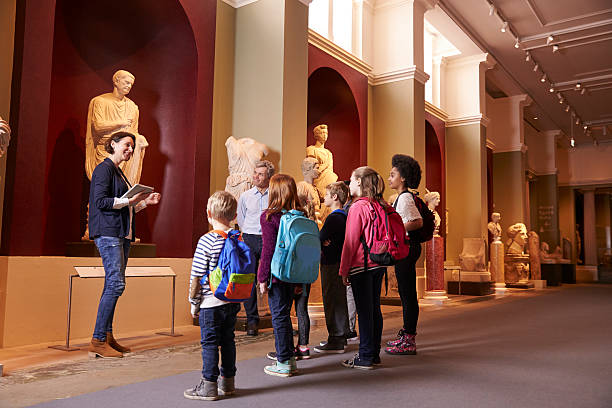
It's tempting to think of a field trip as a break from "real" learning. In practice, it often sharpens skills that classroom learning doesn't get to touch as directly.
Being somewhere new naturally puts a child's observational skills in gear — they're noticing details, asking questions on the spot, and comparing what they expected with what they're actually seeing. That kind of spontaneous curiosity is hard to manufacture at a desk. And because the experience is layered with sight, sound, and movement, it tends to stick in memory far longer than a diagram ever could. Ask a student what they learned in a chapter three months later, and they might struggle. Ask them what they saw on a trip to a wildlife sanctuary, and they'll usually remember the exact moment they spotted an animal in the wild.
The Conversation After the Trip Matters Just as Much
Here's the part that often gets overlooked: the excursion itself isn't where the learning ends. What happens afterwards — the classroom discussion, the reflection, the questions a teacher asks once everyone's back at their desks — is what turns a fun outing into an actual lesson. A good teacher will ask a student to connect what they saw at a heritage monument back to the history chapter they're studying, or get them to explain a science centre exhibit in their own words. That reflection is the bridge between "we went somewhere interesting" and "I understand this better now."
Bringing Theory and Real Life Together
Put simply, educational excursions work because they reinforce, rather than replace, what's happening in the classroom. A museum visit deepens a lesson on art or history. A trip to a planetarium makes an astronomy chapter click. A visit to a wildlife sanctuary turns an ecology lesson into something a child has actually seen firsthand. None of this substitutes for classroom teaching — it completes it.
Schools That Take This Seriously Build It Into the Calendar
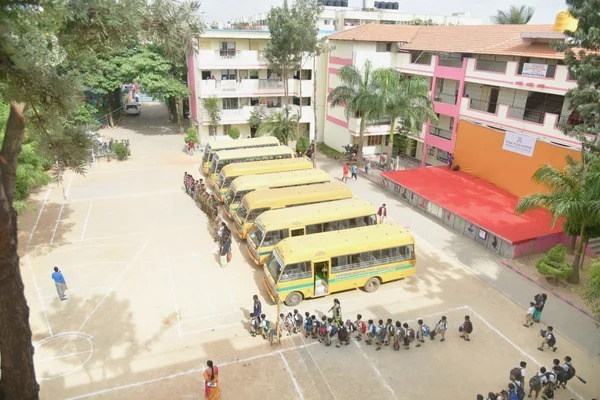
Schools that truly embrace experiential learning ensure these experiences become part of the academic calendar rather than occasional outings — not a once-a-year treat squeezed in before summer break, but a recurring, planned part of how students learn throughout the year.
Excursions With a Purpose, Not Just an Outing
One of the best CISCE schools in Bangalore, The Paradise Academy regularly organises excursions to places of historic and scientific importance, and the intent behind them is clearly stated: these trips exist to complement classroom learning, not simply to give students a day away from their desks. That distinction matters. A trip planned around a curriculum connection asks something different of students than a purely recreational outing does — there's an expectation that they'll come back with something to discuss, not just photographs to share.
Recreation With a Reason
That doesn't mean these excursions aren't enjoyable — they clearly are. But their purpose is layered: to give students a genuine break from routine while also placing them in front of the very things their textbooks describe. A heritage site becomes a live extension of a history lesson. A science-focused destination becomes a hands-on companion to a concept the class has been building toward. It's recreation with a built-in reason.
The Bigger Picture
None of this is about replacing classroom teaching — it never was. It's about recognising that some understanding simply can't be built from a desk. A child who's walked through a historical fort, peered through a telescope, or watched an animal in its natural habitat carries something a textbook alone can't give them: a memory that theory can hang on to. That's exactly what makes a well-planned excursion worth its place on the academic calendar, not just the summer holiday list.
If you are also looking for schools in Bangalore and nearby areas
 as a preferred source on